



White Ceramic Trinket Box
A white ceramic trinket box holds small valuables with quiet charm, bringing period craftsmanship directly to a dressing table.
White Ceramic Trinket Box
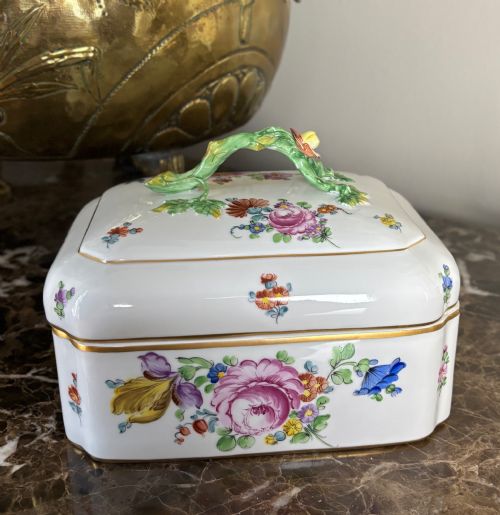
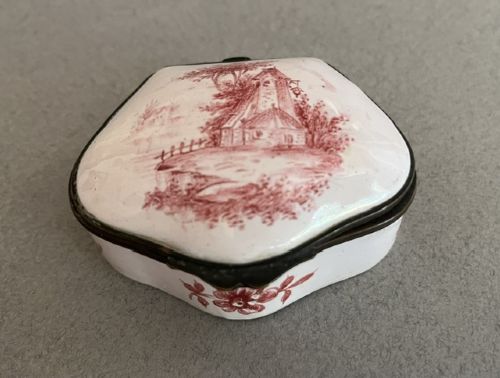
A white ceramic trinket box encompasses small lidded vessels designed for jewellery, patches, and vanity items, spanning several centuries of European production. When searching for a white ceramic trinket box, collectors encounter everything from Georgian patch boxes to Art Deco powder jars.
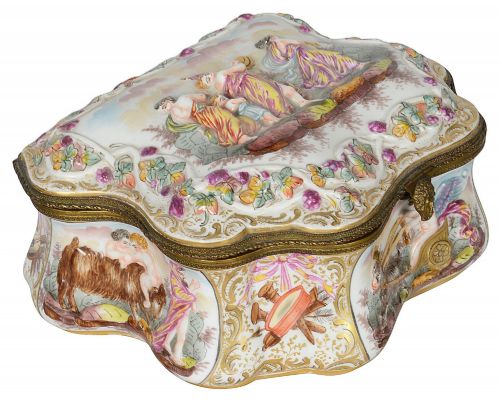
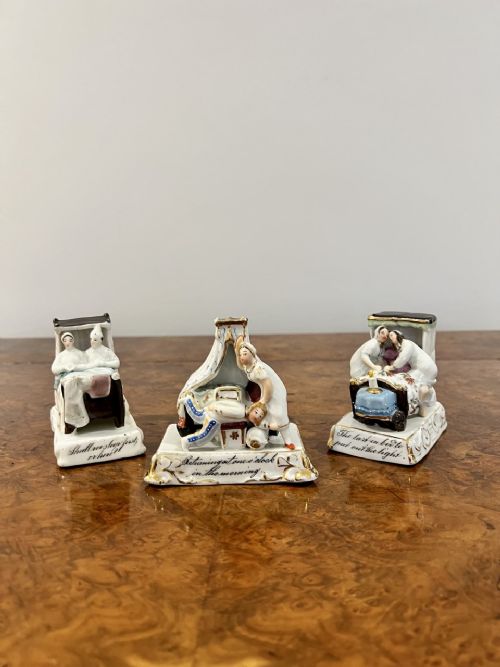
The selections on this page range across diverse aesthetic movements including Rococo Revival, Neoclassical, and Chinoiserie. Pieces take various forms, from circular patch boxes to figural caskets and fairings.
Origins stretch across European centres such as France, Germany, and Italy, with works originating from celebrated continental workshops. These objects served utilitarian vanity functions while displaying decorative refinement.
How they were made
Potters utilised fine porcelain, faience, and glazed ceramic bases, often enriched with enamel decoration and hand-painted motifs. Many examples integrate gilt, brass mounts, or gold leaf detailing around the hinged rims and closures.
Firing techniques allowed for smooth white glazes that served as a canvas for polychrome painting, transfer printing, and moulded relief work. Artisans combined ceramic bodies with metal hardware to create durable, functional boxes.
White Ceramic Trinket Box Retail Price Guide 2026
Typical asking prices for white ceramic trinket box among the pieces listed under this phrase on Sellingantiques today, from the lower quarter to the upper quarter. They describe what is for sale here now, not the wider market.
Listings feature porcelain, enamel, gilt, brass, ceramic, glaze, gold leaf, and jasperware across periods from the eighteenth century to the Art Deco era.
What varies in quality
Quality rests upon the crispness of the porcelain moulding, the fineness of the hand-painted detail, and the integrity of any gilt metal mounts. Pieces with well-preserved polychrome pigments and clean white glazes stand apart from simpler production ware.
The precision of the lid fit and the robustness of original hinges separate standard utility boxes from superior cabinet pieces. Artistic ambition in figural modelling also defines the upper tiers of the range.
Edme Samson Of Paris·Meissen Porcelain·Wedgwood·Dorotheenthal Germany
The White Ceramic Trinket Box Glossary
- Patch box
- A small lidded container historically used to hold cosmetic silk patches for the face. These portable items often featured enamelled or ceramic surfaces.
- Jasperware
- A type of vitreous stoneware developed in the eighteenth century, notable for its matte finish and raised classical reliefs. It is frequently associated with English manufactories.
- Faience
- Tin-glazed earthenware produced widely across continental Europe. This technique yields an opaque white surface suitable for painted decoration.
- Capodimonte
- A style of Italian porcelain originating from Naples, recognised for sculptural relief work and detailed modelling. These items often depict figurative or floral motifs.
White Ceramic Trinket Box: Frequently Asked Questions
How old is my trinket box?
Dating relies upon stylistic markers such as Rococo curves, Art Deco geometric forms, or Neoclassical motifs. Material composition and maker marks underneath the glaze also provide chronological clues.
Examining the metal mounts and hinge construction helps distinguish nineteenth-century examples from twentieth-century productions.
What were these boxes used for?
These vessels originally held small personal effects like rings, pins, beauty patches, or scented powder. Vanity tables and dressing rooms served as their primary domestic settings.
Over time, they transitioned from utilitarian dressing accessories into decorative cabinet display pieces.
How do I care for antique porcelain?
Gentle dusting with a soft, dry cloth is sufficient for routine maintenance of glazed ceramic surfaces. Harsh chemical cleaners and abrasive materials must be avoided to protect hand-painted enamels and gilt highlights.
Handling boxes with care prevents damage to delicate hinges and applied porcelain figures.
Are these boxes English or continental?
Origin is often indicated by the ceramic body type, glaze characteristics, and any factory stamps or impressed marks on the base. Continental pieces frequently originate from French, German, or Italian kilns.
English examples often utilise stoneware bodies like jasperware or distinct bone porcelain formulations.