



Antique Ceramic Jewellery Box
An antique ceramic jewellery box is a small lidded vessel formed from porcelain, earthenware or stoneware, prized for holding keepsakes on a dressing table.
Antique Ceramic Jewellery Box
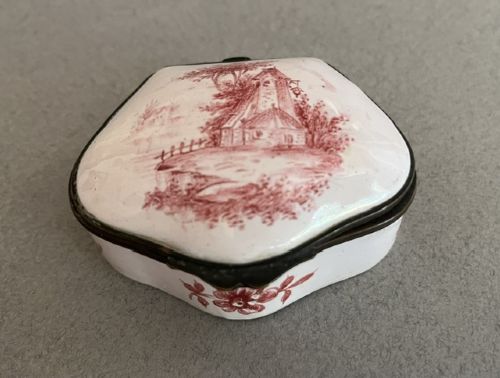
When you search for an antique ceramic jewellery box, you encounter pieces designed to hold small valuables, often described in listings as trinket boxes, caskets or powder boxes. The examples appearing here span the nineteenth century into the twentieth century, bringing together diverse regional traditions.
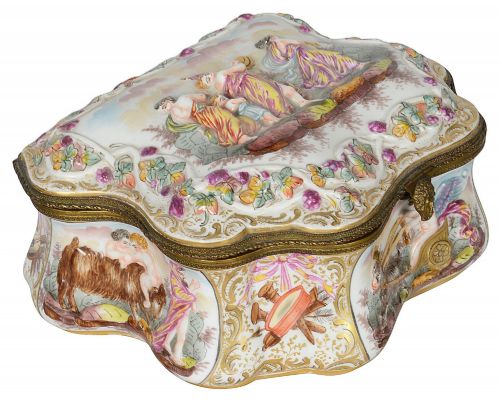
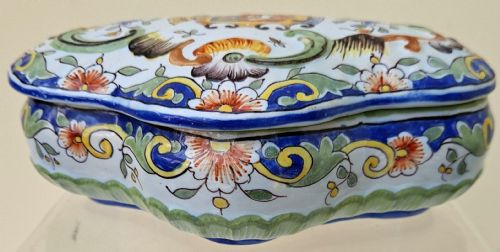
You are most likely to meet French porcelain and faience containers, alongside Italian Capodimonte table caskets and English jasperware pieces. These items serve both a decorative and practical function in domestic spaces.
The forms range from round porcelain pots with gilt detailing to large table caskets supported by metal mounts. Makers across Europe produced these lidded vessels in styles extending from Rococo Revival and Neoclassical to Art Deco.
Materials and construction
The bodies of these boxes rely on ceramic media such as porcelain, earthenware, stoneware and tin-glazed faience, fired and shaped into vessels with matching covers. Many pieces incorporate metal components, utilising brass, gilt brass and enamel hinges, clasps or mounts to secure the lids.
Surface decoration frequently involves hand-painted blue pigments, polychrome glazes and applied relief work, as seen in Jasperware medallions and Capodimonte figures. Gilt detailing is added to highlight moulded rims, feet and decorative borders.
Antique Ceramic Jewellery Box Retail Price Guide 2026
Typical asking prices for ceramic jewellery box among the pieces listed under this phrase on Sellingantiques today, from the lower quarter to the upper quarter. They describe what is for sale here now, not the wider market.
Listings feature items spanning the 19th Century up to 1960, executed in porcelain, earthenware, tin glaze and jasperware.
Distinctions in quality
The standard of a piece depends on the crispness of the ceramic moulding and the precision of the hand-painted brushwork applied to the surface. Finer boxes display delicate detailing in floral or figurative motifs, whereas simpler examples rely on plain glazed finishes.
The integration of the metalwork separates standard items from superior productions, with well-cast brass hinges and secure closures indicating careful assembly. The clarity of the glaze and the complexity of the decorative style also distinguish the range.
Wedgwood·Capodimonte·Desvres·Rouen
The Antique Ceramic Jewellery Box Glossary
- Casket
- A box or chest designed for storing jewellery or valuables, often featuring hinged lids and decorative mounts. These vessels range from small trinket containers to substantial table pieces.
- Faience
- Tin-glazed earthenware produced in France and other European regions, typically decorated with painted designs over a white opaque glaze. Pieces often exhibit regional artistic traditions.
- Jasperware
- A type of fine stoneware developed by Josiah Wedgwood, characterised by a matte unglazed surface and contrasting raised white relief figures. It is frequently seen in shades of dark blue.
- Capodimonte
- Italian porcelain originating from the historic Naples factory, known for sculptural relief decoration and ornate modelling. Such pieces frequently form large table caskets.
- Gilt Brass
- Brass that has been treated with a thin layer of gold or gold-coloured wash to give the appearance of solid metal. It provides structural support and decorative framing for ceramic lids and bases.
Antique Ceramic Jewellery Box: Frequently Asked Questions
What is an antique ceramic jewellery box used for?
These lidded vessels served historically to hold rings, pins, small trinkets and cosmetics on a dressing table or vanity.
Today they function similarly as decorative containers for small personal items while adding a period aesthetic to interior spaces.
How do I date an antique ceramic jewellery box?
Dating relies on stylistic clues such as Rococo Revival curves, Victorian Neoclassical symmetry or geometric Art Deco lines. Material types and manufacturing marks also help place a piece within the nineteenth or twentieth century.
Changes in metal mount styles and glaze compositions provide further indicators of the production era.
Are these boxes fragile?
The ceramic bodies and delicate hand-painted surfaces require careful handling to avoid chipping or surface abrasion. Metal mounts and hinges should be manipulated gently during opening and closing.
Placing them on stable surfaces away from high-traffic edges protects both the ceramic and the gilt brass fittings.
What materials are used in these boxes?
The primary structure consists of fired ceramics including porcelain, earthenware, stoneware, tin glaze and jasperware. Many examples integrate brass, gilt brass and enamel for structural mounts and decorative closures.
Surface enrichment is achieved through hand-painted pigments and moulded relief detailing.