
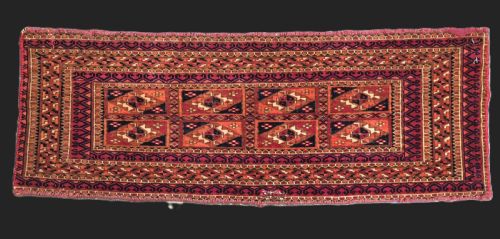
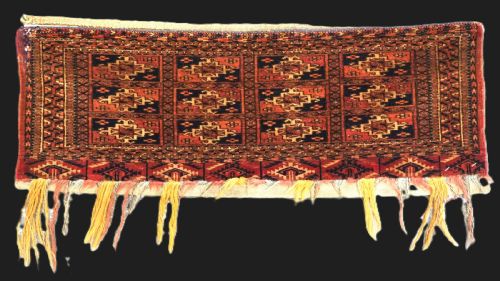


Hand Knotted Tekke Carpet
A hand knotted tekke carpet offers dense tribal geometry and rich madder tones woven by Central Asian nomads.
Hand Knotted Tekke Carpet
A hand knotted tekke carpet brings together the distinct tribal weaving traditions of Central Asian nomads. Buyers searching this phrase typically encounter nineteenth-century floor coverings, smaller dowry rugs, and storage bag faces featuring repeating guls.
The selection ranges from main carpets down to smaller torba and chuval bag faces made for nomadic camp use. These pieces demonstrate the disciplined layout and deep red palettes characteristic of Turkmen tribal artistry.
Most examples date from the mid-nineteenth century through the early twentieth century, spanning periods of traditional production before commercial dyes became dominant.
Materials and construction
Weavers constructed these textiles primarily from wool foundations and pile, occasionally incorporating cotton for structural contrast or silk highlights to add lustre to specific motifs.
Natural dyes provide the characteristic red, burgundy, and gold tones, often achieved using madder and cochineal sources that create depth and variation across the surface.
Listings span periods from the mid nineteenth century through 1920, utilising wool, cotton, silk, and natural dyes.
Assessing quality
Knot density and handling of the pile separate finer dowry pieces and main carpets from standard utility weaving. A very fine weave allows intricate secondary motifs and crisp geometry to stand out clearly.
The vibrancy and retention of natural dyes, along with the complexity of the gul arrangements, determine the visual impact of an individual textile.
The Hand Knotted Tekke Carpet Glossary
- Gul
- A primary octagonal medallion motif repeated across Turkmen carpets. Each tribal group utilised specific gul variations to signal identity and heritage.
- Torba
- A small horizontal wall hanging or storage bag face used in nomadic tents. These smaller formats often display exceptionally fine detail.
- Chuval
- A large tent storage bag face produced by tribal weavers. They frequently appear on the market as decorative panels separated from their original backs.
- Ensi
- A tribal door rug featuring a characteristic cruciform design dividing the field into four panels. They served as tent flap coverings.
- Cochineal
- A natural insect-derived dye yielding vibrant crimson and magenta highlights. Its presence often indicates high-status nineteenth-century weaving.
Hand Knotted Tekke Carpet: Frequently Asked Questions
What is a tekke carpet?
A tekke carpet is a knotted pile textile made by the Tekke tribe of Turkmen people in Central Asia. They are recognised by their orderly rows of octagonal guls and rich red colourways.
These pieces served functional and ceremonial roles within nomadic life, including domestic flooring and dowry furnishing.
How old are these carpets?
Most antique examples available date from the mid-nineteenth century up to the early twentieth century. Pieces from the 1850s to 1880s generally display traditional natural dye palettes.
Later pieces extending into the 1920s reflect changing production methods and export demands.
What is a dowry rug?
Dowry rugs were smaller textiles woven by women as part of their marriage possessions. They often feature particularly careful knotting and scarce secondary gul designs.
Collectors prize these smaller formats for their intimate scale and concentrated artistry.
How do I care for an antique rug?
Protect wool pile carpets by placing them out of direct sunlight to prevent natural dye fading. Regular gentle vacuuming without a beater bar removes trapped dust effectively.
Professional textile conservation cleaning should be used for maintenance rather than standard domestic washing.