



Hand Hammered Coal Bucket
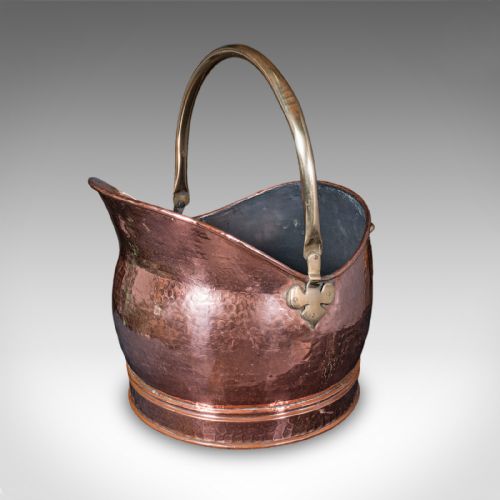
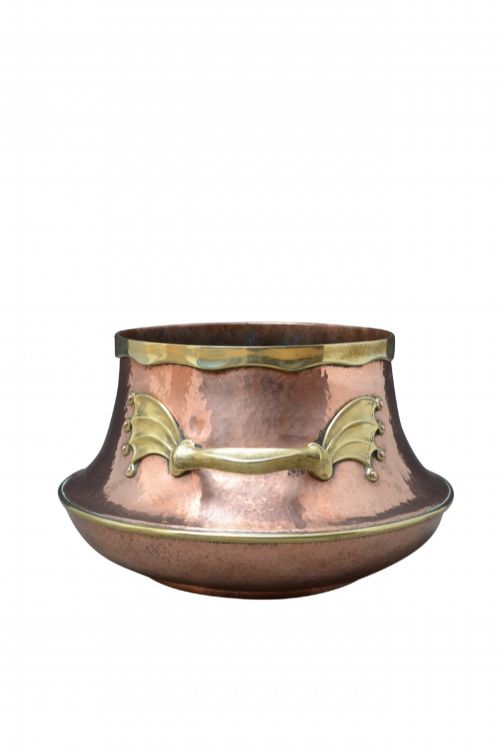
These hand hammered coal bucket pieces are robust fireside vessels crafted from copper and brass, bringing genuine period utility and texture to a hearth.

Hand Hammered Coal Bucket
A hand hammered coal bucket is a practical fireside accessory designed to hold solid fuel close to the hearth. Buyers seeking this phrase will encounter sturdy vessels intended for daily domestic use in Victorian and Edwardian interiors.
The most common examples on this page take the form of helmet shaped scuttles, log buckets, and cylindrical bins fashioned from heavy gauge metals. They combine functional capacity with decorative metalwork suited to period fireplaces.
How they were made
Makers shaped these vessels primarily from sheet copper and brass, often combining both metals to create contrasting rims, handles, and swing bails. Wrought iron appears occasionally for structural mounts and feet.
The characteristic surface texture comes from manual hammering and beating techniques performed across the metal body. Artisans worked the sheet metal over stakes to build both strength and decorative relief before attaching riveted joints and swing handles.
Hand Hammered Coal Bucket Retail Price Guide 2026
Typical asking prices for hand hammered coal bucket among the pieces listed under this phrase on Sellingantiques today, from the lower quarter to the upper quarter. They describe what is for sale here now, not the wider market.
Listings span the Victorian, Edwardian, and Arts and Crafts periods, featuring copper, brass, and wrought iron.
What varies in quality
The distinction between standard utility items and finer pieces lies in the weight of the metal sheet and the control of the hand beaten surface. Heavier gauge copper retains its structural integrity better under the heavy weight of coal.
Detailing on the handles, rivets, and any brass mounts marks the division in craftsmanship. Superior examples display neatly articulated joints and balanced proportions rather than purely mechanical stamping.
The Hand Hammered Coal Bucket Glossary
- Helmet scuttle
- A coal container featuring a high, sloping back and a flared spout at the front designed for pouring fuel cleanly. This silhouette dominates traditional Victorian fireside equipment.
- Ferrat
- A traditional metal vessel type often utilised for carrying solid fuel or ash. It shares robust construction methods with standard coal buckets.
- Swing bail
- The pivoting arched handle attached to the sides of the bucket via rings or ears. It allows the vessel to be lifted and tilted with ease.
- Purdonium
- A box or bucket style coal store designed to keep fuel contained and out of sight beside the fireplace. These often feature drop down lids or specialised storage forms.
- Arts and Crafts
- A design movement emphasising hand craftsmanship and simple, honest materials. Metalwork from this style focuses on visible working marks and honest construction.
Hand Hammered Coal Bucket: Frequently Asked Questions
How do I clean a copper coal bucket?
Maintenance depends entirely on whether you prefer a bright polished finish or an aged patina. Gentle washing with warm soapy water removes soot without disturbing the historic surface.
Avoid harsh abrasive compounds that strip away the character built up over decades of domestic service.
Can I still use these for real coal?
These vessels were built specifically for solid fuel storage and remain entirely functional for daily hearthside use. Many owners continue to load them with logs or coal beside active fireplaces.
Inspect the interior for any historic corrosion or thinning of the metal before subjecting the vessel to heavy loads.
How do I tell Victorian from Edwardian pieces?
Victorian examples often display heavier cast brass mounts and deep hand beaten textures typical of mid to late nineteenth century production. Edwardian items frequently lean towards lighter Arts and Crafts styling with simplified geometric forms.
Overlaps in manufacturing traditions mean construction techniques offer a clearer guide to age than stylistic labels alone.
What else can I use these buckets for?
Beyond fireside duties, many of these vessels function well as large planters, jardiniere displays, or umbrella stands in hallways. Their generous metal capacity accommodates potted plants and dry storage with ease.
Placing a plastic liner inside protects the historic base from moisture if utilised for live greenery.