


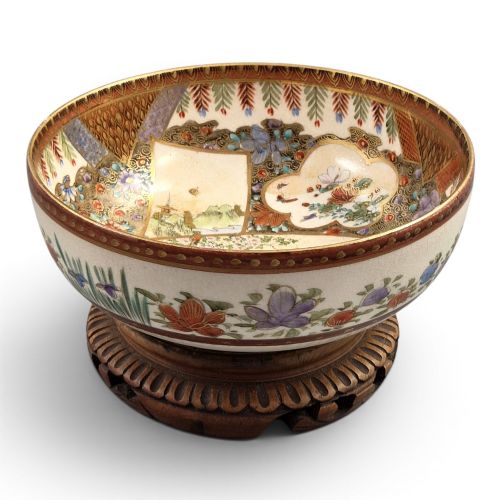


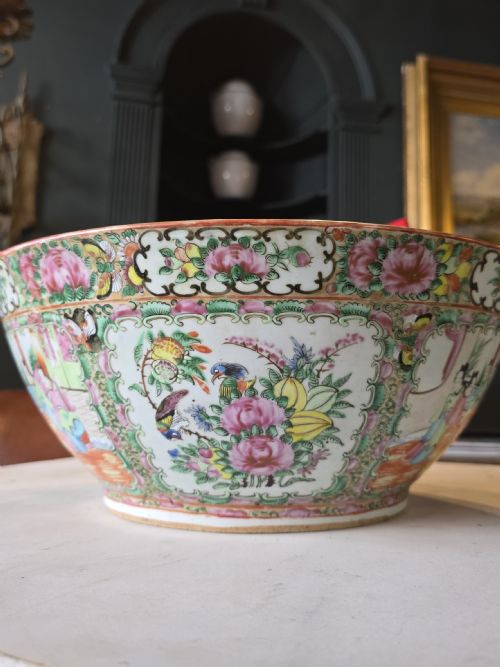


Hand Enamelled Porcelain Bowl
These hand enamelled porcelain bowl examples bring vibrant polychrome palettes and intricate brushwork from eighteenth and nineteenth century kilns directly to modern interiors.
Hand Enamelled Porcelain Bowl
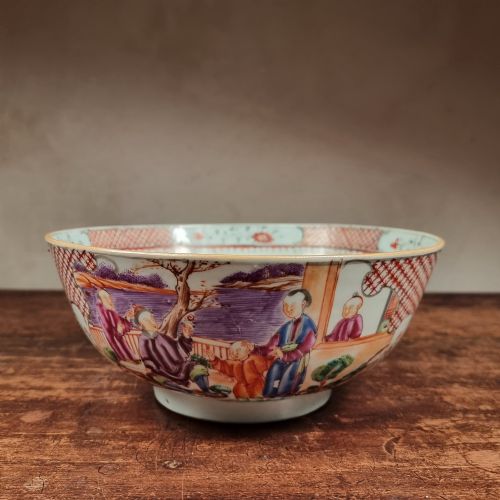
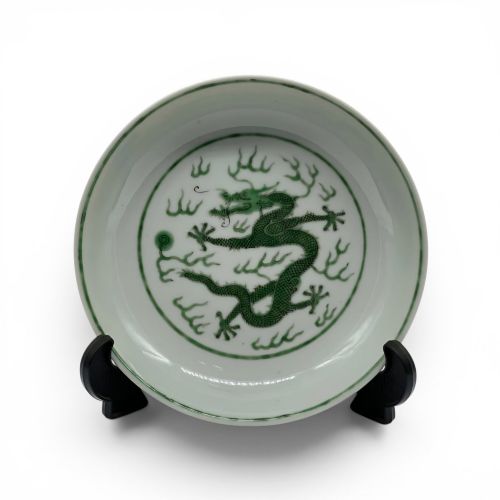
A hand enamelled porcelain bowl covers a diverse range of forms, from large punch bowls and jardinieres to delicate tea bowls originating from Chinese, Japanese and European kilns. The selection leans heavily towards nineteenth century Chinese Canton production and Japanese Imari and Satsuma wares, alongside eighteenth century export pieces.
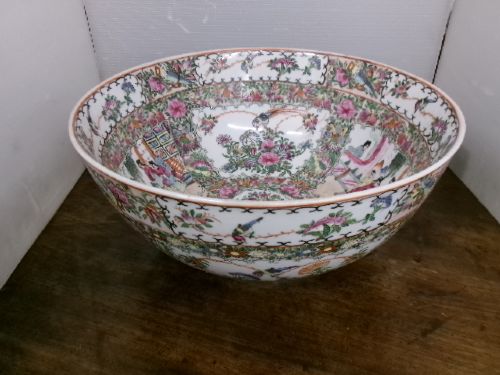
Buyers encounter everything from massive sixteen-inch Rose Medallion centrepieces to miniature Kutani dishes and French Sevres mounting combinations. These vessels served functional roles for punch, tea, or display, carrying cultural narratives across centuries.
The aesthetic vocabulary spans Qing Dynasty imperial styles, famille rose palettes, and European interpretations like Samson of Paris armorial designs. Each piece reflects the specific trade routes and domestic tastes of its period.
How they were made
Potters shaped fine porcelain clay bodies before applying initial underglaze cobalt blue motifs or firing plain white blanks for subsequent decoration. Artisans then built up the designs using overglaze enamel pigments, often adding gold leaf, gilding, or gilt bronze mounts to enhance the decorative impact.
Japanese workshops utilised distinct regional techniques, such as Kutani or Satsuma potting methods, while Chinese artisans perfected famille rose palettes and Canton hand-painted schemes. European makers like Worcester and Meissen applied turquoise guilloche borders and puce grounds over hard or soft paste porcelain.
Listings feature eighteenth century Qianlong period porcelain alongside nineteenth century Japanese Imari, demonstrating diverse global trade routes.
What varies in quality
The distinction between ordinary production and superior execution rests on the precision of the brushwork and the vibrancy of the overglaze enamel palette. Fine examples display crisp detailing in figures, flora, and heraldic motifs, whilst lesser pieces show hurried application and blurred pigment boundaries.
The presence of studio signatures, imperial marks, or high-status mounts elevates a piece's standing within its category. Heavier, well-balanced potting and intact gilding separate well-preserved historical specimens from heavily worn domestic wares.
Kozan·Shozo·James Giles·Samson Of Paris
The Hand Enamelled Porcelain Bowl Glossary
- Famille Rose
- A palette of opaque overglaze enamels dominated by pink or rose colours, introduced in China during the Qing Dynasty. This technique allowed for nuanced shading and detailed pictorial scenes.
- Imari
- A style of Japanese porcelain featuring a distinct colour scheme of underglaze blue, iron red, and gilt highlights. These pieces were extensively exported to Europe from the seventeenth century onwards.
- Canton
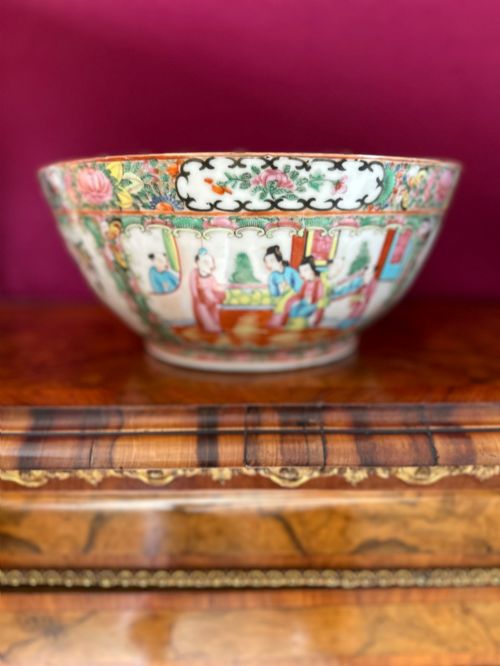
- Porcelain manufactured in Guangdong province and decorated for the export market with crowded figural scenes, birds, and butterflies. The style became immensely popular during the Victorian era.
- Gilt Bronze
- An alloy of copper and zinc treated with gold amalgam to create a rich metallic finish. French makers frequently employed these mounts to elevate imported porcelain bowls.
- Tea Bowl
- A small, handleless drinking vessel designed for consuming infused tea. Eighteenth century examples often include matching saucers.
Hand Enamelled Porcelain Bowl: Frequently Asked Questions
Were these bowls used for dining?
Large punch bowls and jardinieres served social functions during banquets and formal gatherings. Smaller tea bowls and saucers were intended for domestic beverage consumption.
Over time, many transitioned into pure display objects due to their fragile enamel decoration and historical significance.
How do I date a Chinese export bowl?
Examine the base for reign marks, though these can be retrospective tributes rather than strict indicators of manufacture. Stylistic shifts in the famille rose palette and potting weight offer reliable clues.
Compare the border designs and foot ring finish with documented examples from specific periods like the Qianlong or Guangxu eras.
What is Rose Medallion ware?
Rose Medallion is a distinct nineteenth century Canton decoration style featuring alternating panels of figures and birds, centered on a medallion. The composition uses dense floral backgrounds filled with overglaze pink enamels.
These pieces were produced in substantial quantities for international export markets, particularly during the Victorian period.