



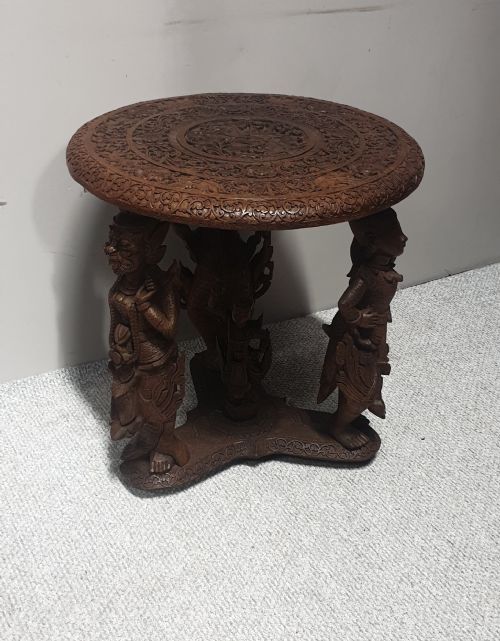
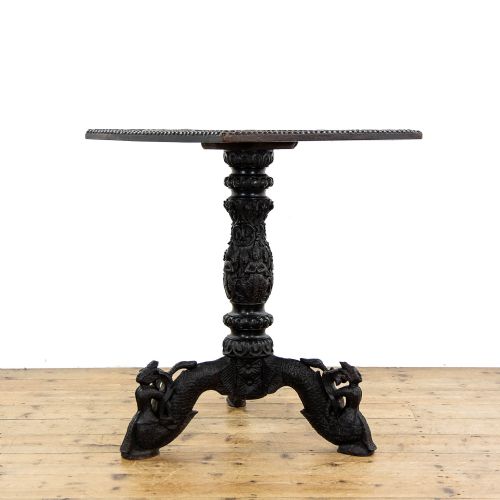


Hand Carved Tripod Stand
These hand carved tripod stand pieces bring solid wood craftsmanship and distinct regional carving into everyday rooms.
Hand Carved Tripod Stand
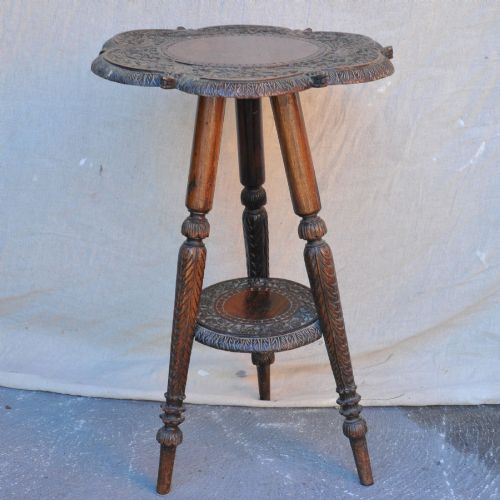
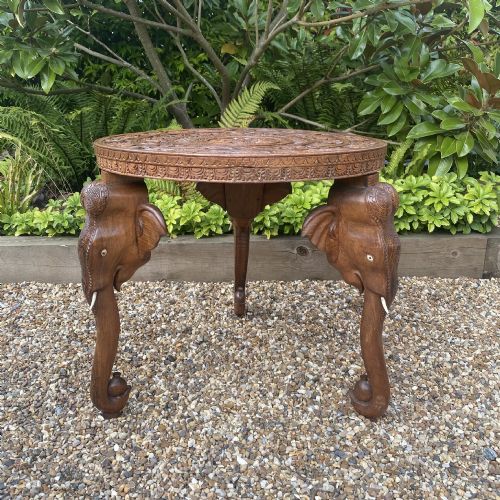
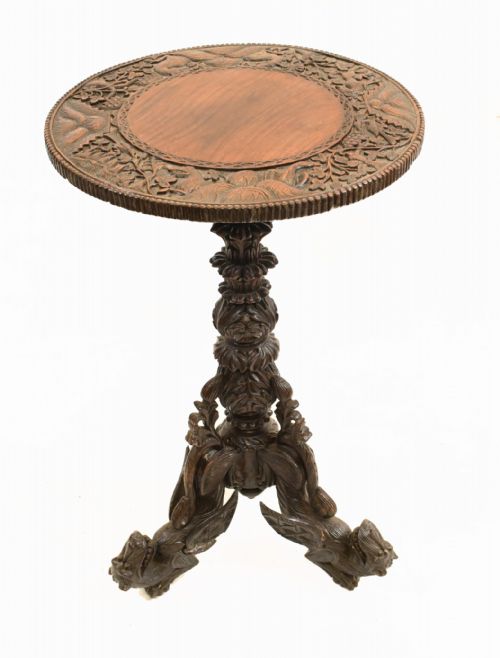
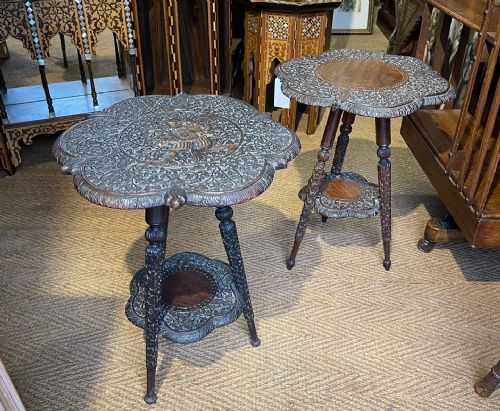
A hand carved tripod stand takes the form of a small occasional table, side table, or low stool supported by three legs. When you search for this phrase, you encounter items shaped by diverse regional traditions, ranging from British oak country furniture to intricate Anglo-Indian and Burmese imports.
The most common versions on this page are circular occasional tables and side tables dating from the late nineteenth century. These pieces function easily beside a chair or in a corner, serving both as display surfaces and as focal points through their carved decoration.
Materials and construction methods
The makers relied on dense timbers such as rosewood, teak, mahogany, padauk, and oak to support deep relief carving without splitting. Selected pieces incorporate contrasting details like bone inlay to accentuate the motifs carved into the top and legs.
Joinery techniques link the three legs directly to the central pillar or tabletop using traditional pegged or socketed joints. The surface ornamentation relies entirely on hand chiselling, producing tactile depth across floral, animal, and geometric patterns.
Hand Carved Tripod Stand Retail Price Guide 2026
Typical asking prices for hand carved tripod stand among the pieces listed under this phrase on Sellingantiques today, from the lower quarter to the upper quarter. They describe what is for sale here now, not the wider market.
Listings span periods from the mid-nineteenth century through the 1920s, including Victorian and Edwardian examples.
Assessing quality in hand carved tripod stands
Quality reveals itself in the depth and crispness of the hand carving rather than the mere presence of decoration. Superior examples display sharp undercut details and well-balanced proportions between the top and the supporting legs.
The choice of timber and stability of the tripod base further separate the output. Heavier exotic hardwoods and solid construction hold up better over time than lighter utility woods or later assembled replacements.
The Hand Carved Tripod Stand Glossary
- Tripod table
- A small table supported by a pillar on three legs. This format allows the piece to stand steady on uneven floors.
- Padauk
- A heavy, durable tropical hardwood with a reddish hue. Makers utilised this timber for detailed carving because of its stable grain.
- Bobbin turned
- A style of furniture leg or stretcher shaped into a series of rounded spheres resembling wooden bobbins. This technique appeared frequently in late nineteenth century British seating and tables.
- Bone inlay
- Fragments of bone inserted into shallow recesses in the wood to form contrasting patterns. This method often highlights animal or geometric motifs on eastern tables.
Hand Carved Tripod Stand: Frequently Asked Questions
Where should I place a hand carved tripod stand?
These compact pieces fit well beside armchairs, in narrow hallways, or as bedside surfaces where a full-sized table takes up too much floor space.
Because they feature decorative surfaces on the top and sides, they look best when positioned where natural light catches the carved details.
How do I care for solid rosewood and teak?
Dust the carved surfaces regularly with a soft brush to prevent dirt from settling into the deep recesses of the woodwork. Avoid placing these items near direct heat sources or in strong sunlight, which can dry out the dense timbers.
Occasional application of natural wax helps maintain the sheen of the wood without building up heavy residues.
Are these tables sturdy enough for daily use?
Most tripod stands handle everyday items like lamps, books, or cups without trouble, provided the three legs remain tightly fitted to the central pillar. Heavy impacts or pulling on the top can strain the joints where the legs meet the base.
Checking the underside joints periodically ensures the legs stay secure.
How can I tell British Victorian work from Anglo-Indian pieces?
British Victorian versions generally utilise native woods like oak or elm with simpler turned or rustic framing. Anglo-Indian and Burmese pieces typically feature exotic dense hardwoods covered in dense floral or animal carvings.
The choice of timber and the specific style of relief work usually indicate the geographic origin of the maker.