




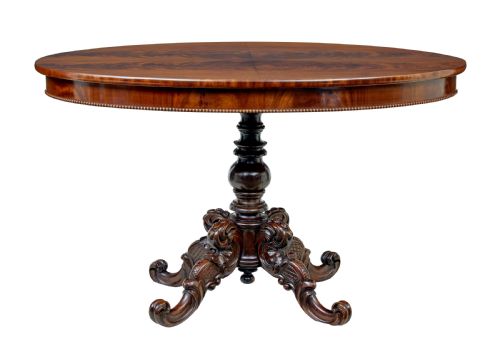


Hand Carved Pedestal Table
A hand carved pedestal table brings intricate regional craftsmanship and solid timber presence into a room.
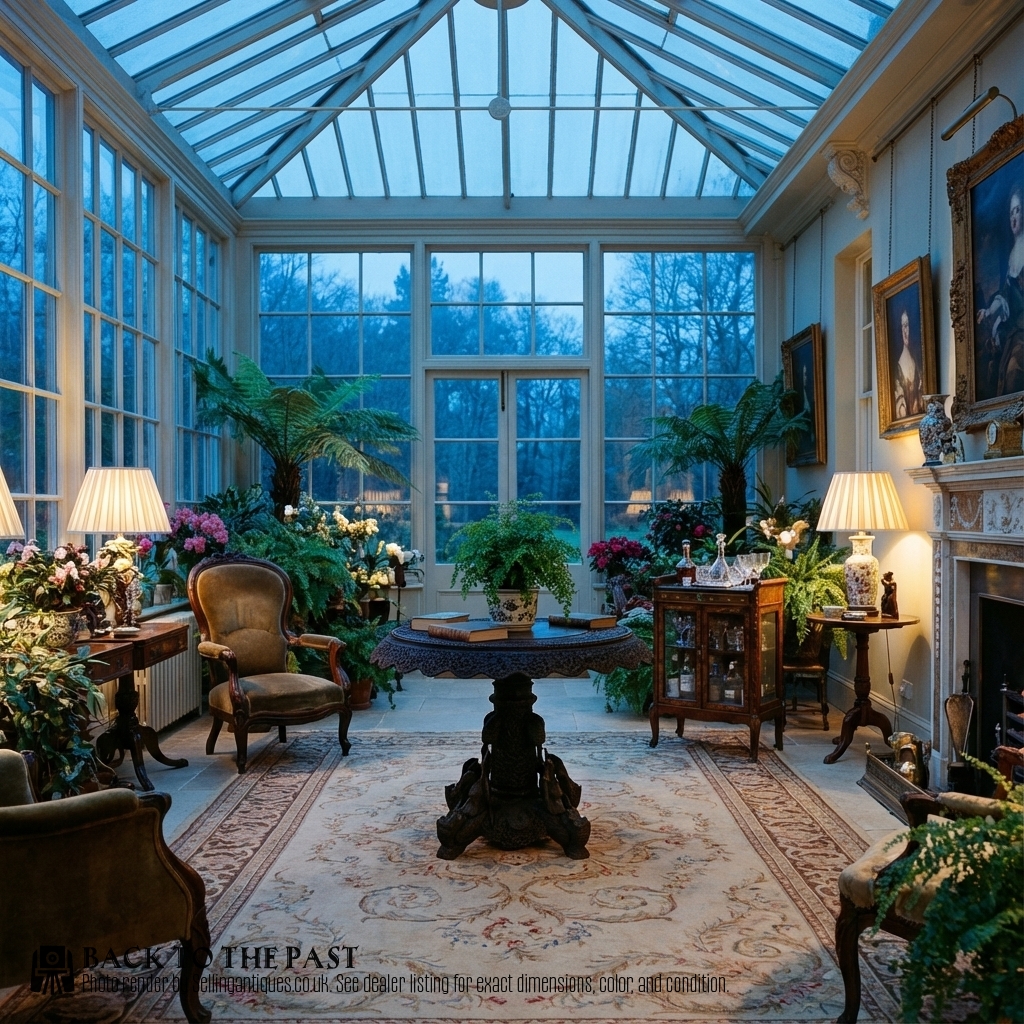
Hand Carved Pedestal Table
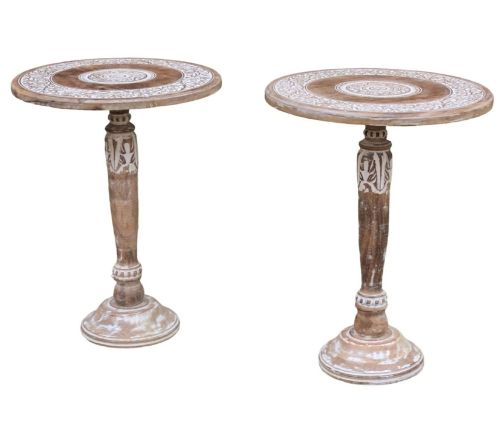
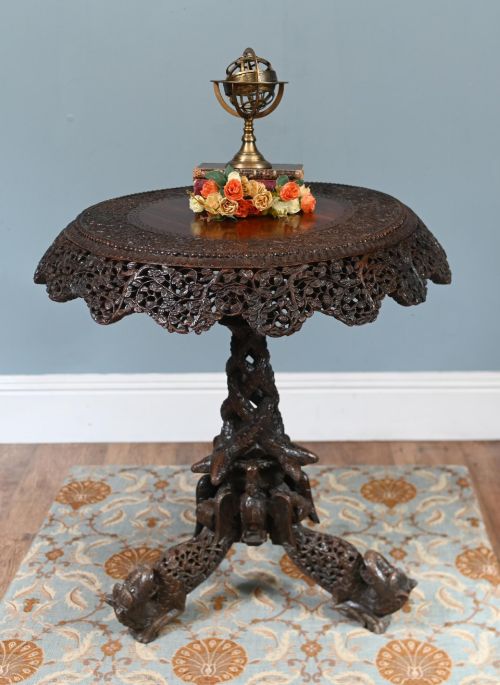
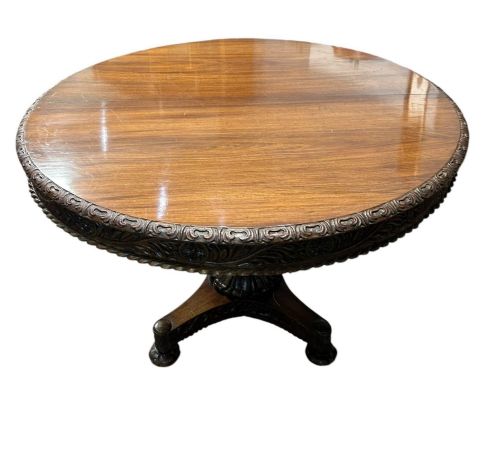
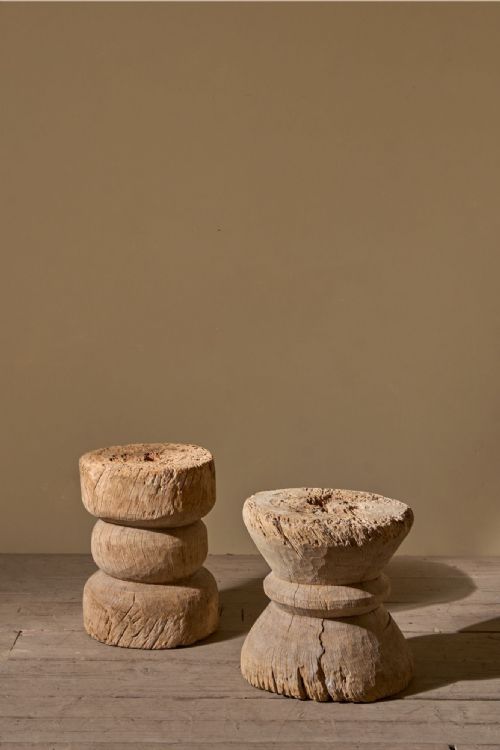
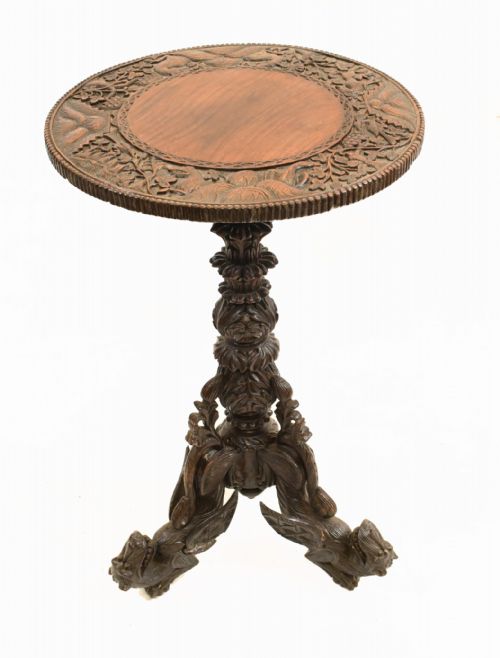
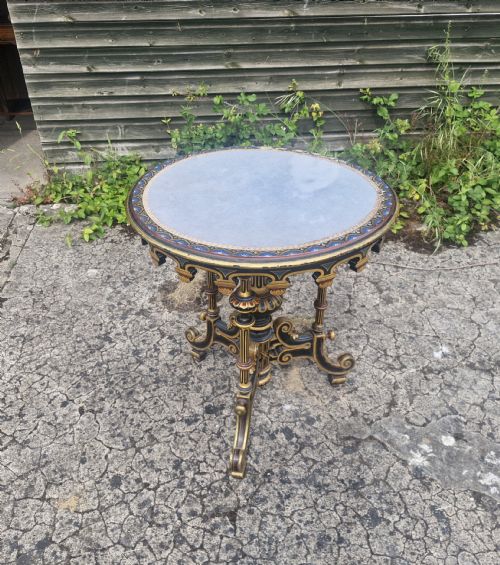
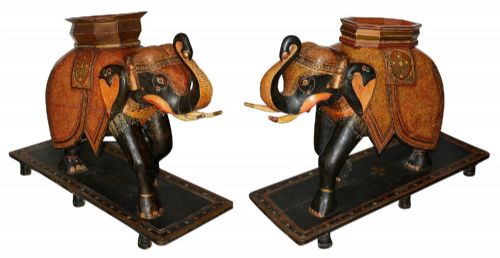
A hand carved pedestal table covers a diverse array of occasional, side, and centre tables originating from the nineteenth and early twentieth centuries. These tables frequently display detailed regional styles including Anglo-Indian, Anglo-Burmese, and rustic folk art forms.
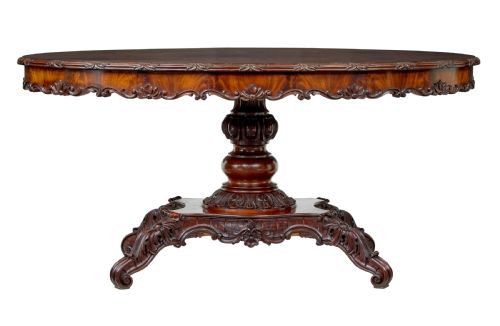
Buyers will encounter various timber forms ranging from compact plant stands to larger centre tables supported by central columns or pedestals. The selection reflects global colonial trade alongside European country house furniture traditions.
Makers utilised dense exotic hardwoods and native timbers to create functional surfaces featuring deep relief carving and figural supports. Each piece serves as both a practical table and a distinct sculptural object.
How they were made
Cabinet makers and regional artisans relied on solid hardwoods such as teak, mahogany, padauk, walnut, and rosewood for structural stability and carving depth. These dense timbers allowed craftsmen to execute deep undercutting and sharp relief details without splintering.
Construction techniques combined traditional joinery with extensive hand chiselling, gouging, and occasionally painted or lacquered surface decoration. Pedestal bases were typically turned on a lathe or constructed from multiple carved sections joined to a central column.
Hand Carved Pedestal Table Retail Price Guide 2026
Typical asking prices for hand carved pedestal table among the pieces listed under this phrase on Sellingantiques today, from the lower quarter to the upper quarter. They describe what is for sale here now, not the wider market.
Regional styles represented include Anglo-Indian, Anglo-Burmese, and rustic folk art traditions.
What varies in quality
Quality rests upon the depth, sharpness, and symmetry of the hand carving across the pedestal and top. Superior examples demonstrate confident execution where motifs like foliage, animals, and geometric patterns remain crisp and well-defined.
The choice of timber and the stability of the central pedestal connection dictate the overall integrity of the piece. Tables with dense padauk or teak construction and well-balanced pillar supports represent the finer tier of manufacture.
Liberty of London
The Hand Carved Pedestal Table Glossary
- Pedestal table
- A table supported by a single central pillar or column resting on a footed base. This form allows maximum legroom around the perimeter.
- Centre table
- A freestanding table designed to be viewed from all sides, traditionally placed in the middle of a room rather than against a wall.
- Anglo-Indian
- Furniture made in India by local craftsmen adapting traditional British forms to include intricate indigenous carving styles and exotic timbers.
- Padauk
- A heavy, durable tropical hardwood displaying rich red or brown tones, frequently utilised in colonial furniture production.
- Tilt top
- A table mechanism featuring a hinged top that can be tilted vertically for storage when not in use.
Hand Carved Pedestal Table: Frequently Asked Questions
Where should I place a pedestal table?
These tables suit hallways, drawing rooms, or corners where a freestanding piece can be viewed from multiple angles. Their compact footprints make them effective as lamp tables or plant stands.
Ensure the central pillar and feet sit level on your floor surface to maintain stability during daily use.
How do I care for carved wood surfaces?
Dust the intricate carvings regularly with a soft brush to prevent dirt accumulation in the recesses. Avoid harsh chemical polishes and keep the timber away from direct heat sources.
Applying a traditional beeswax occasionally helps preserve the natural lustre of the hardwood.
What defines Anglo-Indian furniture?
Anglo-Indian pieces combine British furniture shapes with traditional Indian woodcarving techniques and native timbers. These items emerged during the colonial period for export or use by British residents.
The resulting objects display dense floral, foliate, or animal motifs carved into dense woods like teak and padauk.
Are tilt top tables stable?
Tilt top tables utilise a catch mechanism beneath the surface to lock the top horizontally onto the pedestal base. When properly engaged, the top remains secure for normal display use.
Inspect the pivot block and latch periodically to ensure the mechanism operates smoothly.