



Hand Blown Carafe
A hand blown carafe is a functional vessel shaped by breath and iron, prized for serving wine or water with authentic period character.
Hand Blown Carafe
When searching for a hand blown carafe, buyers encounter a diverse range of forms including decanters, pitchers, ewers, and serving bottles. These vessels span from the eighteenth century through the Victorian and Edwardian eras, reflecting traditional craftsmanship across English, French, Scottish, and Bohemian origins.
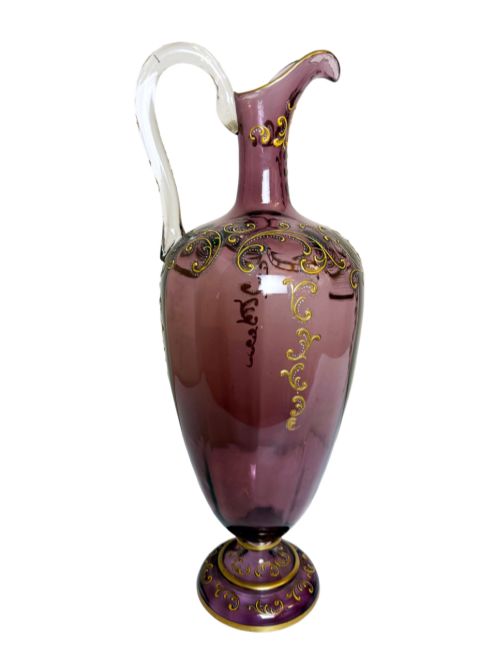
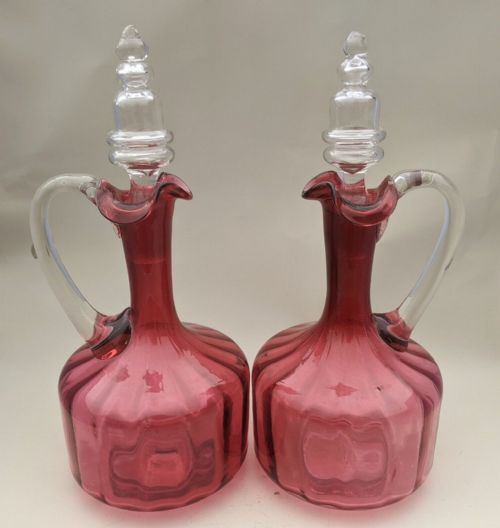
The most common versions met on this page belong to the Victorian and Edwardian periods, frequently appearing in clear glass, cranberry glass, and rich greens or blues. Forms range from simple shaft and globe shapes to sculptural animal designs and Arts and Crafts creations.
Makers and designers like James Powell and Archibald Knox occasionally emerge among these pieces, alongside regional styles such as Scottish Mell decanters and Bristol blue glass. Every hand blown carafe carries distinct markers of its era, from hand-painted gilt appliques to Mary Gregory enamel work.
Methods of production
Makers formed each hand blown carafe by gathering molten glass on a blowpipe and shaping it by hand, sometimes utilising optical moulds to create internal patterns. Artisans added handles, necks, and pours while the metal remained hot, resulting in subtle individual variations across every vessel.
Decoration involved techniques such as enamel painting, hand-painted gilt applique, and gold leaf application. Coloured glass varieties, including cranberry and blue glass, achieved their hues through specific mineral oxides added during the melting process.
One curious Victorian vessel takes the anatomical form of a dog, bringing canine charm directly to the dining table.
Distinctions in quality
Quality in a hand blown carafe rests upon the balance of the vessel, the clarity or depth of the glass, and the precision of the hand-applied decoration. Superior pieces display refined optical blowing, smooth pontil marks, and expertly executed enamel or gilt work.
The reputation of the maker or the specific stylistic movement, such as Arts and Crafts design, elevates certain examples above standard domestic wares. The integrity of the glass and the harmony of the overall form separate standard production items from exceptional workshop creations.
James Powell·Archibald Knox·Liberty
The Hand Blown Carafe Glossary
- Pontil mark
- The rough scar left on the base of a hand blown carafe where the punty rod was detached after forming. Its presence confirms traditional mouth-blown production methods.
- Ewer
- A large jug with a wide spout and handled shape, historically used for water or wine. Many Victorian examples function as decorative table service pieces.
- Optical blowing
- A technique where molten glass is inflated into a ribbed or patterned mould before final shaping, creating internal geometric effects. This method appears in Arts and Crafts decanters.
- Gilt applique
- Applied surface ornamentation in gold leaf or gold paint, frequently seen on nineteenth-century glass pitchers. It provides a decorative contrast to coloured glass.
Hand Blown Carafe: Frequently Asked Questions
What is a hand blown carafe used for?
These vessels served primarily for holding and pouring wine, water, or cider at the dining table. They combined utility with decorative presence in nineteenth-century domestic settings.
Collectors today utilise them for serving beverages or display them as examples of period glassmaking artistry.
How do I date a hand blown carafe?
Dating relies on observing stylistic markers, manufacturing techniques, and material colours characteristic of specific periods like the Victorian era or eighteenth century. Shape evolution, such as the shaft and globe form, offers additional chronological clues.
Makers' signatures, registered designs, or attribution to studios like Liberty help narrow the production timeframe further.
What is Mary Gregory glass?
Mary Gregory pieces feature distinctive white enamel hand-painted silhouettes, usually depicting children playing in natural settings. This decorative style gained popularity during the Victorian period on coloured glass grounds.
Such vessels appear frequently as ewers, water jugs, and decorative decanters.
How should I clean my antique glass?
Wash glass vessels gently by hand using warm water and mild detergent, avoiding sudden temperature changes that can stress old material. Soft cloths help preserve delicate gilt appliques and enamel work.
Harsh scrubbing agents and dishwashers must be avoided to protect the historic surface finish.