




Engraved Glass Flask
An engraved glass flask is a portable vessel of cut, ruby, or amethyst glass paired with silver, leather, or wrought iron, combining utility with fine decorative work.
Engraved Glass Flask
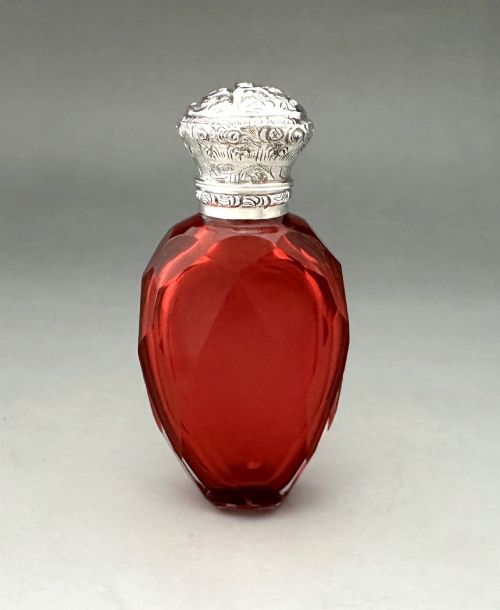
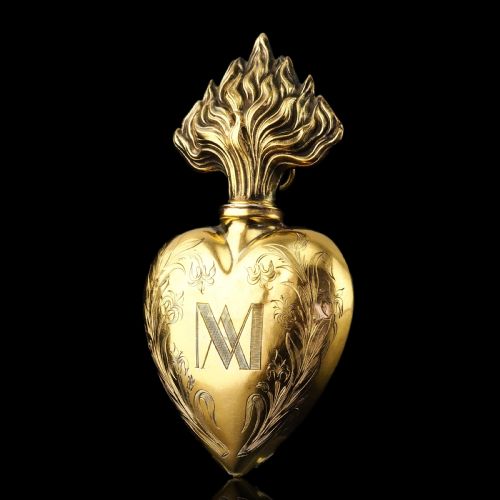
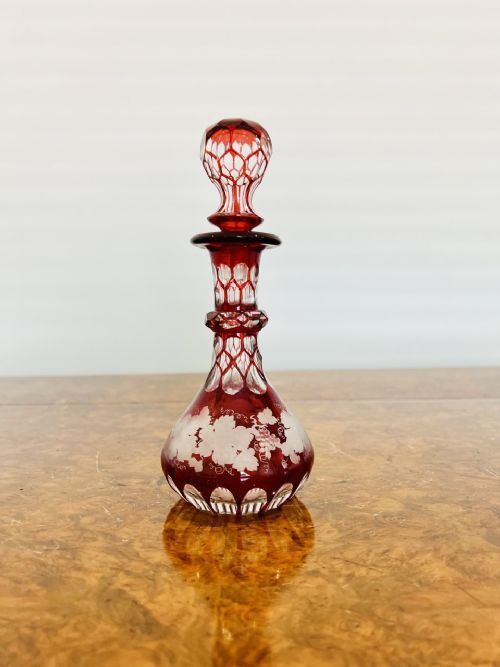
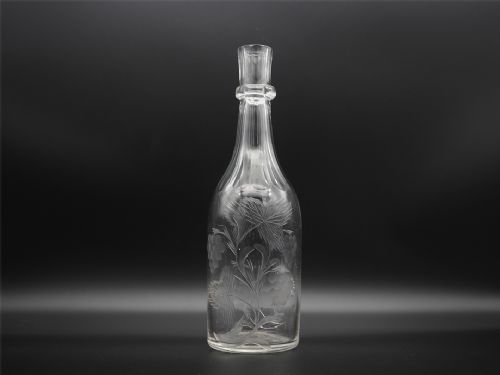
When you search for an engraved glass flask, you are looking at small portable containers and larger dispensing vessels produced across the Georgian, Victorian, and Edwardian eras. The examples seen on this page span several specific forms, including perfume and scent bottles, hip flasks, spirit dispensers, decanters, and a travelling communion set.
The most frequent versions you will meet are Victorian and 19th-century scent bottles and perfume flasks, often featuring cut glass or coloured glass bodies paired with silver, silver gilt, or sterling silver mounts. Alongside these personal items, the selection includes Georgian serving bottles and gimmel flasks, as well as Edwardian leather-covered hip flasks and Art Nouveau wine dispensers.
Origin and period vary across the inventory, ranging from mid-18th-century Georgian Jacobite pieces to late-Victorian London-made spirit flasks and 19th-century French silver gilt items. These pieces served diverse daily and ceremonial functions, from personal fragrance and spirit storage to travelling religious service use.
How they were made
Glass production for these flasks relies on lead glass and cut glass techniques, sometimes utilising ruby or amethyst coloured glass bodies that are subsequently wheel-engraved, etched, or cut with geometric and floral motifs. Artisans shaped the vessels by blowing and moulding the glass before applying surface decoration.
Metalwork forms an integral part of construction, utilising sterling silver, silver gilt, and silver plating for caps, screw tops, collars, and full protective cases. Metal components frequently feature hand-engraved detail or chased ornament, while other pieces incorporate fitted leather coverings or wrought iron stands.
The listings on this site span Victorian, Georgian, and Edwardian periods, utilising lead glass, ruby glass, sterling silver, and leather.
What varies in quality
Quality rests in the crispness of the glass cutting and the depth and clarity of the hand engraving upon both the crystal and the metal mounts. Finer pieces demonstrate precise facet-cutting and detailed wheel-engraving that remains sharp and well-defined.
The choice of materials and the integration of components also separate examples, with solid silver gilt, sterling silver housings, and coloured glass indicating higher production standards than plated alternatives. Maker marks, such as those by S. Morden & Co, add verifiable provenance and craftsmanship to the metal elements.
S. Morden and Co
The Engraved Glass Flask Glossary
- Gimmel flask
- A double-chambered glass vessel joined together, designed to hold two different liquids simultaneously. These Georgian pieces often feature engraved glass decoration.
- Silver gilt
- Silver that has been coated with a thin layer of gold on its surface. This technique provides the rich appearance of solid gold while utilising a silver base.
- Lead glass
- Glass manufactured with lead oxide added to the silica, potash, and lead mixture. This composition increases clarity, weight, and brilliance, making it ideal for deep cutting and engraving.
- Double ended scent bottle
- A container featuring two separate compartments accessed from opposite ends, typically used for carrying two different perfumes or smelling salts.
- Spirit flask
- A pocket-sized container designed for carrying potable liquor, frequently encased in leather or fitted with a silver cup base.
Engraved Glass Flask: Frequently Asked Questions
What is a gimmel flask used for?
A gimmel flask consists of two interlinked glass chambers designed to hold two separate liquids, such as different spirits or perfumes, within a single portable object. These Georgian vessels showcase specialised glassblowing skills.
They were carried or displayed as novelties and serving vessels, allowing a host or traveller to dispense two distinct contents from one piece.
How do I date an engraved glass flask?
Dating relies on examining the combination of glass manufacturing style, cutting techniques, and metal hallmarks present on the mounts. Georgian pieces often display specific wheel engraving like Jacobite motifs, while Victorian items frequently incorporate coloured glass and heavy silver work.
Silver mounts often carry assay office marks and date letters that pinpoint the exact year of manufacture.
What is ruby glass?
Ruby glass is a deep red coloured glass produced by adding gold or copper compounds to the molten batch during manufacturing. It achieved popularity during the Victorian period for decorative scent bottles and tablewares.
The rich colour provides a strong contrast when combined with engraved patterns and silver mounts.