




Hand Blown Blue Glass
These hand blown blue glass pieces range from Georgian tableware to Venetian figures, offering vibrant colour and historic craftsmanship for the home.
Hand Blown Blue Glass
Hand blown blue glass encompasses a diverse range of historic tableware, decorative bowls, and sculptural objects spanning the eighteenth century through to the twentieth century. When searching for hand blown blue glass, buyers encounter domestic items such as wine glasses, decanters, cream jugs, and sugar bowls alongside ornamental pieces like posy vases and animal sculptures.
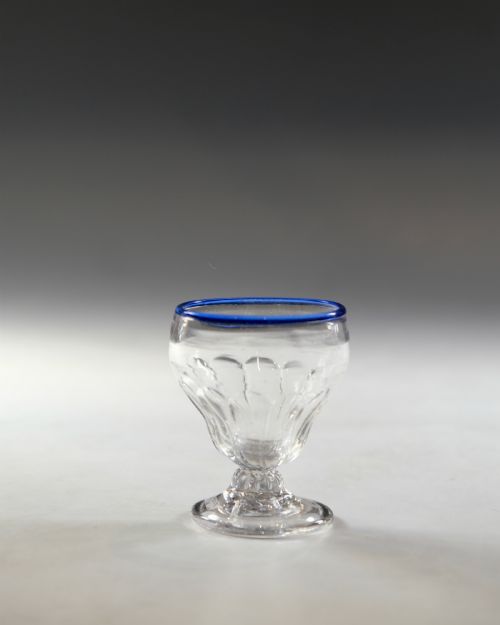
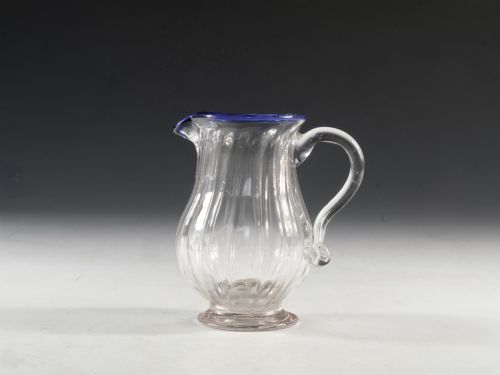
The domestic vessels originate primarily from English and Scottish makers, featuring deep cobalt hues, turquoise shades, and delicate blue rims on clear metal. Meanwhile, the decorative objects showcase Continental techniques from Venetian workshops and early twentieth-century studio glass traditions.
Georgian examples lean towards functional forms like wrythened egg cups and tankards, whereas later Victorian and Edwardian periods favour tall wine goblets and posy vases. Across all eras, the appeal lies in the rich coloration achieved through historic glassmaking methods.
What varies in quality
Quality in these pieces is dictated by the fineness of the metal, the balance of the form, and the skill evident in the manipulation of the hot material. Earlier examples often display the characteristic pontil mark on the base, showing where the glass was snapped off the punty rod after blowing.
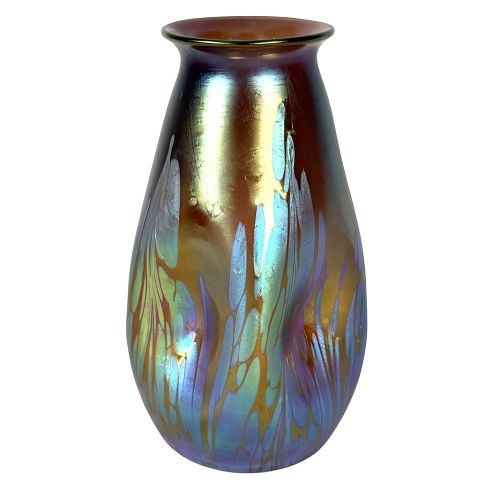
Superior items maintain symmetry in free-blown vessels and precision in decorative applications like handles and rims. The depth and consistency of the blue colour, whether uniform or iridescent, further distinguishes standard production items from finer studio and factory pieces.
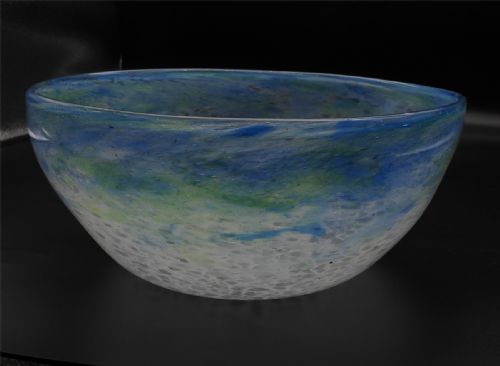
The object forms span functional tableware like decanters and wine glasses alongside decorative bowls, jugs, and sculptural figures.
Salviati·Monart Glass·Napoleone Martinuzzi
The Hand Blown Blue Glass Glossary
- Pontil mark
- The rough scar left on the base of a blown glass vessel where the punty rod was attached during manufacture. Its presence indicates traditional hand-blown production methods.
- Wrythen
- A decorative spiral or rib pattern formed by twisting the glass while hot. This technique is frequently seen on Georgian tableware.
- Cane glass
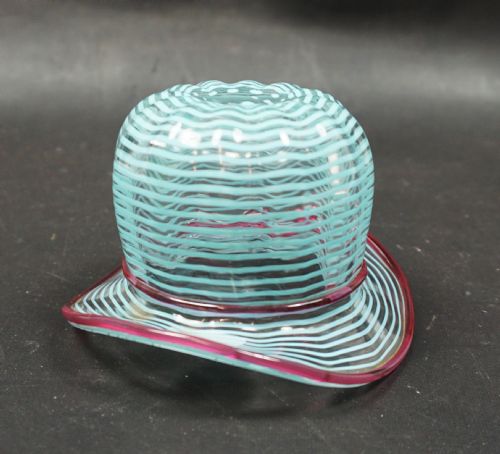
- Glass incorporating coloured rods or threads fused into the body during the blowing process. This creates linear patterns within the object.
- Iridescent glass
- Glass treated with metallic salts to produce a rainbow sheen on the surface. This effect is particularly prominent in twentieth-century studio pieces.
Hand Blown Blue Glass: Frequently Asked Questions
What is Bristol blue glass?
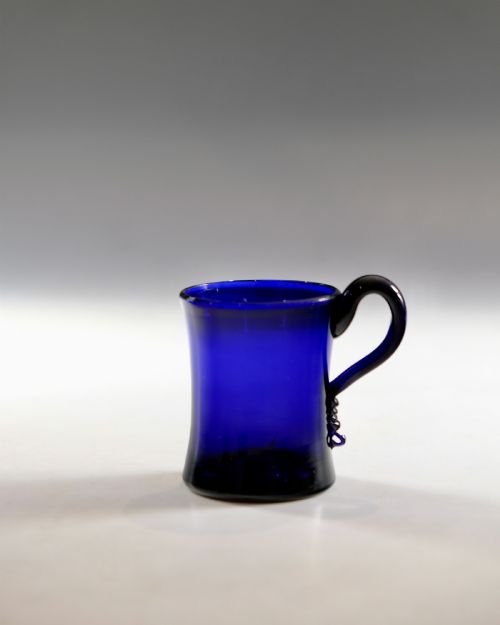
Bristol blue glass refers to deep cobalt blue glassware traditionally associated with production in the West of England during the eighteenth and nineteenth centuries. The intense colour comes from the inclusion of cobalt oxide in the glass batch.
While much of it was made in Bristol, similar deep blue vessels were produced in other English and Scottish glasshouses of the period.
How do I date old blue glass?
Dating involves examining the form, the weight of the metal, and the base for pontil marks which indicate hand-blowing techniques. Georgian and Victorian pieces often show distinct stylistic traits such as thick rims, heavy lead content, or specific decorative motifs like wrythen ribs.
Comparing the object type against known manufacturing periods helps narrow down the decade of origin.
Are these pieces dishwasher safe?
Historic hand blown blue glass is delicate and requires careful hand washing in lukewarm water with mild soap. Sudden temperature changes can cause thermal shock, leading to cracks in antique metal.
Harsh detergents and modern dishwashers will damage the surface finish and any enamel or applied details.
What is Nailsea glass?
Nailsea glass originates from the Somerset glassworks active from the late eighteenth to the mid nineteenth century. It is traditionally known for whimsical items and decorative patterns incorporating white and coloured glass loops.
Pieces attributed to this origin often include items like glass hats and flasks featuring distinctive cane decoration.