
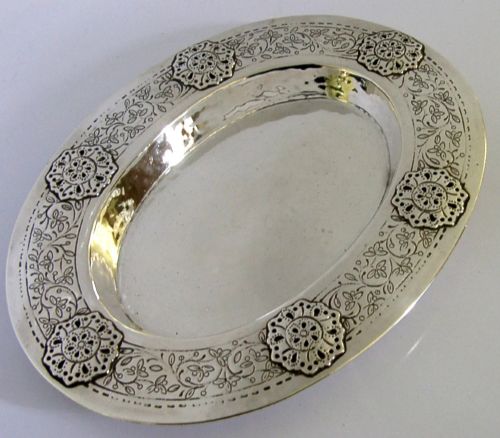
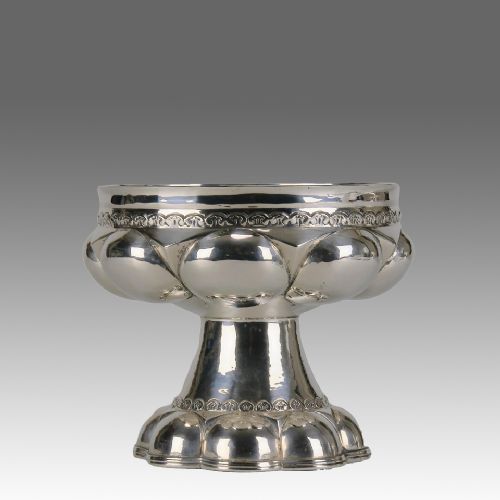
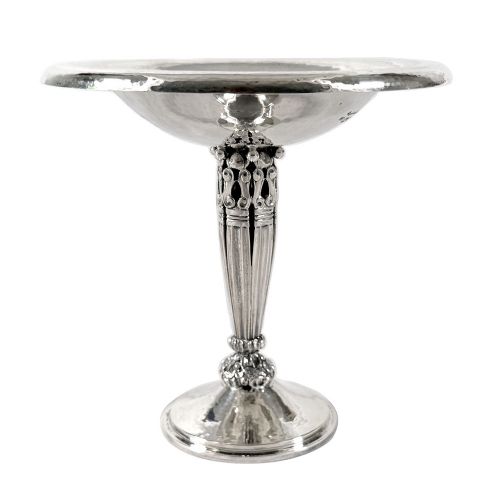


Hammered Sterling Silver Bowl
A hammered sterling silver bowl brings tactile warmth to a room through the rhythmic marks of the maker's hammer.
Hammered Sterling Silver Bowl
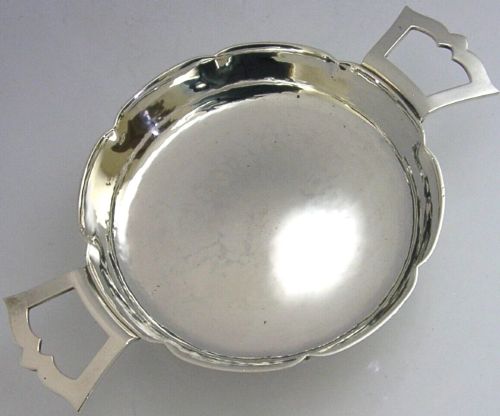
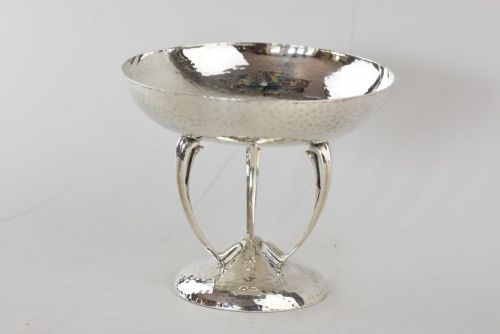
A hammered sterling silver bowl typically emerges from early twentieth-century British workshops influenced by the Arts and Crafts movement or Art Deco design. These vessels take various forms including footed quaich cups, small tazzas, wine tasters, and sugar bowls produced in sterling silver.
The pieces on this page span from the Edwardian era through the nineteen-sixties, capturing a long tradition of hand-raised metalwork. Buyers encounter both utilitarian dishes and decorative chalices bearing British hallmarks from London, Birmingham, and Edinburgh.
Makers working in this style prioritise visible craftsmanship over machine perfection, resulting in distinctive surface textures. Each vessel reflects the specific aesthetic choices of its decade, shifting from rustic Arts and Crafts ideals to cleaner geometric lines.
Materials and construction
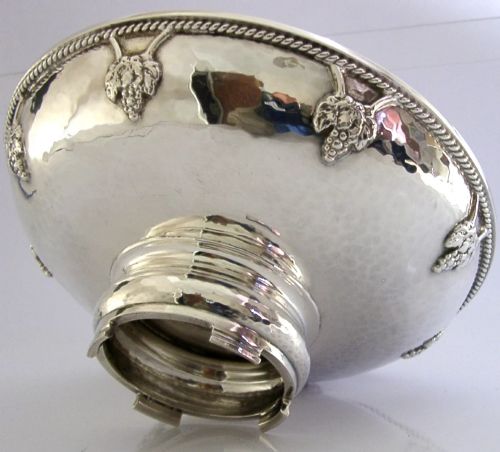
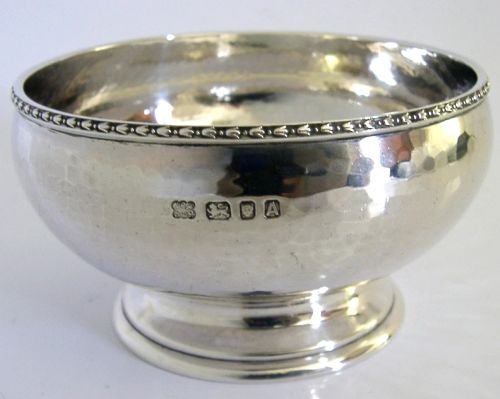
Silversmiths shape these bowls from sheets of sterling silver using hammers to raise the metal from a flat disc into a hollow form. This traditional process leaves small, intentional indentations known as planished marks across the surface.
Workshops often mount these vessels on three legs or small pedestals, or finish them with applied wire rims and cast handles. The combination of hand-beaten textures and polished highlights defines the physical character of each piece.
Silversmiths occasionally left their personal tool marks hidden beneath the base, a quiet signature of the bench worker.
Judging quality and execution
Quality rests upon the regularity and control of the planished surface marks, where skilled hammering creates a uniform rhythm across the silver. The weight of the metal relative to the size of the bowl also indicates the standard of production.
The distinction between workshop pieces and standard commercial output lies in the crispness of the hand-finishing and the integrity of the form. Well-balanced proportions and clear hallmarks add to the desirability of an individual vessel.
R E Stone·A E Jones·Goldsmiths and Silversmiths Company·Liberty and Co·Nathan and Hayes·Charles Boyton·John Barrett
The Hammered Sterling Silver Bowl Glossary
- Planishing
- The process of smoothing and shaping sheet metal with a light hammer, leaving a patterned texture of flat facets across the sterling silver surface.
- Quaich
- A traditional Scottish two-handled drinking vessel often adapted into a shallow bowl form with flat lugs.
- Tazza
- An ornamental chalice or shallow bowl raised upon a high foot or pedestal base.
- Sterling silver
- An alloy containing a fixed proportion of pure silver and other metals to ensure durability for tableware and decorative objects.
- Hallmark
- A series of official marks stamped on precious metals indicating the standard of purity, the assay office, and the year of manufacture.
Hammered Sterling Silver Bowl: Frequently Asked Questions
How do I clean a hammered silver bowl?
Use a soft cloth with a mild silver polish designed to preserve the delicate texture of the metal. Avoid abrasive pads that might damage the antique finish.
Take care around raised hallmarks and deep hammer marks where polish residue can accumulate over time.
Are these bowls safe for food use?
Most sterling silver vessels are suitable for serving dry foods or sugar cubes. Acidic foods should not remain in contact with the metal for extended periods.
Hand washing in warm soapy water immediately after use keeps the silver in stable condition.
What is the difference between Arts and Crafts and Art Deco styles?
Arts and Crafts pieces emphasise visible hand-hammering and organic forms inspired by medieval traditions. Makers working in this idiom celebrate the tactile evidence of manual labour.
Art Deco designs favour streamlined symmetry and geometric precision, moving away from rustic textures toward smooth modernism.
How do I date an unmarked or worn piece?
Examine the stamped hallmarks for standard assay office symbols and date letters that correspond to British registry records. Stylistic details such as foot styles and handle shapes offer further clues.
Consulting specialist reference books helps narrow down the decade of production when stamps are partially rubbed.