


Hammered Brass Coal Scuttle
A hammered brass coal scuttle brings bright metallic warmth to a hearth while keeping fuel close to the fire.

Hammered Brass Coal Scuttle
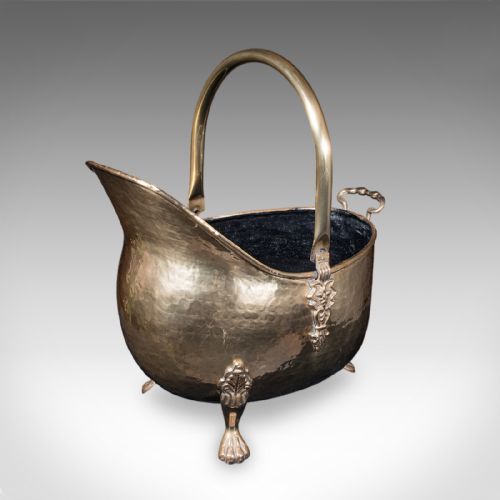
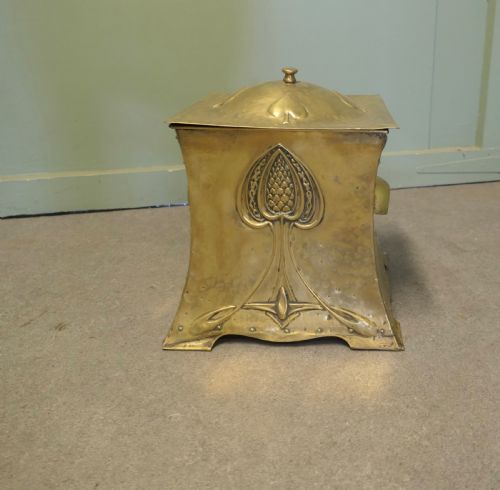
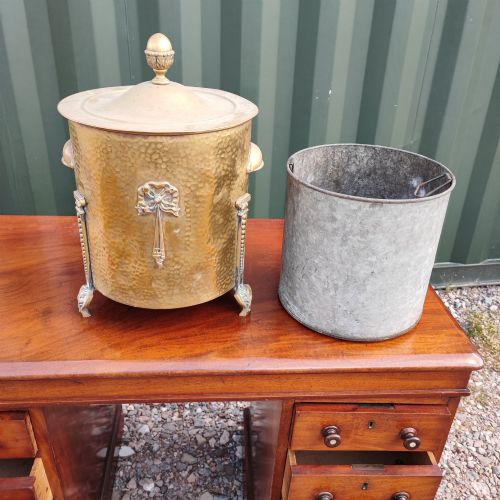
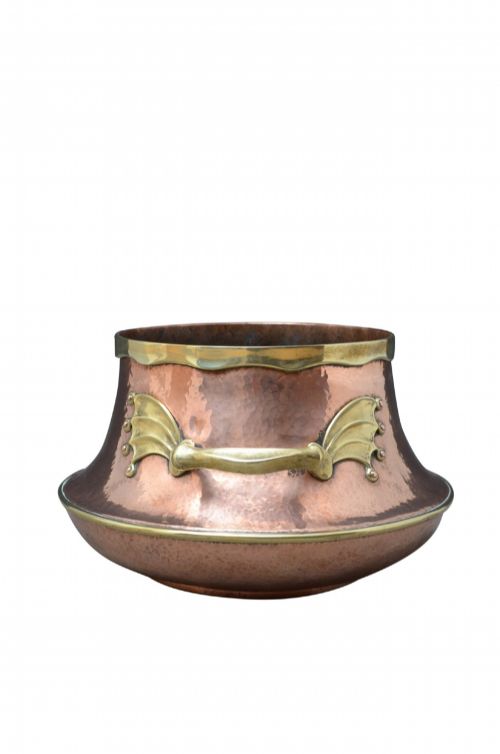
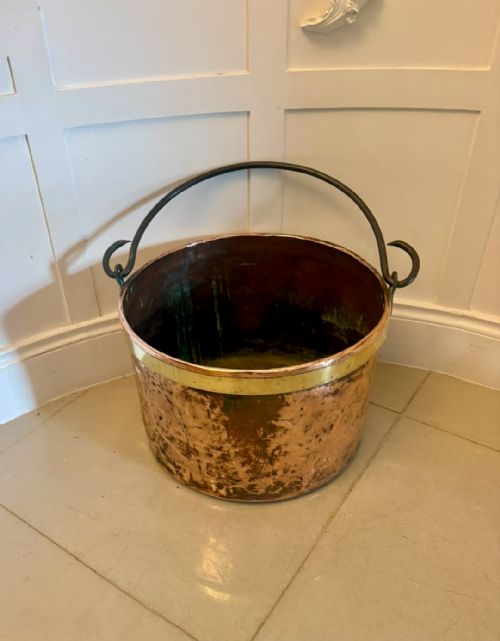
A hammered brass coal scuttle is a practical hearth accessory designed to hold solid fuel for domestic fires. The pieces found here span the Victorian period through to the early twentieth century, taking forms such as helmet scuttles, boxes, bins, and cauldrons.
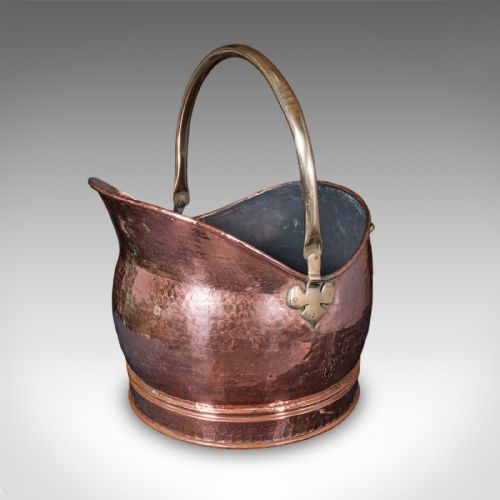
The most common version met on this page is the Victorian helmet-shaped coal scuttle, often paired with a matching shovel. These vessels combine functional storage with decorative metalwork suited to period fireplaces.
Makers and craftsmen of the nineteenth and early twentieth centuries produced these items in various styles, including Victorian, Arts and Crafts, and Art Nouveau. Alongside brass, these containers frequently incorporate copper, iron, and wood.
How they were made
Makers fashioned these vessels primarily from sheet brass and copper, sometimes integrating iron, galvanised metal, and wood for structural stability. Metalworkers used hand-beating and riveting techniques to join the components and create textured surfaces.
The characteristic hammered or hand-beaten texture results from skilled work with hammers and stakes, shaping the metal sheet into robust containers like buckets, bins, and helmet scuttles. Rivets secure handles and seams, adding both utility and visible industrial detail.
Listings span periods from the mid-nineteenth century through the 1930s, featuring Victorian, Arts and Crafts, and Art Nouveau styles.
What varies in quality
Quality in these pieces depends upon the weight of the metal used and the crispness of the hand-beaten hammering. Heavier gauge brass and copper provide structural integrity that resists denting and maintains its shape over generations of hearthside use.
Attention to detail in construction, such as solid riveting, original fixings, and well-fitted handles, separates standard utility items from finer decorative examples. The presence of matching original shovels and well-executed stylistic motifs further distinguishes superior pieces.
Henry Loveridge
The Hammered Brass Coal Scuttle Glossary
- Helmet scuttle
- A traditional coal container featuring a flared rim resembling a classical helmet, designed for easy pouring of fuel.
- Dinanderie
- A term for objects made of brass, copper, or bronze, often associated with vessel production and decorative metalwork.
- Arts and Crafts
- A design movement prioritising handcraftsmanship, simple forms, and visible honest construction over mass production.
- Cauldron
- A round, deep metal vessel with a wide opening, frequently utilised for holding logs or coal beside the hearth.
Hammered Brass Coal Scuttle: Frequently Asked Questions
What is a helmet coal scuttle?
A helmet coal scuttle is a deep metal container shaped with a flared lip and a raised handle to direct coal cleanly into a grate.
These pieces combine functional fuel storage with decorative brass and copper surfaces suited for period fireplace settings.
How do you clean brass scuttles?
Cleaning involves dusting the metal surface and using appropriate polishes if a bright finish is desired. Many collectors prefer to leave an aged patina rather than polishing the brass to a mirror shine.
Harsh abrasives can damage hand-beaten textures and remove historical wear that shows the age of the piece.
What styles are common?
The listings show strong representation from the Victorian era alongside Arts and Crafts and Art Nouveau designs. Victorian pieces often favour helmet shapes, while Arts and Crafts examples display hand-beaten surfaces and plant motifs.
Styles span from mid-nineteenth-century forms through to early twentieth-century decorative vessels.
Were these used only for coal?
While designed primarily for coal storage, these vessels also served as log bins and fire kindling holders. Today, many find new purpose as planters, jardinieres, or general fireside storage containers.
The durable metal and wood construction accommodated heavy solid fuel without sustaining damage.