



Victorian Brass Coal Helmet
A victorian brass coal helmet brings functional nineteenth-century hearth metalwork directly to the fireside.
Victorian Brass Coal Helmet
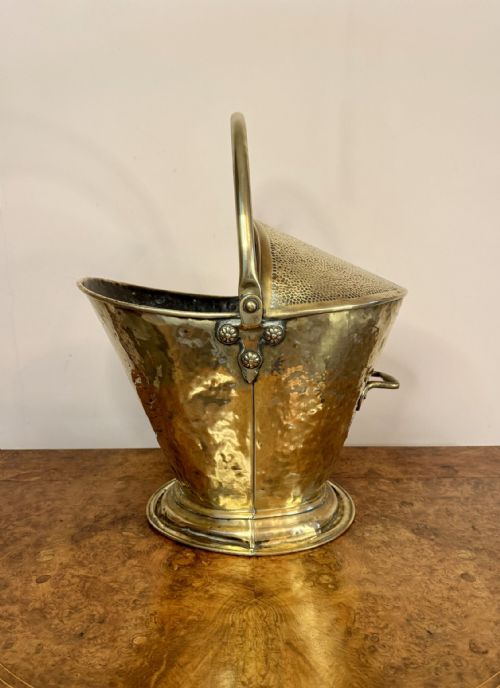
A victorian brass coal helmet is a fireside vessel designed to hold solid fuel close to the fireplace. These objects take their name from their distinctive sloped profile, resembling a traditional headpiece, which allowed fuel to pour out easily from the mouth. The selection on this page centres on nineteenth-century examples, spanning periods from the mid-Victorian decades through to the Edwardian era.
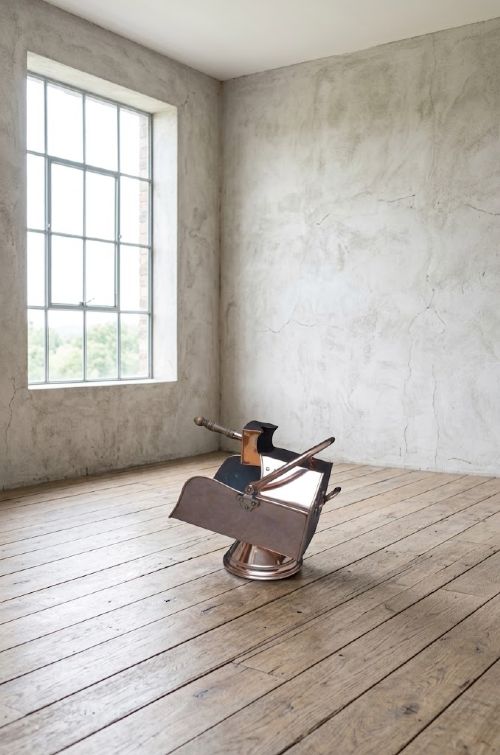
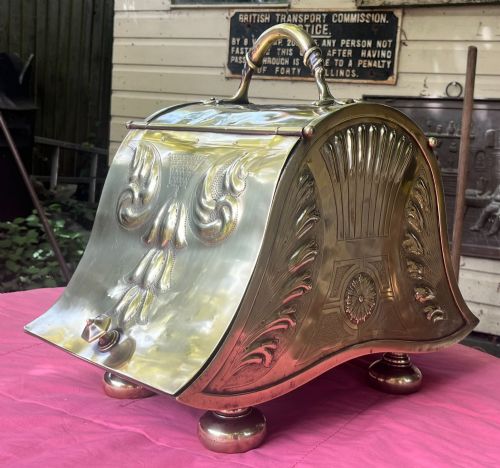
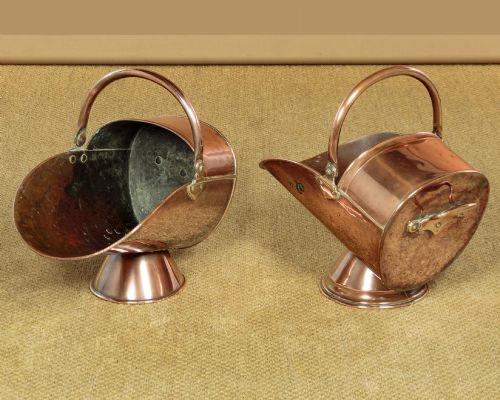
Forms vary from classic helmet shapes with swing handles to curved scuttles, buckets, and hods. Many pieces appear in polished brass or hammered copper, frequently accompanied by an original brass shovel or scoop housed in a side bracket. Alongside standard domestic scuttles, related hearth forms and umbrella stands also emerge within these materials.
How They Were Made
Makers utilised sheet brass and copper, hammering, spinning, or pressing the metal into rigid helmet contours. Rivets, seams, and soldered joints held the bodies together, while turned wood, ebonised wood, or ebony provided insulated grips on handles.
Iron components frequently formed internal frames or base plates to add necessary weight and stability. Decorative surface work involved embossing or polished finishes, highlighting the warm metallic tones of the brass and copper.
Victorian Brass Coal Helmet Retail Price Guide 2026
Typical asking prices for victorian brass coal helmet among the pieces listed under this phrase on Sellingantiques today, from the lower quarter to the upper quarter. They describe what is for sale here now, not the wider market.
Listings feature items dated from eighteen-fifty through the Edwardian period, constructed in brass, copper, iron, and ebonised wood.
What Varies in Quality
Gauge thickness separates heavier utility vessels from thinner domestic pieces, with substantial gauge metal resisting dents and distortion from daily hearth use. Solid construction extends to the integrity of handles, mounts, and riveted joints.
The presence of matching original shovels and crisp, hand-finished embossing elevate standard production items. Maker marks from established metalwork firms also distinguish workshop output.
Benham And Froud·Henry Loveridge
The Victorian Brass Coal Helmet Glossary
- Coal helmet
- A metal fireside container featuring a flared, sloped opening designed for carrying and pouring fuel. The shape echoes traditional headwear, combining practical function with hearth display.
- Coal scuttle
- A general term for a bucket or bin used to store coal near a fireplace. These containers often include a swing handle and a flat base for stability.
- Ebonised wood
- Timber treated with a dark stain or finish to imitate ebony. This material frequently appears on the handles and grips of metal fireside pieces.
- Hearth accessory
- Any portable metal or wood item used around the fireplace for fuel storage and fire maintenance. Examples include shovels, coal buckets, and companion sets.
- Sheet brass
- Flat rolled alloy of copper and zinc cut and formed into shaped vessels. It provides both structural rigidity and a bright reflective surface.
Victorian Brass Coal Helmet: Frequently Asked Questions
How were these helmets used?
These vessels transported coal from an outdoor cellar or scullery directly to the living room fireplace. The sloped mouth allowed fuel to slide out cleanly into the grate without spilling.
They sat permanently beside the hearth as functional furniture, keeping solid fuel ready for stoking the fire throughout the day.
Are original shovels common?
Original shovels survive with some pieces, often sliding into a dedicated vertical sleeve or bracket attached to the side or back of the body. Many vessels lost their matching scoops over decades of domestic use.
Finding a scuttle complete with its original shovel adds considerable interest for collectors seeking a matched fireside set.
How do you clean brass and copper?
Regular dusting with a soft cloth maintains the surface finish of nineteenth-century metalwork. Traditional cleaning methods involved mild polishes, though many collectors prefer preserving a mellow patinated surface.
Harsh chemical abrasives should be avoided to protect the original sheet metal and embossed details from excessive wear.