
Hallway Coat Pegs
These hallway coat pegs are solid timber wall fixtures and freestanding stands designed to organise outerwear in domestic spaces.
Hallway Coat Pegs
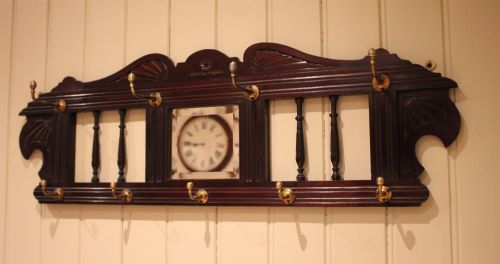
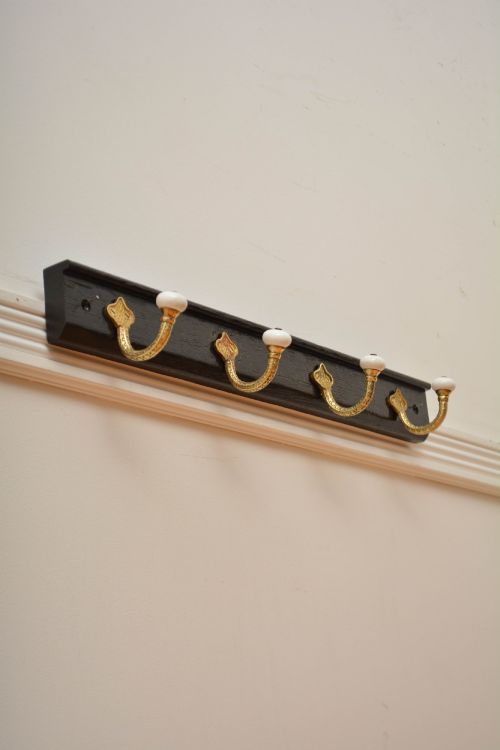
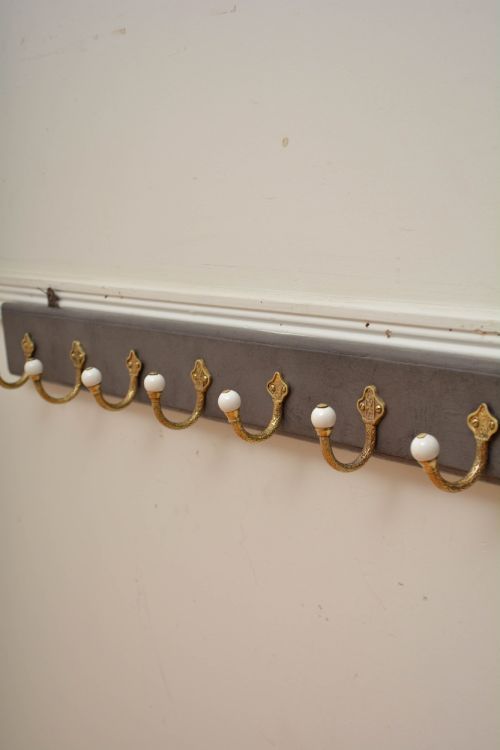
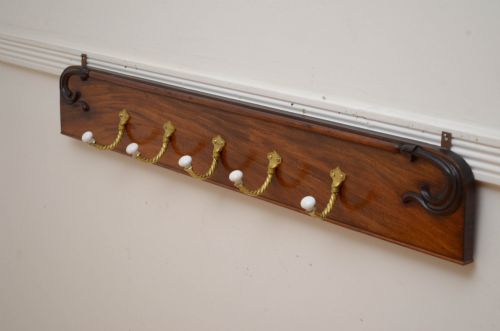
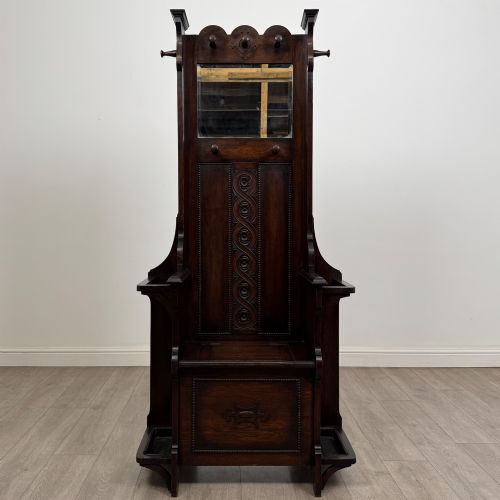
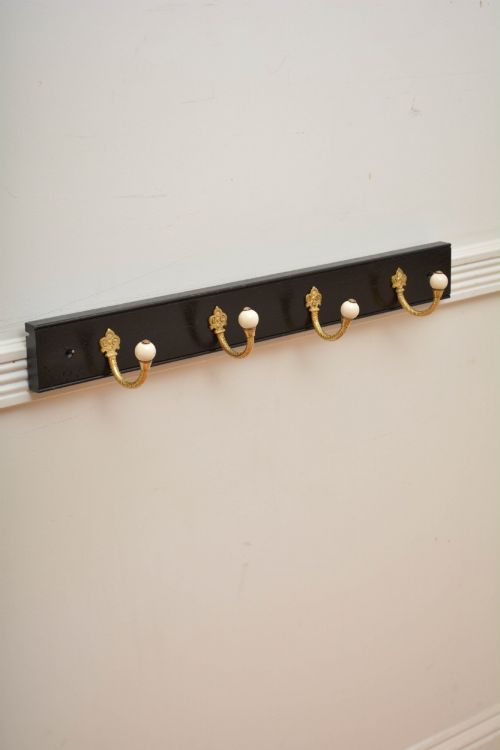
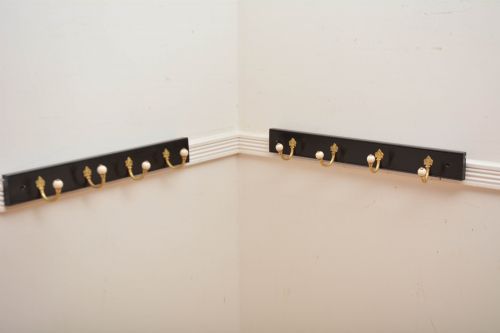
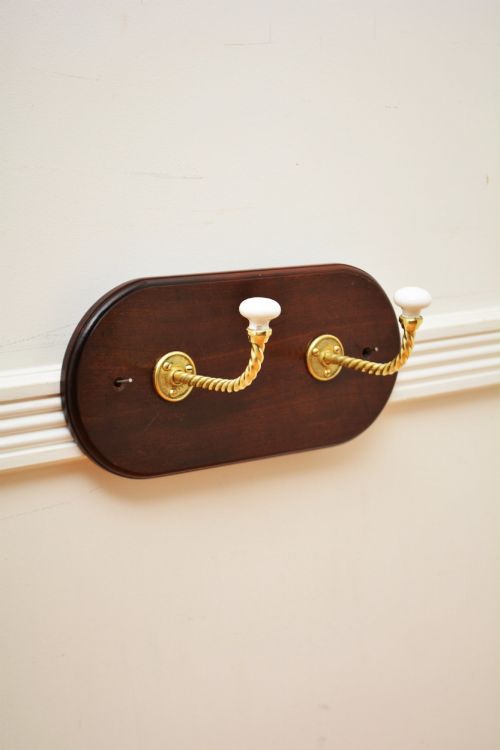
Hallway coat pegs appear predominantly as wall-mounted rails and larger hall stands originating from the Victorian and Edwardian periods. Timber backboards typically carry brass, ceramic, or porcelain hooks arranged singly or in rows.
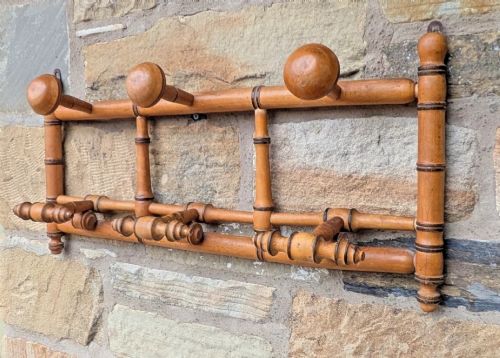
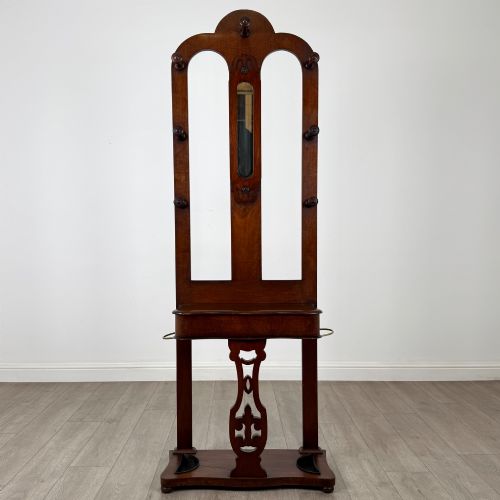
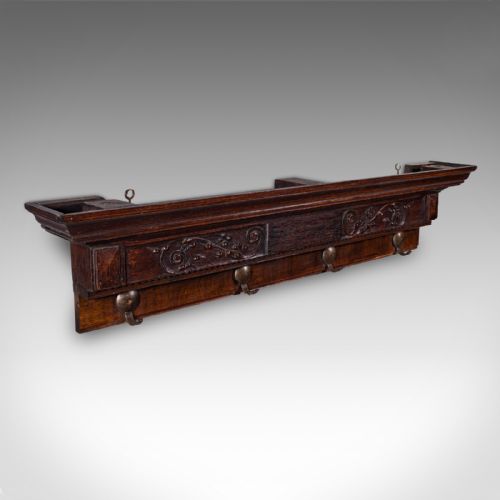
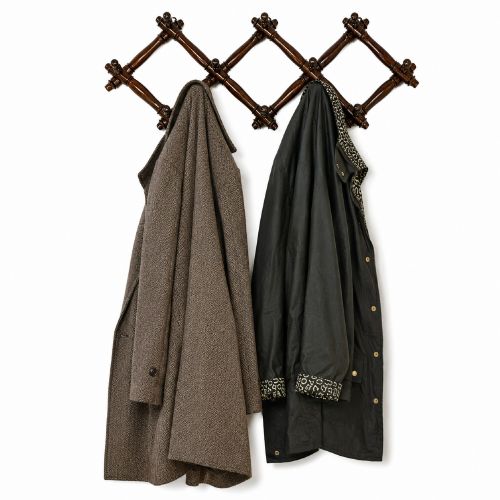
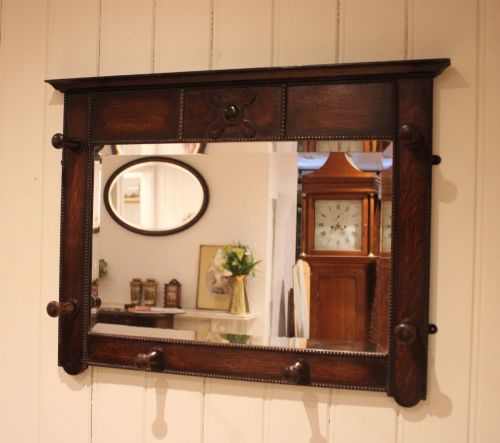
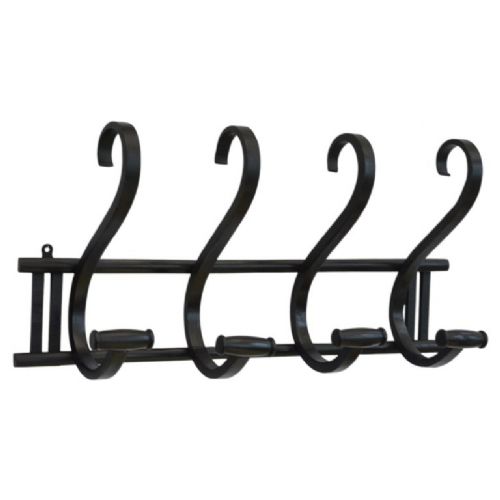
The selection ranges from compact oak and mahogany wall racks to substantial hall stands combining mirrors, umbrella stands, and coat hooks. Examples span the nineteenth and early twentieth centuries, including French provincial and bentwood designs.
Buyers encounter single pairs of brass hooks alongside long reception valets fitted with multiple hanging points. These fixtures serve everyday domestic utility while retaining period character.
Materials and Construction
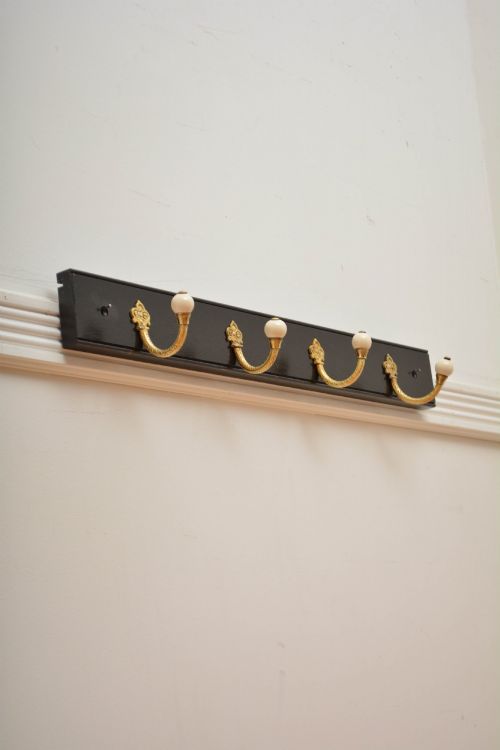
Maker construction relies heavily on hardwoods such as mahogany, oak, and beech, frequently mounted with cast brass and ceramic elements. Ebonised finishes and bentwood techniques appear across nineteenth-century and turn-of-the-century items.
Metalwork utilises cast bronze and brass, often paired with porcelain knobs or ceramic inserts on individual hooks. Backboards are shaped from solid pine, oak, or mahogany, secured to walls via integrated mounting plates.
Certain Victorian hall stands integrated barometers so Victorians could check the weather precisely as they picked up their hats.
Assessing Quality and Execution
Quality rests in the casting detail of the metalwork and the weight of the timber backboard. Finer examples feature crisply chased brass hooks and robust hardwood mounts rather than thin pine or pressed metal.
The integrity of the fixture depends on original ceramic knobs remaining intact and securely fastened to sturdy brass brackets. Substantial joinery and well-defined mouldings separate superior pieces from standard utility items.
The Hallway Coat Pegs Glossary
- Hall Stand
- A large piece of hall furniture combining coat hooks, a central mirror, and often umbrella storage. These items anchor the entranceway of period properties.
- Bentwood
- Wood softened by steam and bent into curved shapes, commonly utilised in nineteenth-century coat racks and stands. Thonet pioneered much of this production.
- Ebonised
- Timber treated to resemble ebony through staining or painting black. This finish highlights the polished brass and ceramic fittings mounted upon it.
- Backboard
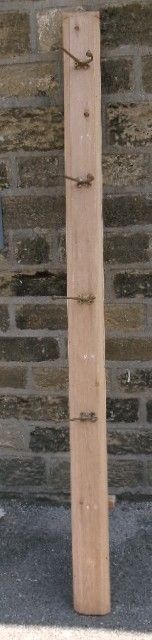
- The horizontal or vertical strip of wood supporting the individual coat hooks. It distributes the weight of garments across the wall fixings.
Hallway Coat Pegs: Frequently Asked Questions
How do I mount a wooden coat rack?
Secure the backboard directly into wall studs or use appropriate heavy-duty wall anchors suitable for the weight of the timber.
Ensure the mounting plates or screw holes align properly to support the load of heavy winter garments.
How do I clean antique brass hooks?
Remove dust with a soft, dry cloth and avoid harsh chemical abrasives that strip the aged patina.
Preserving the natural surface oxidation maintains the authentic character of nineteenth-century hardware.
Can these pegs support heavy coats?
Solid hardwood rails fixed correctly to a wall easily support heavy winter overcoats and cloaks.
Older pieces with robust brass or bronze hooks fastened to oak or mahogany backboards offer dependable structural strength.