
Wooden Coat Hooks
Solid wooden coat hooks bring utilitarian warmth to an entrance hall, combining sturdy timber backboards with functional hanging points.
Wooden Coat Hooks
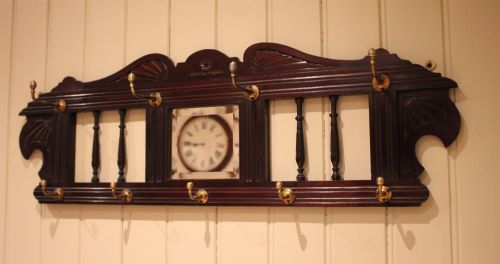
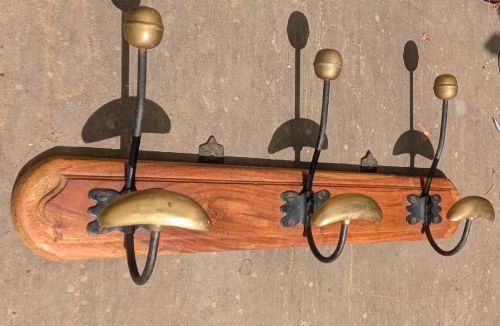
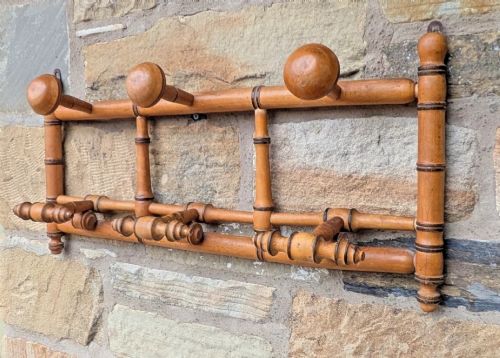
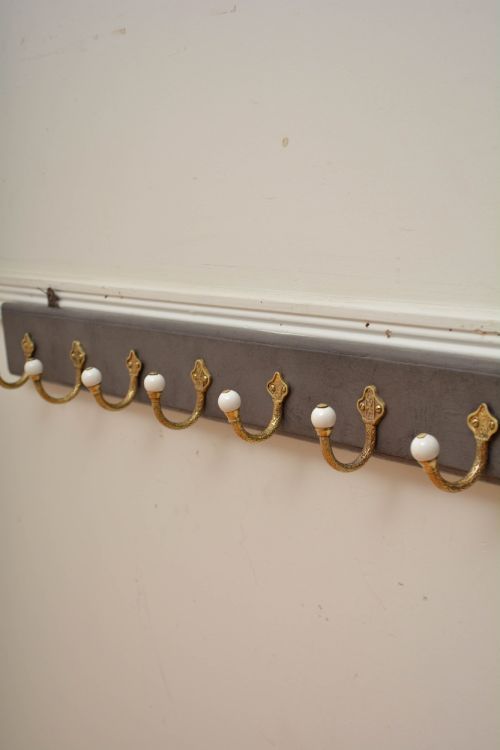
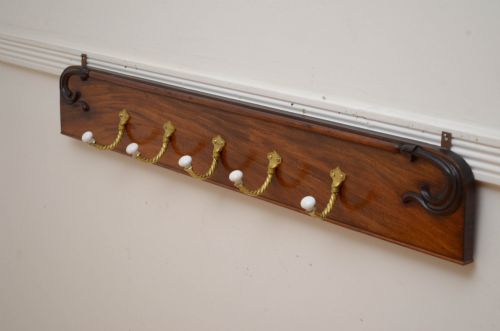
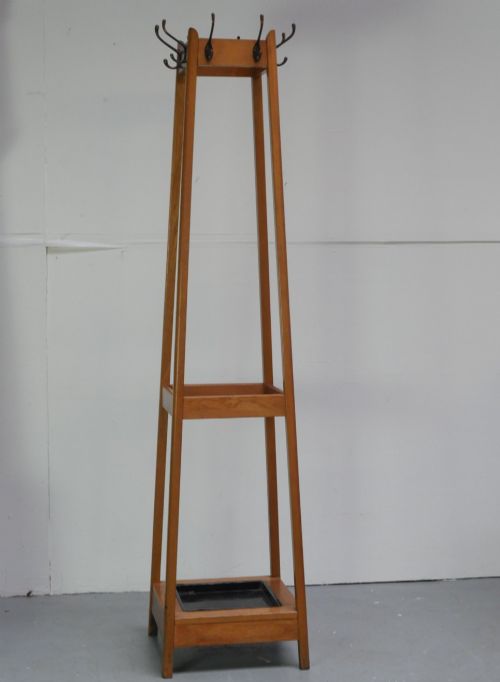
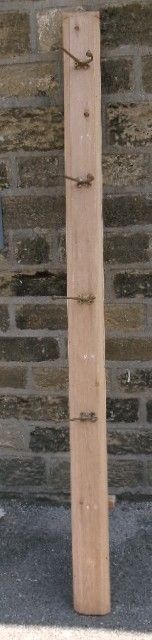
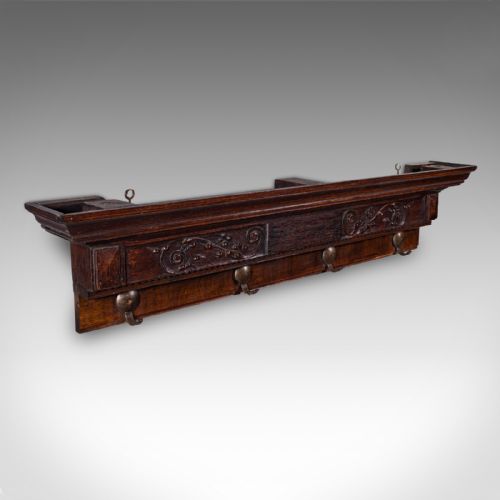
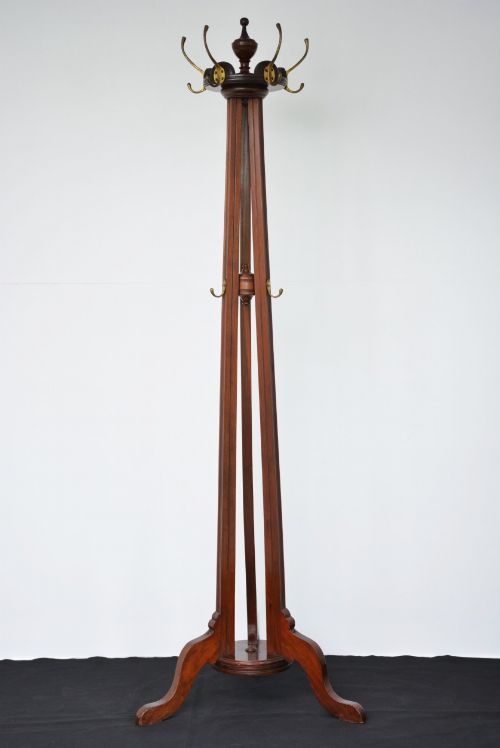
Wooden coat hooks appear primarily as wall-mounted backboards fitted with brass, iron or ceramic pegs, alongside larger freestanding hall stands and hat trees. These pieces span the Victorian, Edwardian and Arts and Crafts periods, utilising timbers such as oak, mahogany, walnut and pine.
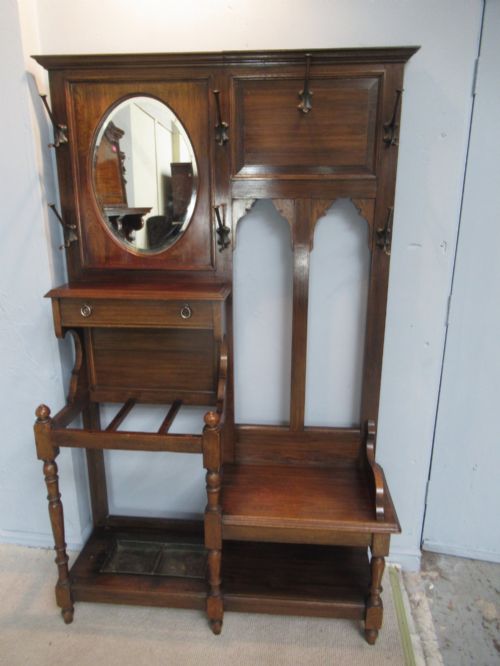
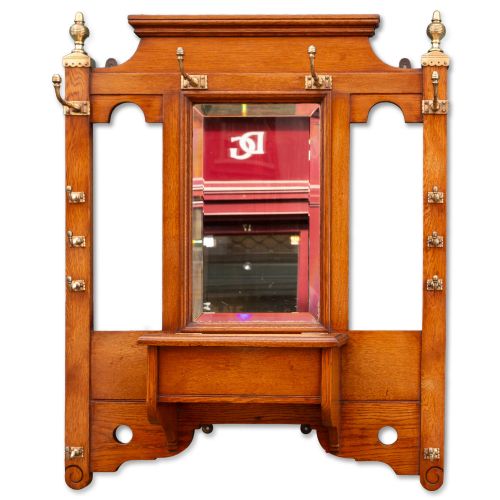
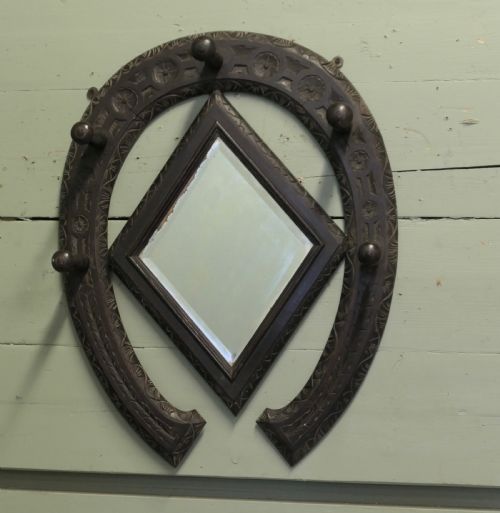
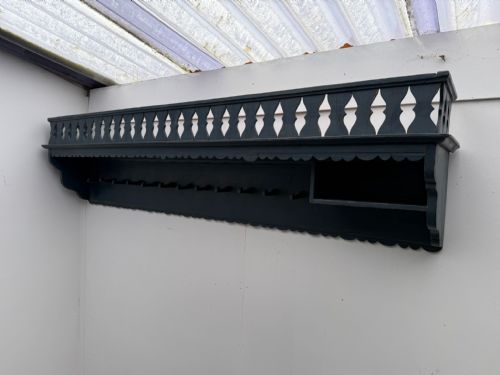
The most common examples on this page are wall racks featuring multiple hooks fixed to a polished or ebonised timber rail, often incorporating mirrors, umbrella stands or hat shelves for hallway organisation.
Materials and Construction
Cabinetmakers constructed these pieces from native and imported hardwoods like oak and mahogany, frequently utilising solid timber boards to support the weight of heavy garments. Metal elements including brass, wrought iron and cast bronze were screwed directly into the wood, sometimes paired with ceramic or glass components.
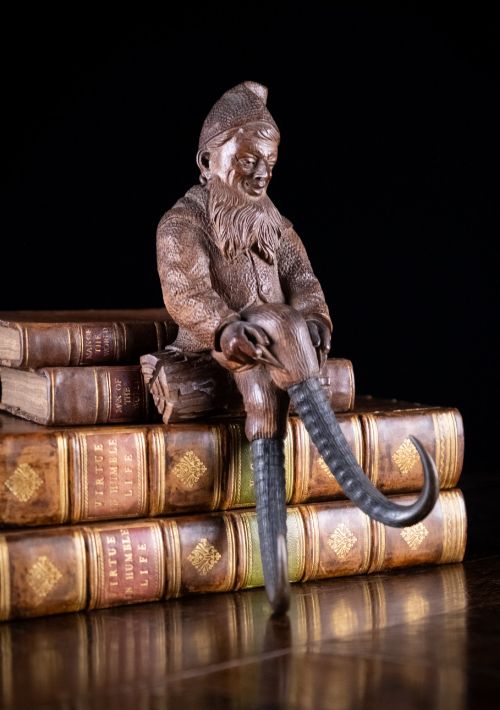
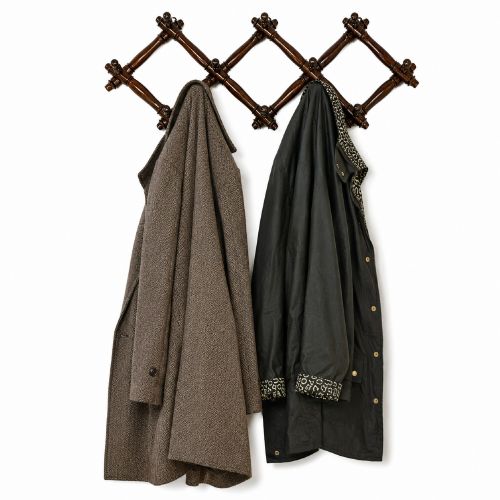
Carved decorative pieces, particularly Black Forest items, relied on hand-carving techniques to shape detailed animal heads or figural motifs into the timber. Bentwood variants utilised steam-bending methods to curve wood into continuous rails and hanging loops.
Listings feature oak, mahogany, walnut and pine backboards mounted with brass, iron, ceramic and glass hooks.
Assessing Quality
Quality rests in the selection of timber and the integration of the hardware, where dense hardwoods and heavy cast brass display superior durability compared to lighter pine or pressed metal. The method of fixing the hooks to the backboard indicates the standard of original construction.
Carved detail sets apart exceptional examples, such as deeply sculpted Black Forest animal forms or intricate Arts and Crafts joinery, from plain utilitarian rails produced in larger quantities.
Jas. Shoolbred·Thonet
The Wooden Coat Hooks Glossary
- Backboard
- The horizontal or vertical plank of timber that carries the hanging hooks. This wooden base attaches directly to the wall.
- Bentwood
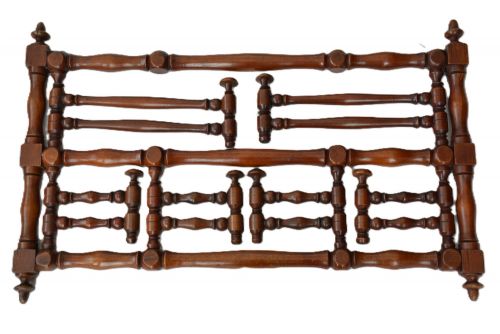
- Wood that is steamed and bent into curved shapes. This technique creates lightweight yet strong coat racks and hanging loops.
- Hall Stand
- A larger piece of hallway furniture combining coat hooks, a mirror, and umbrella storage. These often feature umbrella wells at the base.
- Hat Tree
- A freestanding vertical post with multiple arms for hats and coats. These items stand independently on the floor.
- Cast Brass
- Molten brass poured into a mould to form shaped coat hooks. This material provides rigid strength for hanging garments.
Wooden Coat Hooks: Frequently Asked Questions
How do I mount a heavy wooden coat rack safely?
Fix the backboard directly into wall studs or use appropriate heavy-duty wall anchors suited to your plaster or masonry.
Ensure the screws match the depth and weight capacity of the original mounting holes where possible to distribute the load evenly.
Were these racks used only in hallways?
While designed primarily for entrance halls and cloakrooms, smaller variants served in bedrooms, reception rooms and office spaces for daily garments.
Many incorporated mirrors and umbrella stands to function as complete entryway furniture pieces.
How do I care for antique wood and brass hooks?
Dust the timber regularly and feed the surface occasionally with an appropriate wax to preserve the grain and finish.
Clean brass components gently without harsh abrasives to maintain their natural patina over time.
How do I distinguish Arts and Crafts pieces?
Arts and Crafts pieces emphasise visible hand-craftsmanship, solid walnut or oak construction, and straightforward, honest joinery without excessive ornamentation.
They frequently feature simple bracket supports and hammered or patinated metalwork.