



Hallmarked Silver Tea Storage
These pieces of hallmarked silver tea storage keep dry leaves fresh while bringing unmistakable metalwork craftsmanship to the table.
Hallmarked Silver Tea Storage
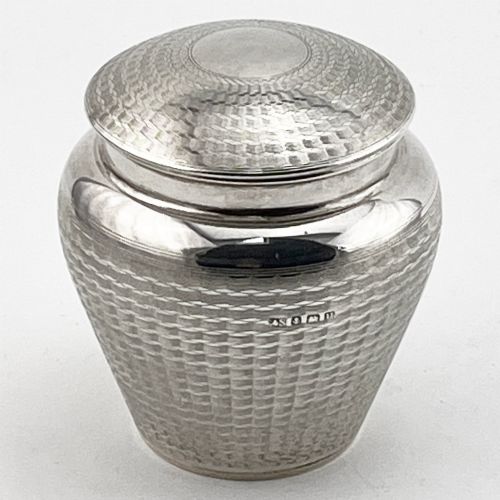
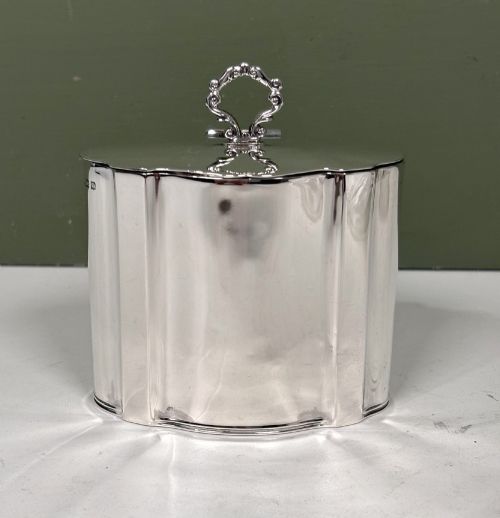
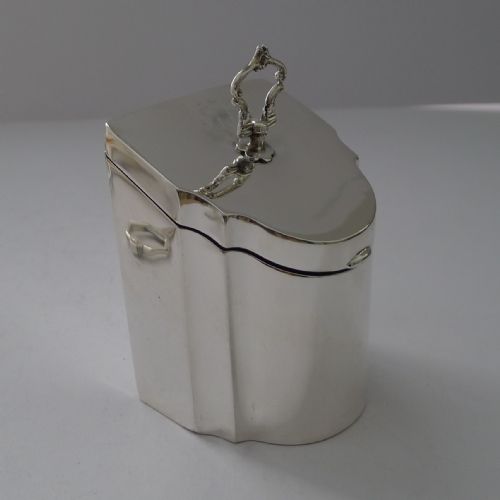
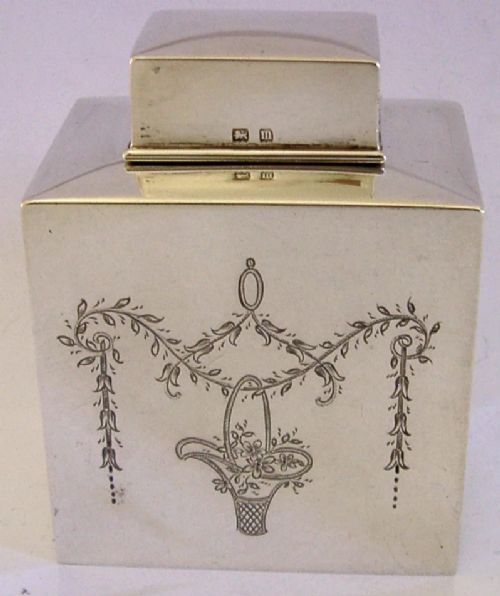
When buyers search for hallmarked silver tea storage, they encounter genuine antique caddies designed to protect expensive dry leaves from moisture and air. These vessels date from the Victorian, Edwardian, and mid-twentieth-century periods, showing the changing tastes of British households across decades.
The most common forms on this page are tea caddies and small boxes shaped like knife boxes or traditional canisters. These objects reflect the formal rituals of tea preparation in grand houses, utilising precious metal rather than ceramic or wood.
Origins span major English assay offices, with Birmingham and London hallmarks appearing frequently across the inventory. Makers from these hubs produced items that ranged from plain geometric containers to heavily decorated repousse surfaces.
Manufacturing and materials
Silversmiths constructed these pieces primarily from solid sterling silver, hammering and shaping the metal into rigid bodies designed to seal tightly. Some specialised forms incorporated contrasting materials like ebony for handles or internal fittings.
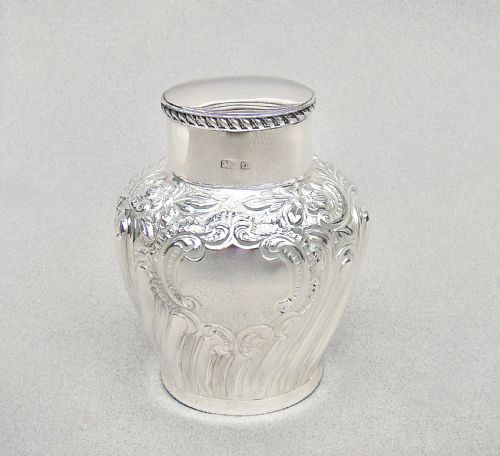
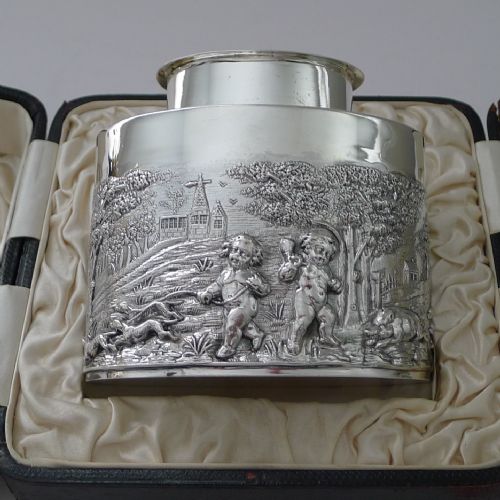
Techniques such as repousse hammering allowed artisans to push the metal from the reverse side to create raised floral or scroll patterns. Assay office punches were then struck directly onto the metal to certify the silver standard and year of production.
Listings span the Victorian, Edwardian, and George V periods, featuring solid sterling silver alongside occasional ebony details.
Assessing quality and craftsmanship
The distinction between standard containers and superior pieces lies in the crispness of the hallmark stamps and the weight of the solid silver used. Thicker gauge metal resists dents and maintains structural integrity over centuries of handling.
Design complexity also separates mass-produced items from workshop specials, particularly where hand-chased repousse work displays deep relief and precise detail. The internal fit of the lid remains a crucial indicator of original maker precision.
Zimmermann·Thomas Hayes·William Hutton and Sons Ltd·Ernest Druiff and Co
The Hallmarked Silver Tea Storage Glossary
- Hallmark
- Official marks stamped into precious metals to indicate the purity, the assay office, and the year of production. These stamps provide a reliable method for dating British antiques.
- Repousse
- A metalworking technique where the artisan hammers the design from the reverse side to create a raised relief pattern on the surface. This method was widely used on Victorian and Edwardian silver vessels.
- Sterling silver
- An alloy consisting of ninety-two point five percent silver and seven point five percent other metals, usually copper, chosen for durability. British pieces meeting this standard receive the lion passant hallmark.
- Tea caddy
- A small box or jar designed specifically to store loose tea leaves securely. Early versions often included internal locks to protect the valuable contents.
- Assay office
- An official organisation responsible for testing the purity of precious metal items and stamping them with statutory hallmarks. London and Birmingham are prominent examples seen on these items.
Hallmarked Silver Tea Storage: Frequently Asked Questions
What is a silver tea caddy?
A silver tea caddy is a small, lidded vessel designed to keep loose tea leaves dry and aromatic. In past centuries, tea was an expensive commodity, so these containers often featured secure lids.
Today, they function both as decorative desk accessories and as tangible examples of historical British silversmithing.
How do I read silver hallmarks?
British hallmarks typically include a standard mark like the lion passant for sterling silver, an anchor or leopard head for the assay office, and a date letter.
By matching the date letter to historical assay tables, you can determine the exact year the metal was tested and certified.
Were these caddies used daily?
Wealthy households utilised silver tea caddies during formal afternoon tea services, often keeping them locked in tea chests alongside porcelain cups.
Servants would measure out the leaves using small spoons, limiting direct wear on the metal bodies.
How do I clean antique silver?
Antique silver benefits from gentle washing with warm water and mild soap, followed by drying with a soft cotton cloth to prevent water spots. Avoid harsh abrasive dips that can strip away the aged patination collected over decades.
Regular, light dusting keeps the repousse details clear without wearing down the raised metal.