





Hallmarked Silver Mug
A hallmarked silver mug holds a weight of history in the hand, spanning centuries of British silversmithing from robust Georgian tankards to delicate Victorian christening cups.
Hallmarked Silver Mug
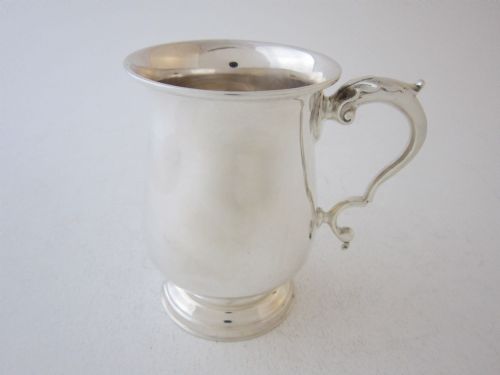
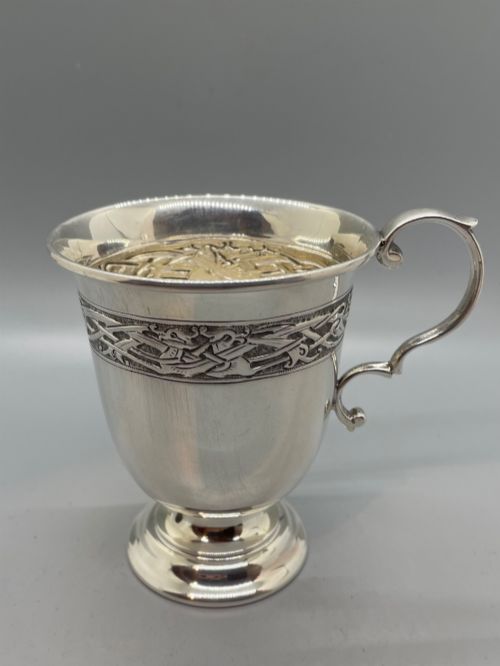
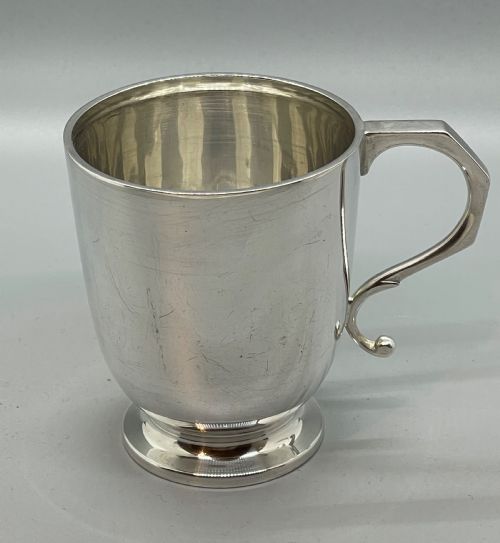
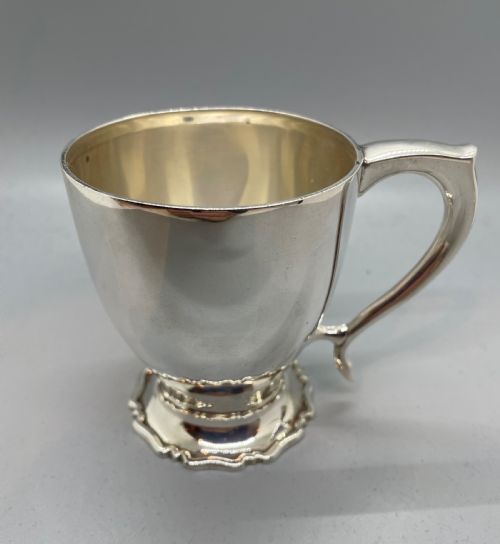
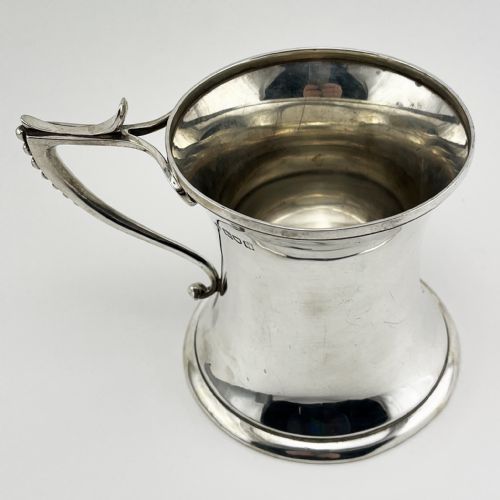
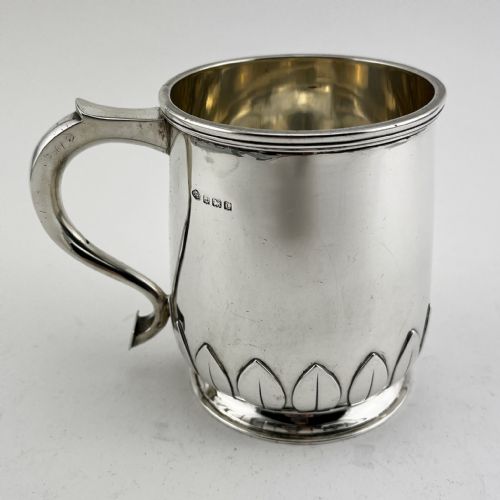
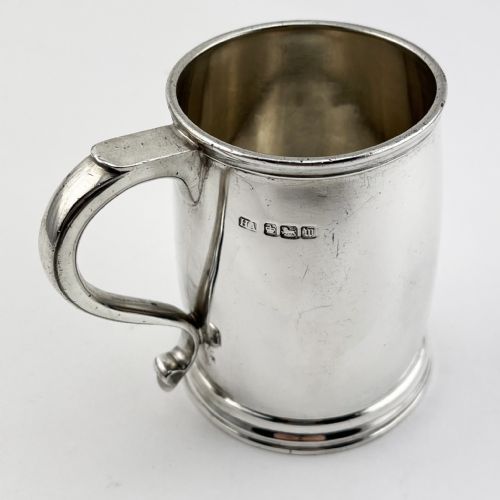
A hallmarked silver mug spans practical drinking vessels and intimate gift pieces, appearing in forms ranging from pint-sized tankards to small christening cups. When looking for a hallmarked silver mug on this page, a buyer encounters domestic table silver produced across the eighteenth, nineteenth and twentieth centuries.
The domestic forms include heavy pint mugs designed for daily ale or water alongside smaller presentation pieces intended for children. Silversmiths working in major assay towns such as London, Birmingham and Sheffield shaped these cylindrical and slightly tapered vessels for functional use or ceremonial marking.
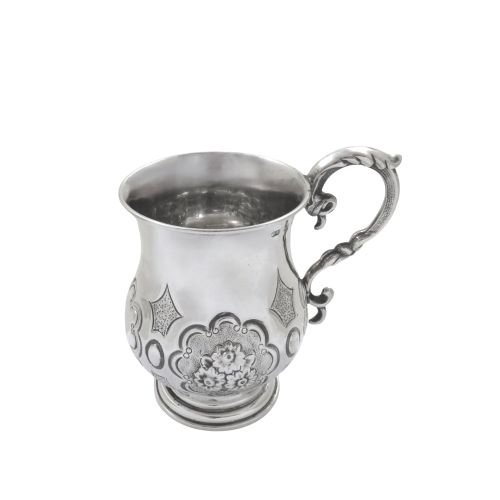
Earlier examples reflect the heavier gauge metal and Britannia standard silver of the eighteenth century, while later Victorian and twentieth-century items often carry crisp repousse decoration or simple plain bodies. Many survive alongside original fitted presentation boxes or associated silk linings from retail jewellers.
Materials and construction methods
The primary metal underpinning these pieces is sterling silver, alongside occasional earlier examples struck in higher-purity Britannia standard silver. Silversmiths formed the bodies from sheet metal rolled and soldered at the seam, attaching cast handles with secure joints.
Decoration relied on hand techniques including chasing, embossing and fine engraving to render floral scrolls or presentation inscriptions. Maker marks, assay office symbols, date letters and the lion passant were punched directly into the silver to guarantee purity.
Hallmarked Silver Mug Retail Price Guide 2026
Typical asking prices for hallmarked silver mug among the pieces listed under this phrase on Sellingantiques today, from the lower quarter to the upper quarter. They describe what is for sale here now, not the wider market.
A few antique mugs carry deeply personal Victorian baptism dates intended to remind the recipient of a very muddy eighteenth-century christening.
Distinctions in quality and execution
Quality rests upon the gauge of the silver used and the crispness of the original hand-chased or engraved ornament. Thicker walls prevent denting and maintain structural integrity during daily handling.
The quality of a piece also shows in the balance of the handle against the body and the clarity of the official hallmark stamps. Well-preserved makers' marks and legible date letters indicate careful workshop standards and pride of manufacture.
Tiffany and Co·Lee and Wigfull·A B Savory and Sons·Charles Fox·Edward and John Barnard·James Young
The Hallmarked Silver Mug Glossary
- Hallmark
- An official stamp applied by an assay office to indicate the fineness of the metal, the maker, the origin and the year of production. These marks provide the primary means of dating British silver.
- Britannia standard
- A higher purity standard of silver containing 95.84 percent pure silver, required by law in Britain between 1697 and 1719. Pieces from this era carry distinct marks of a seated Britannia.
- Repousse
- A metalworking technique where the silversmith hammers the design from the reverse side to form raised relief patterns on the exterior. This ornamentation appears frequently on Victorian presentation mugs.
- Tankard
- A tall drinking vessel featuring a single handle and often a lid, traditionally used for beer or ale. Eighteenth-century examples display robust proportions compared to later domestic cups.
- Assay office
- An official body responsible for testing the purity of precious metal wares and stamping them with statutory hallmarks. Cities such as London, Birmingham and Sheffield maintained active offices.
Hallmarked Silver Mug: Frequently Asked Questions
How do I date a silver mug?
Dating relies upon the sequence of stamped hallmarks, specifically the designated date letter assigned by the assay office for that exact year. Additional context comes from the stylistic traits of the period, such as Georgian plain bands or Victorian embossed floral motifs.
Matching the maker's mark alongside the town mark narrows the origin further. Reference registers list these punch marks chronologically.
What was the original purpose of christening mugs?
Christening mugs were traditionally gifted to infants to mark a baptism or birth, serving as a lasting keepsake intended to be used as the child grew. Many were inscribed with initials, birth dates or family crests to record the occasion.
Over time, these pieces transitioned from functional table silver into cherished family heirlooms. Cased sets often include matching spoons for presentation.
Are these mugs safe for daily use?
Solid silver is non-toxic and durable, making these vessels structurally capable of holding cool beverages when cleaned correctly. However, antique pieces with thin antique walls or fragile soldered handles benefit from gentle handling.
Using them for everyday dining requires careful hand washing with mild soap rather than mechanical dishwashing. Silver polish should be used sparingly to preserve underlying engravings.
Why do some mugs have leather handles?
Leather wrapping or insulation on certain historical tankards prevented the transfer of heat from warm contents or hand warmth to the beverage inside. This practical feature was common on specific drinking vessels designed for heavy use.
Survival of original organic materials like leather or silk linings adds significant interest to an antique piece. These elements require protection from moisture and direct sunlight.