

Hall Bench with Back
A hall bench with back offers a sturdy seat and practical storage, bringing centuries of robust woodworking straight to your hallway.
Hall Bench with Back
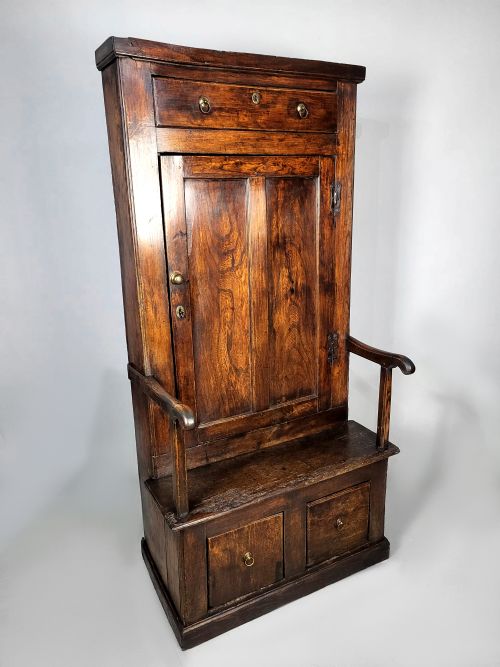
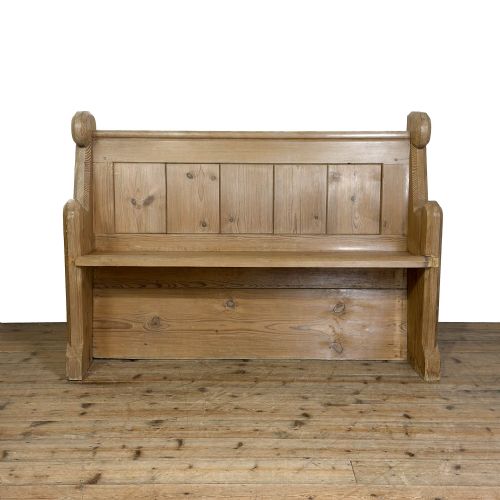
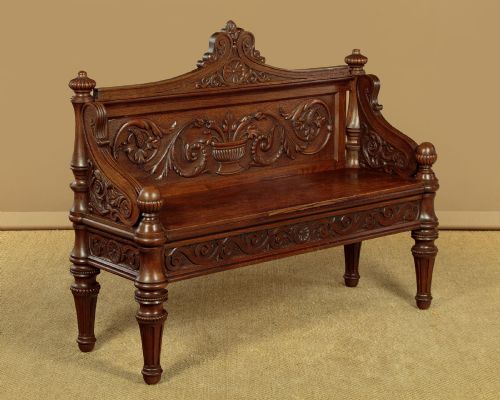
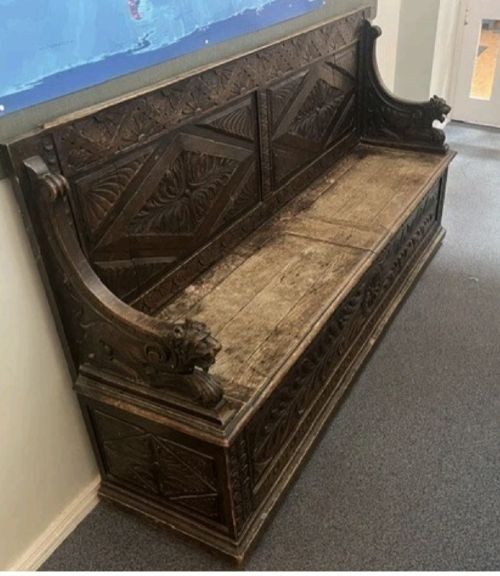
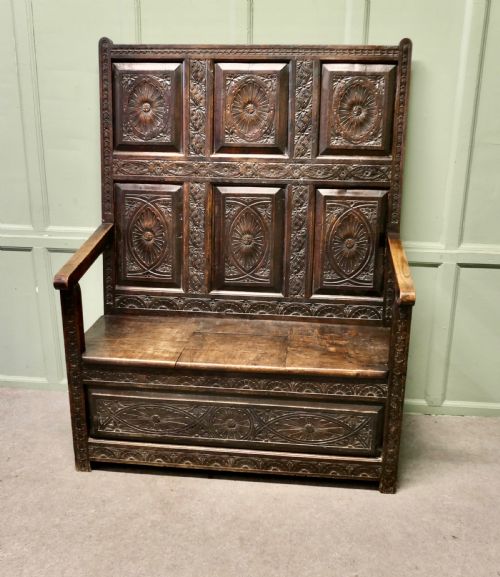
A hall bench with back combines a high wooden support with a solid seat, designed to withstand daily use in busy entranceways. These pieces range from early box settles with enclosed storage beneath the seat to simpler pine and oak forms originating across British and continental workshops.
The selections span distinct periods including the seventeenth, eighteenth, and nineteenth centuries, alongside Arts and Crafts adaptations. Oak and pine remain the predominant materials, shaping both country vernacular styles and more formal Georgian interpretations.
Materials and construction methods
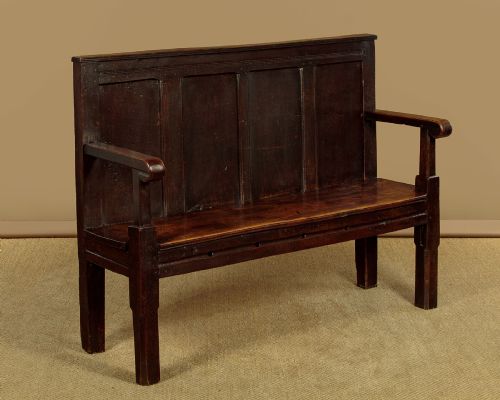
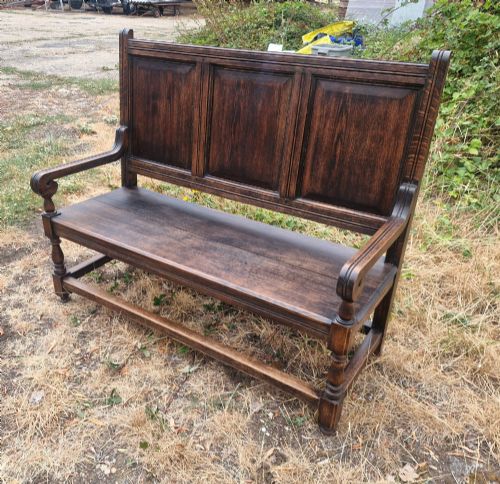
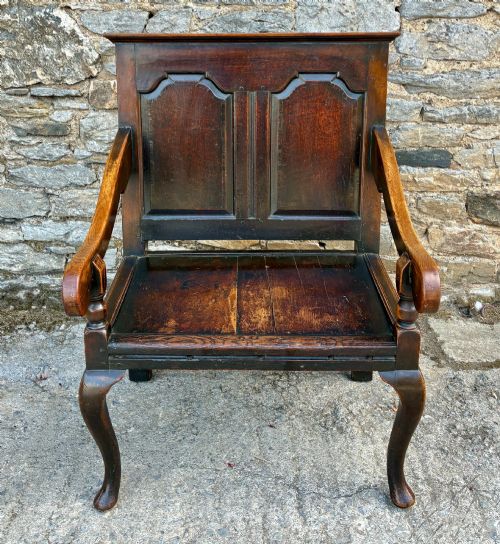
Joiners built these benches primarily using solid timber planks of oak and pine, frequently employing panelled construction for the backs to prevent warping. Traditional pegged joints and dovetailed storage boxes provide the structural integrity seen across surviving examples.
Surface treatments vary from waxed finishes that highlight natural grain to surviving early coats of paint. Metal hardware such as iron hinges and brass details occasionally supplement the timber framework.
Hall Bench with Back Retail Price Guide 2026
Typical asking prices for hall bench with back among the pieces listed under this phrase on Sellingantiques today, from the lower quarter to the upper quarter. They describe what is for sale here now, not the wider market.
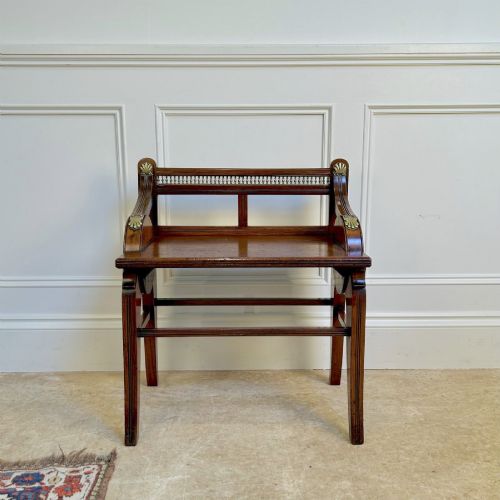
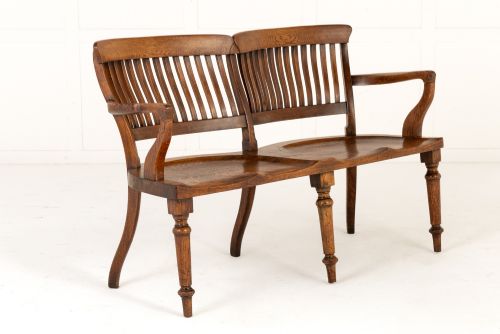
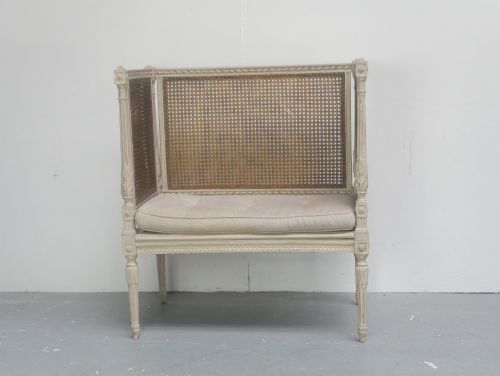
One cheerful Edwardian seat arrives complete with a novel twist in the design.
Distinguishing quality and craftsmanship
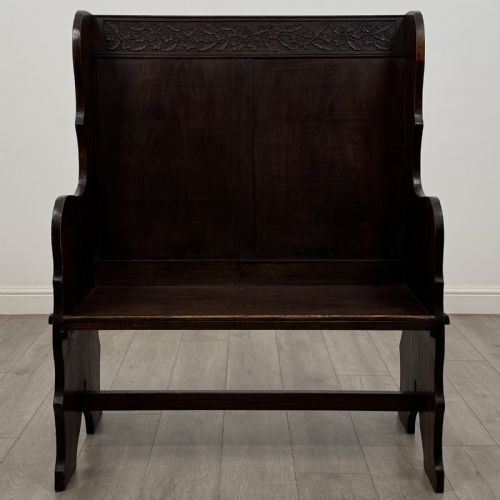
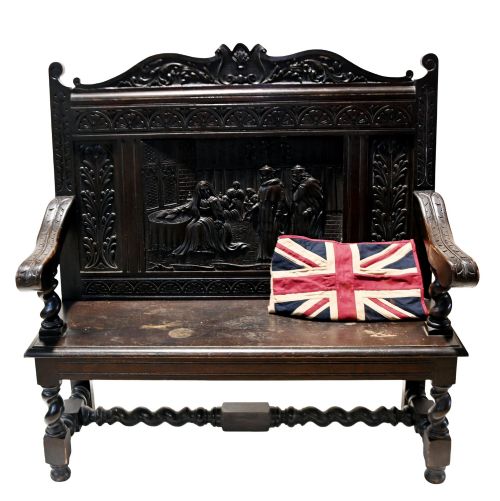
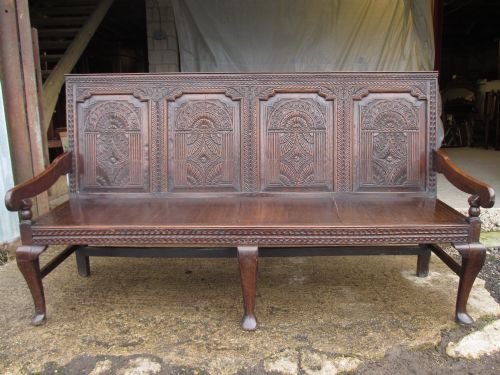
Quality rests upon the proportion of the timber, the depth of carved detail on the backrest, and the preservation of original surfaces. Pieces retaining their initial box storage structure and authentic patina demonstrate superior integrity.
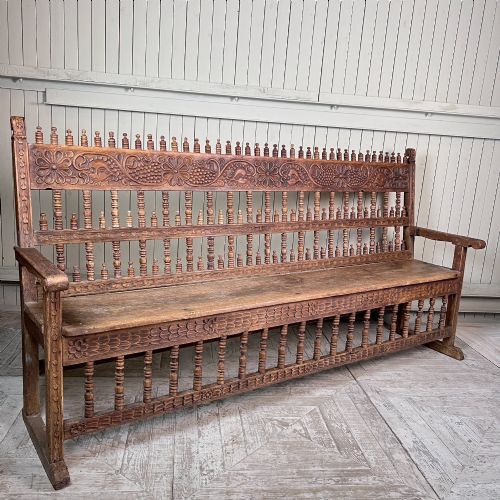
Finer examples display careful attention to joinery and decorative motifs such as tulip carvings or spindles, whereas simpler utility pieces rely on straightforward board construction.
James Shoolbred & Co.·Liberty
The Hall Bench with Back Glossary
- Box settle
- A bench featuring a high back and a box base with a hinged seat lid for storage. This form kept draughts away from the sitter while housing household goods.
- Vernacular
- Regional furniture made by local joiners using available native timbers rather than following strict London fashion. These pieces reflect local traditions of construction and design.
- Patina
- The surface sheen and colour developed by wood through decades of handling, light exposure and waxing. A deep patina indicates age and continuous use.
- Panelled back
- A backrest constructed from fitted wooden panels held within a grooved frame. This technique accommodates seasonal timber movement without splitting.
Hall Bench with Back: Frequently Asked Questions
What is a hall bench with back used for?
These benches provided practical seating in drafty corridors and entrance halls while offering concealed storage beneath the seat for blankets or boots.
Their high backs served to block cold air from doorways, making them functional furniture for historical homes.
How do I date an antique settle?
Dating relies on examining the construction methods, tool marks, and timber species used in the frame. Hand-cut pegs, board thickness, and the style of any carved decoration offer clues to the period.
Secondary woods inside storage boxes and the type of hinges also help confirm the era of manufacture.
Are these benches comfortable to sit on?
Historical wooden settles feature upright wooden backs and solid plank seats designed for posture rather than lounging. Adding a loose cushion or squab fabric pad softens the seat for everyday use.
Depth and height dimensions vary significantly between regional pieces, influencing how upright the seating position feels.
How do I maintain waxed pine furniture?
Maintain waxed surfaces by applying a traditional beeswax polish sparingly and buffing with a soft cloth to preserve the finish. Avoid placing timber furniture near direct heat sources or strong sunlight to prevent drying.
Regular dusting keeps the grain clear without risking moisture damage to old wood.