







Gustavian Style Chest Drawers
Gustavian style chest drawers bring pale elegance and restrained neoclassical proportion from Scandinavian workshops into domestic spaces.
Gustavian Style Chest Drawers
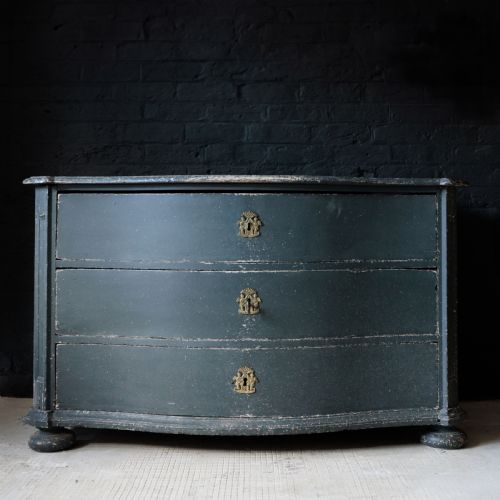
When you search for gustavian style chest drawers, you encounter storage furniture originating primarily from Swedish, Danish and Dutch makers across the eighteenth and nineteenth centuries. These pieces appear as painted commodes, serpentine chests and upright drawer units reflecting northern interpretations of continental neoclassical design.
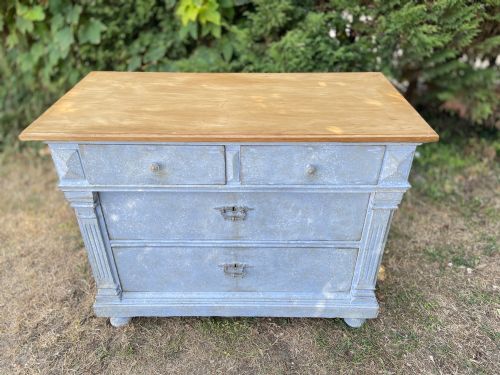
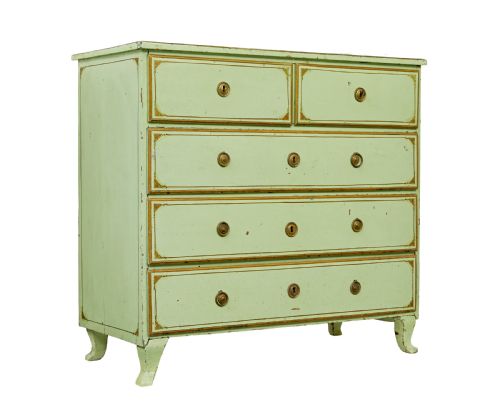
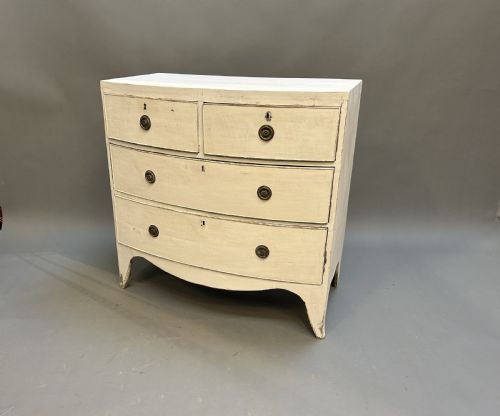
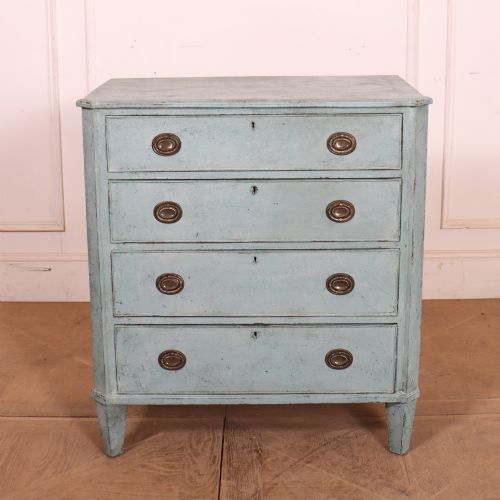
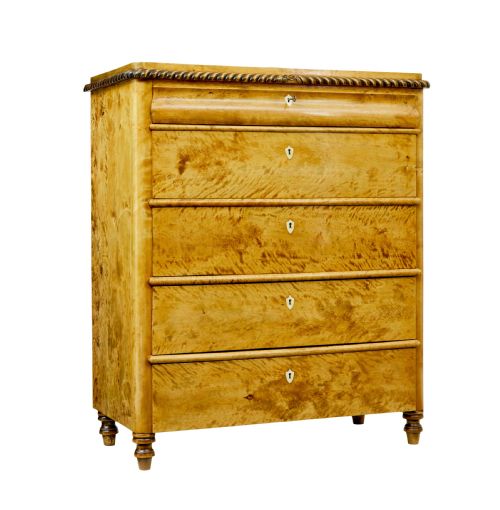
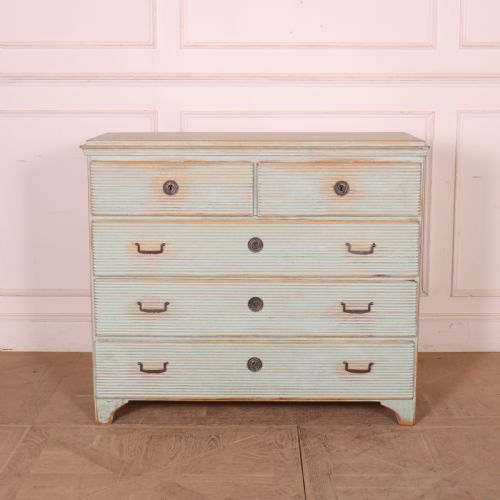
The version you are most likely to meet on this page is the nineteenth-century Swedish painted chest of drawers, often constructed with multiple horizontal drawers and finished in light grey or muted tones. Forms range from simple pine carcases to elaborate birch and oak commodes featuring fluted drawer fronts or faux marble tops.
Beyond straightforward chests, the selection encompasses related Continental forms including Dutch tall boys, Baroque revival commodes and diamond-point decorated fronts. These storage items combine practical drawer space with the restrained decorative vocabulary characteristic of Scandinavian country and neoclassical interiors.
How they were made
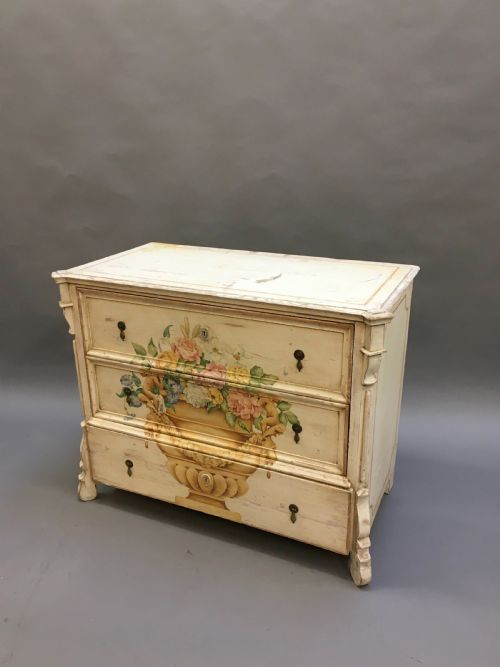
Carpenters utilised regional timbers such as pine, birch, oak and ash to build the carcases, employing solid planks for structural stability. Surfaces were frequently treated with layers of paint, often applied by hand in pale colours to reflect available light in northern rooms.
Metal hardware, including brass handles and iron fittings, provided functional fastening while complementing the timber drawer fronts. Joinery techniques varied from traditional drawer construction to carved details like fluting and serpentine curves shaped directly into the wood.
Gustavian Style Chest Drawers Retail Price Guide 2026
Typical asking prices for gustavian style chest drawers among the pieces listed under this phrase on Sellingantiques today, from the lower quarter to the upper quarter. They describe what is for sale here now, not the wider market.
Some nineteenth-century ash chests owe their contemporary Swedish grey appearance to a modern hand-applied makeover.
What varies in quality
The standard of execution in these chests depends upon the crispness of carved details, such as fluted drawer fronts or serpentine curves, and the harmony of proportion across the piece. Finer examples display meticulous hand-painted finishes and well-fitted drawers that operate smoothly within their carcases.
Materials also divide the range, distinguishing simple pine utility storage from dense hardwoods like birch and oak that carry more complex inlay or shaped top surfaces.
The Gustavian Style Chest Drawers Glossary
- Commode
- A low chest of drawers or cabinet, frequently used interchangeably with the term chest of drawers in continental and Scandinavian contexts. These pieces often feature decorative painted surfaces or serpentine fronts.
- Serpentine
- A curved furniture front characterised by a convex centre flanked by concave sides, creating an undulating line. This shape requires advanced woodworking skill to execute properly.
- Gustavian
- The Swedish neoclassical style spanning the late eighteenth century, named after King Gustav III. It is characterised by restrained ornamentation, pale painted finishes and classical proportions inspired by French design.
- Caddy top
- A raised, moulded tabletop profile resembling the lid of a tea caddy. This detail adds architectural definition to the upper edge of a chest of drawers.
- Faux marble
- A painted surface technique designed to imitate the appearance of real stone. Artisans applied pigments by hand to wood surfaces to create mineral-like veining.
Gustavian Style Chest Drawers: Frequently Asked Questions
What materials are these chests made from?
These chests are constructed from a variety of timbers including pine, birch, oak and ash. Many examples feature painted wooden surfaces finished in muted or grey tones.
Metal elements such as brass and iron provide hardware and pulls for the drawers.
How do I date a gustavian style chest?
Dating relies on stylistic markers and construction methods that point to eighteenth or nineteenth-century workshops. Pieces range from early neoclassical Gustavian designs to later nineteenth-century revival commodes.
Evidence of hand-painted finishes, timber choice and regional forms helps narrow the production era.
Where were these chests originally made?
The selection consists primarily of Scandinavian pieces originating in Sweden and Denmark. Additional examples come from Dutch workshops reflecting provincial and neoclassical styles.
These regions adapted continental furniture trends into distinctive local interpretations.
How do I live with a painted chest?
Painted chests serve as functional storage units while adding light and texture to domestic rooms. Their neutral painted finishes integrate easily into contemporary and traditional interior schemes alike.
Placed in bedrooms, hallways or living spaces, they provide surface display area alongside deep drawer capacity.
What is a serpentine front?
A serpentine front is a shaped cabinet or drawer face featuring an undulating curve. The design incorporates a central convex section moving outward between two concave ends.
This contour requires skilled carpentry to shape the timber and fit the drawers accurately within the carcase.