





Gustavian Painted Drawers
Gustavian painted drawers bring bright Scandinavian proportion and storage to a room through centuries-old pine, oak, and layered paint.
Gustavian Painted Drawers
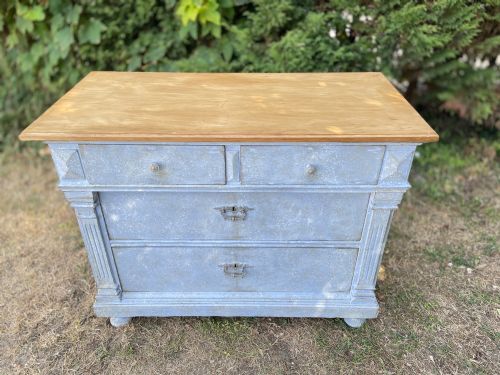
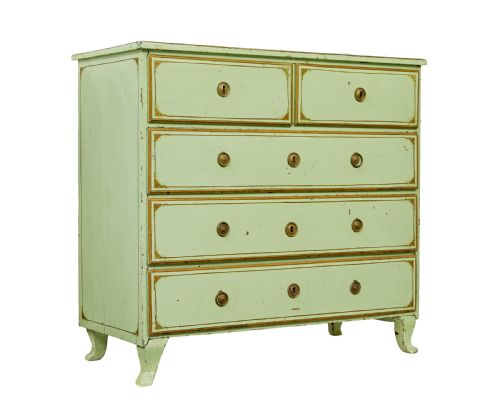
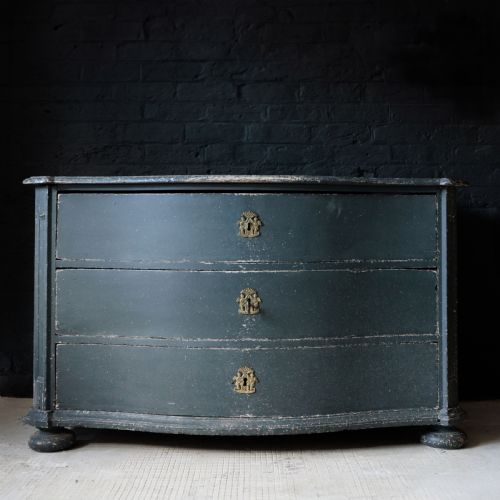
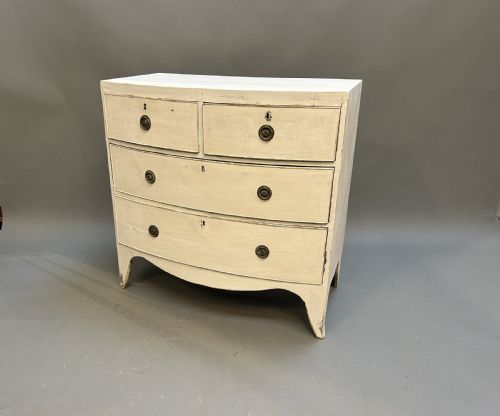
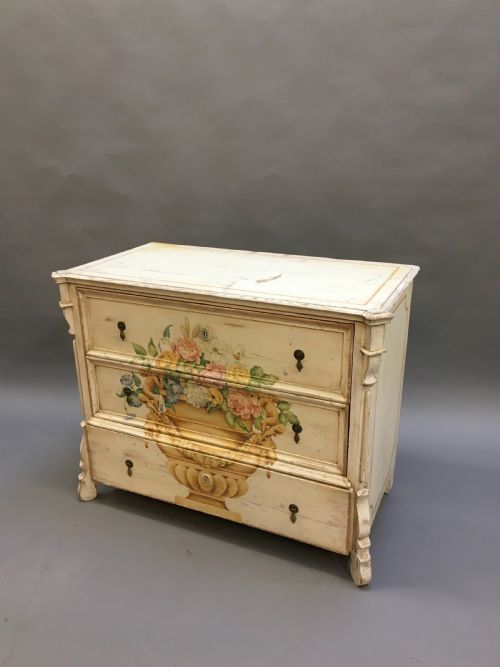
Gustavian painted drawers form a distinct group of storage furniture largely rooted in eighteenth and nineteenth-century Scandinavia, though examples stretch from the seventeenth to the early twentieth century. Buyers seeking this search phrase encounter chests of drawers, commodes, and bedside tables primarily shaped from pine, softwood, and oak. These pieces range from restrained Swedish neoclassical designs to provincial continental interpretations featuring serpentine or bow fronts.
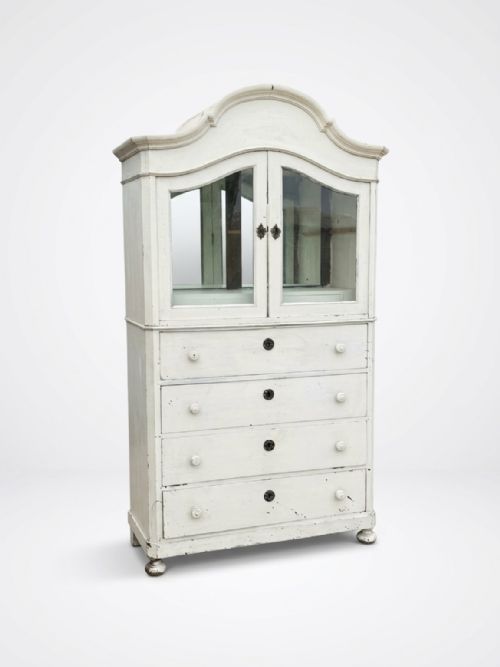
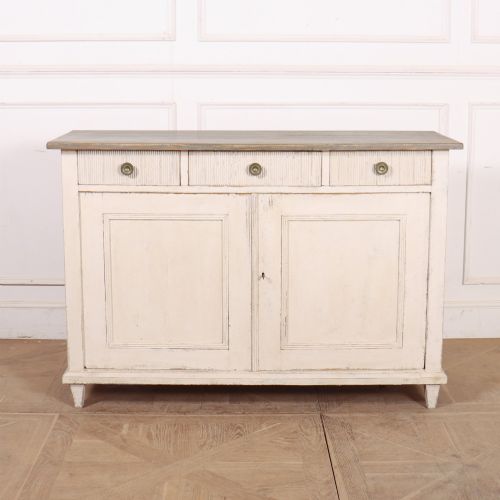
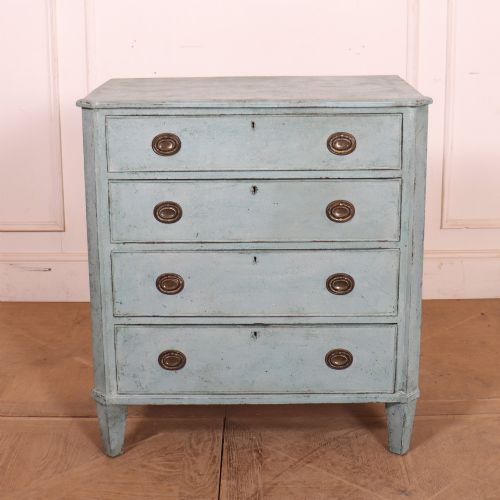
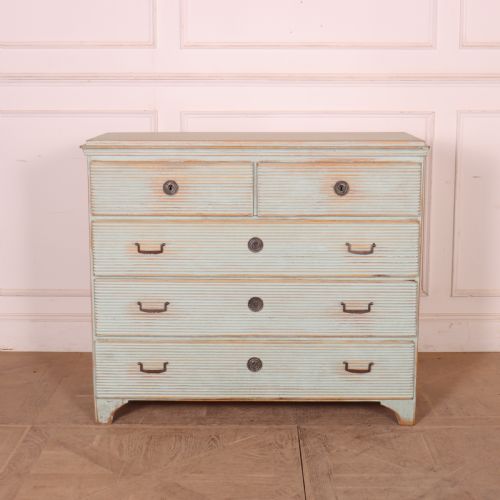
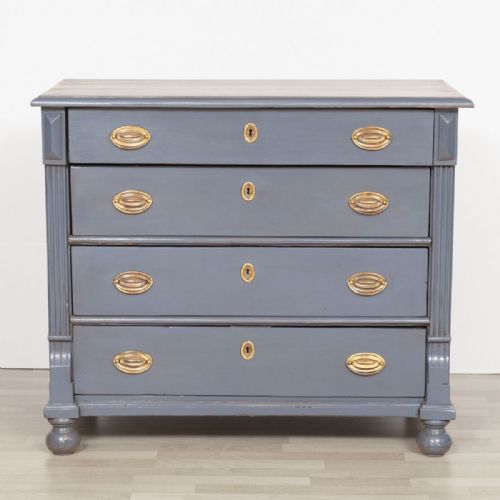
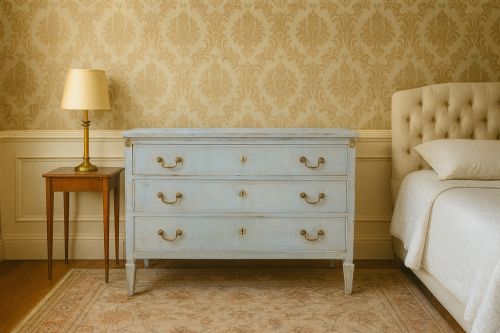
The version most frequently met on this page is the nineteenth-century Swedish painted commode or chest of drawers. Such pieces often display pale grey, black, or multi-layered painted surfaces applied over sturdy timber carcasses. Alongside standard chests, the selection encompasses taller formats like bureau bookcases, cabinets, and sideboards sharing the same pale, painted aesthetic.
Construction and Materials
Carpenters constructed these pieces predominantly using native timbers such as pine and softwood, supplemented by oak and occasional ash frameworks. Timber sections were joined with traditional cabinetry methods to form solid drawer boxes and carcasses capable of supporting repeated use over generations.
Surfaces received multiple coats of lead- or oil-based paint, often layered to achieve muted tones like Swedish grey, white, or black. Metal elements including brass handles, iron hardware, and occasional faux marble painted tops finished the construction process.
Listings span the eighteenth century to the early twentieth century, with nineteenth-century pine and painted softwood commodes forming the majority of the selection.
Quality and Distinction
Quality rests upon the proportion of the carcass and the handling of the painted finish rather than mere age alone. Superior pieces exhibit balanced fluted drawer fronts, clean serpentine or breakfront lines, and harmonious proportions that reflect neoclassical design principles.
The integrity of the painted surface dictates much of the distinction between tiers of pieces. Original layered paintwork possessing natural wear and depth commands greater regard than later redecoration, while finer cabinetmaking shows in smoothly operating drawers and well-fitted timber joints.
The Gustavian Painted Drawers Glossary
- Commode
- A low chest of drawers or cabinet originating in French furniture design but widely adopted across Sweden and Denmark. These pieces often feature three or four drawers and decorative fronts.
- Serpentine
- A furniture front characterised by a curving line that bends outward in the centre and inward at the sides, or vice versa. This shape demands precise woodworking skill.
- Gustavian
- The Swedish neoclassical style spanning the late eighteenth century, drawing inspiration from French Louis XVI design. It emphasises restraint, symmetry, and pale painted finishes.
- Pine
- A soft, accessible timber widely utilised across Scandinavian country workshops for painted furniture carcasses and drawer linings. It accepts paint layers readily.
- Faux marble
- A decorative painting technique applied to wooden tops to imitate stone surfaces. This finish provides the visual weight of marble without the heavy mass.
Gustavian Painted Drawers: Frequently Asked Questions
What is a Gustavian chest of drawers?
A Gustavian chest of drawers is a storage piece stemming from the Swedish neoclassical movement inspired by French design. These items typically feature painted wooden surfaces, symmetrical lines, and understated classical ornamentation.
Craftsmen built them primarily from pine and softwood during the eighteenth and nineteenth centuries. Their pale painted finishes distinguish them from darker, unpainted antique furniture of the same eras.
How do I tell an 18th-century piece apart from a 19th-century one?
Distinguishing eighteenth-century pieces from nineteenth-century ones involves examining construction traits, timber preparation, and the handling of the paint layers. Eighteenth-century examples often display broader dovetailing and deeper patination resulting from prolonged use and age.
Nineteenth-century chests frequently incorporate standardised hardware and machine-sawn timber components alongside hand-applied painted finishes. Comparing the structural joints and secondary timbers provides reliable clues to the age of the piece.
Are these chests suitable for daily bedroom use?
These chests function well for daily storage in modern bedrooms and living spaces. The drawers slide within solid wooden runners, offering dependable capacity for clothing and household items.
Careful placement away from direct heat sources helps preserve the antique pine carcasses and nineteenth-century paint layers. Routine gentle dusting maintains the finish without harming the historic surface.
What does a serpentine front mean?
A serpentine front describes a wooden chest profile shaped into a gentle wave curve. This design requires advanced carpentry to curve the drawer fronts and matching frame accurately.
Cabinetmakers utilised this technique on commodes to introduce visual movement and refined elegance to the furniture. Such curved fronts require custom-fit drawers that maintain alignment along the undulating contours.
Why are many of these pieces painted grey?
Many Scandinavian pieces feature grey paint because Swedish workshops embraced pale, light-reflecting colours during the neoclassical period. Dark winters made maximising natural indoor light essential, leading to the popularity of soft greys and whites.
Painters applied these finishes over pine to mimic costlier stone or imported materials while brightening rooms. Over decades, this paint acquired a weathered patina unique to Scandinavian country interiors.