



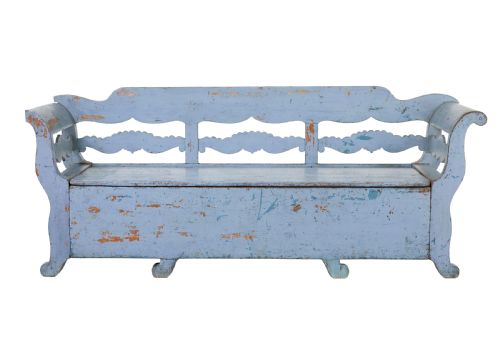


Gustavian Painted Bench
These gustavian painted bench pieces bring pale, restrained Scandinavian elegance to a room, offering both seating and timeless decorative presence.

Gustavian Painted Bench
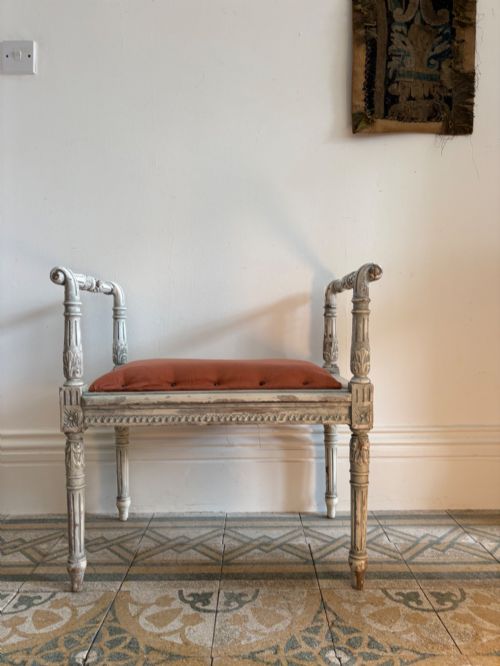
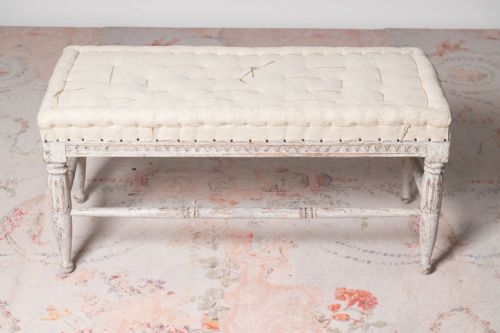
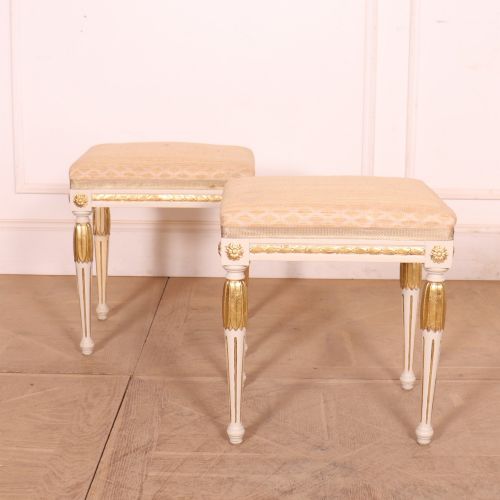
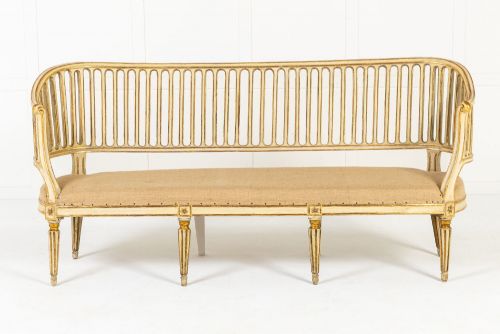
A gustavian painted bench embodies the pale, restrained aesthetic developed in Sweden during the eighteenth and nineteenth centuries, drawing on neoclassical and rococo design principles. These pieces range from simple country settle benches to refined neoclassical settees and stools finished in muted tones.
Most examples found in these listings are Swedish in origin, spanning the eighteenth, nineteenth, and early twentieth centuries, alongside occasional Italian or general Scandinavian pieces. The inventory includes benches, settees, sofas, and stools, often featuring original painted surfaces and upholstered seats.
Buyers seeking a gustavian painted bench will encounter formats varying from long dining settles to low stools and grand sofas. The form provides functional seating while introducing historical character and light to contemporary interiors.
How they were made
Construction relies primarily on pine and painted wood, shaped into architectural frames that reflect neoclassical restraint or rococo curves. Makers applied layers of paint to create soft, chalky finishes that defined the light-reflecting qualities characteristic of the style.
Upholstery materials such as fabric, linen, hessian, and cane provide the seating surfaces for stools and settees. Gilt accents occasionally highlight carved details on more formal frames, contrasting with the dominant painted pine.
The inventory spans the eighteenth century through to nineteen twenty, covering gustavian, neoclassical, rococo, and Scandinavian country styles.
What varies in quality
The distinction between standard examples and finer pieces lies in the integrity of the original painted surface and the sophistication of the carving. Original paint layers that have aged naturally carry more visual weight than later refinishing work.
Structural complexity also separates everyday items from exceptional ones, particularly in the balance of neoclassical proportions and the finesse of turned or carved elements. The harmony between the pine framework and the chosen upholstery material completes the assessment.
The Gustavian Painted Bench Glossary
- Gustavian
- The Swedish neoclassical style named after King Gustav III, characterised by pale painted finishes, straight tapered legs, and restrained classical ornamentation. It adapts French rococo forms into a simpler, brighter vernacular.
- Settle
- A wooden bench featuring a high back, solid arms, and often a storage compartment beneath the seat. This traditional form provided shelter from drafts in older European interiors.
- Settee
- A medium-sized upholstered wooden bench designed for multiple occupants, sharing stylistic traits with larger sofas. These pieces often feature exposed painted frames and padded seats.
- Hessian
- A coarse woven fabric made from jute or hemp fibres, frequently utilised for traditional upholstery foundations or as visible seat coverings on rustic benches.
- Neoclassical
- A Western cultural movement drawing inspiration from the classical art and culture of ancient Greece and Rome. In furniture, it manifests in symmetrical lines, fluted columns, and geometric restraint.
Gustavian Painted Bench: Frequently Asked Questions
What is a gustavian painted bench?
A gustavian painted bench is a wooden seating piece originating from Sweden, finished in pale, layered paint and built in neoclassical or Scandinavian country styles.
These pieces include settees, settle benches, and low stools designed to brighten and anchor an interior space.
How were these benches used?
These benches served as functional seating around dining tables, in hallways, or along living spaces within traditional homes.
Their sturdy pine construction and upholstered or solid seats accommodated daily domestic life while displaying the decorative tastes of the household.
How do I live with a painted bench?
Living with a painted bench involves placing it in spaces where its pale tones can reflect natural light and complement neutral or muted colour schemes.
Care should be taken to protect the historic painted surfaces from moisture and heavy wear while enjoying the piece as everyday seating.
How do I tell periods apart?
Distinguishing periods relies on observing the shift from eighteenth-century rococo curves to strict nineteenth-century neoclassical symmetry and later twentieth-century interpretations.
Details such as leg shape, carving depth, and the character of the underlying pine help indicate the likely date of manufacture.