


Grey Watercolour Study
These grey watercolour study pieces capture subjects from landscapes to portraits on paper using pigment and ink.
Grey Watercolour Study
A grey watercolour study is a work on paper executed in monochrome or muted grey pigment, often heightened with ink, graphite, or gouache. When you search for grey watercolour study, you encounter works spanning the eighteenth century through to the mid-twentieth century, including architectural prints and drawings, landscapes, and portraits.
The selections available here range from nineteenth-century British topographical scenes to continental equestrian drawings and mid-century portraits. Common formats include framed pictures and original drawings on paper, created by named artists and anonymous masters alike.
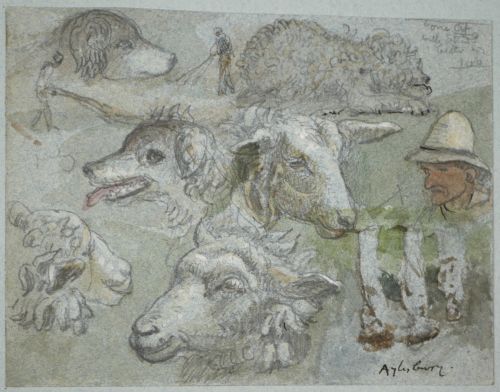
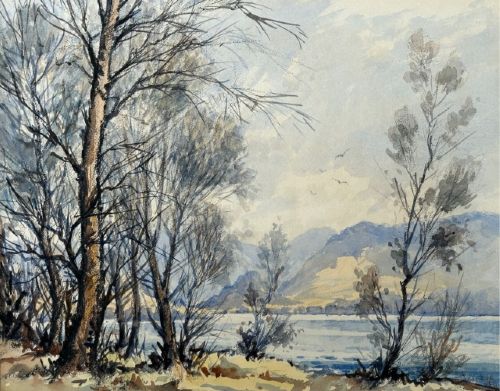
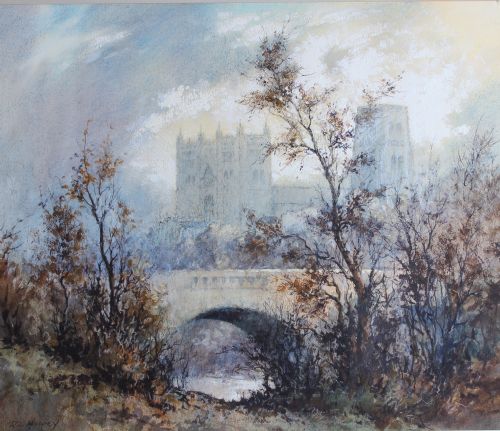
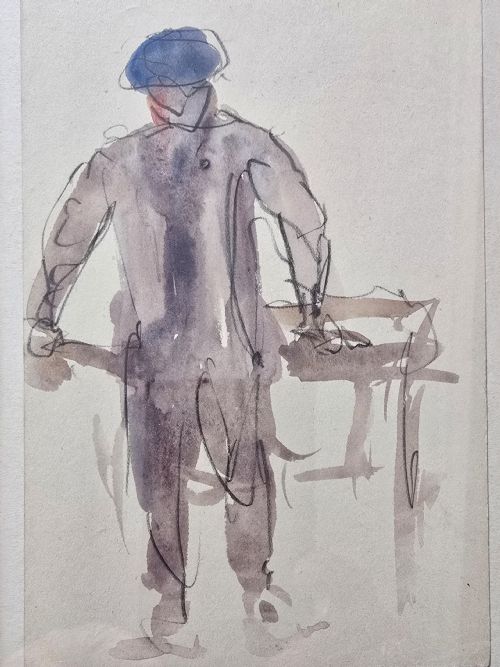
These works often function as preparatory sketches or finished monochrome compositions, capturing light and form through tonal washes. The subject matter varies widely, encompassing coastal views, cathedral exteriors, lake landscapes, and figure studies.
How they were made
Artists apply watercolour pigment and ink onto paper or card, frequently laying down an initial graphite outline to anchor the composition. The tonal qualities rely on dilution of grey washes to create depth, shadow, and architectural precision.
Many sheets incorporate secondary media such as gouache for opaque highlights or pen and ink for sharp contour lines. Framing typically involves wood and glass to protect the delicate paper surface from atmospheric moisture and handling.
The inventory includes works from the 18th century, 19th century, Victorian era, and mid-20th century.
What varies in quality
Quality rests upon the sureness of the initial draughtsmanship and the control of the wash. A confident handling of graphite and pigment creates vitality in a study, whereas hesitant brushwork produces a flat, lifeless sheet.
The condition of the paper surface and the preservation of the original tones dictate the visual strength of the piece. Subtle gradations of grey pigment remain crisp in superior examples, while inferior items suffer from foxing or faded washes.
James Smetham·Robert Leslie Howey·Michael Healy·Johan Noah Bemmel·Montagu Barstow·Tom Dudley·Paul-Louis Barruel·Rowland Henry Hill·Leo Klin
The Grey Watercolour Study Glossary
- Watercolour paint
- A medium consisting of colour pigments suspended in a water-soluble vehicle, used on paper to create translucent washes.
- Graphite
- A form of carbon used for underdrawing and preliminary sketching on paper before the application of wet pigment.
- Gouache
- An opaque watercolour paint containing pigment mixed with a binding agent and white filler, used for highlights.
- Architectural print and drawing
- A category of works depicting buildings, ruins, and structural designs, executed as original drawings or prints.
Grey Watercolour Study: Frequently Asked Questions
What is a grey watercolour study?
A grey watercolour study is a work on paper executed primarily in monochrome pigment, ink, or graphite. These pieces often serve as preparatory observations or finished tonal compositions.
Subjects range from architecture and landscapes to portraits and equestrian scenes, dating from the eighteenth century to the mid-twentieth century.
How should I frame these works?
Works on paper require conservation framing behind glass to protect the pigment and the paper support from light damage and humidity. Acid-free mounts prevent chemical degradation of the paper over time.
Keeping the paper away from direct sunlight preserves the subtle grey tones and prevents yellowing of the sheet.
How do I identify the period?
Dating relies on the paper type, watermark evidence, framing materials, and the style of the draughtsmanship. Eighteenth-century and nineteenth-century works often exhibit distinct paper textures and handwriting styles on the reverse.
Artist signatures and recorded biographical dates further narrow the timeline of execution.
Where were these pieces produced?
The pieces originate from British, Irish, Dutch, German, and French schools, reflecting diverse regional artistic traditions. Continental masters and British watercolourists both contributed to this body of monochrome work.
Topographical subjects often record specific locations such as Durham Cathedral, York, or Whitby.