




Profile Portrait Sketch
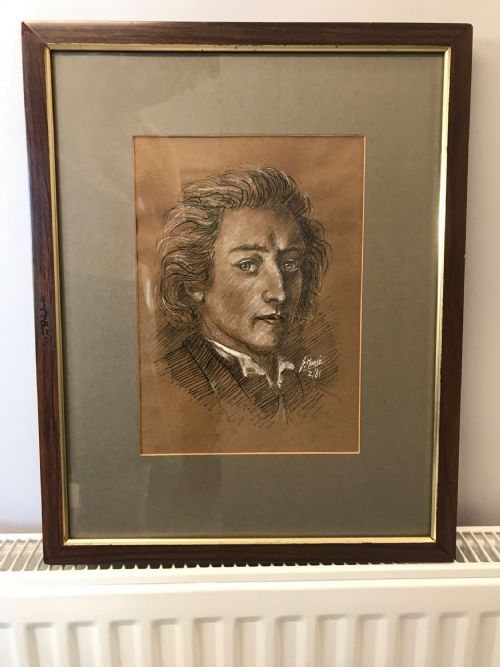
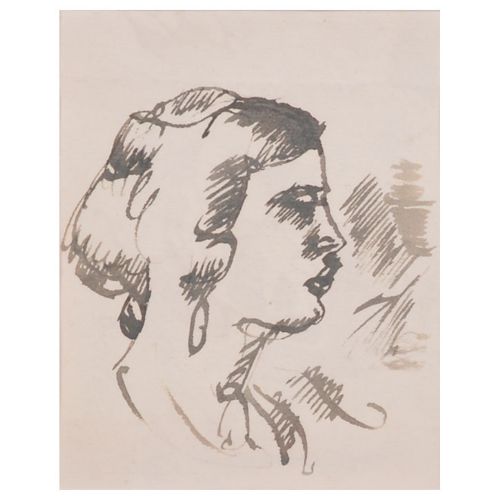
These profile portrait sketch pieces capture likenesses in graphite, charcoal, and watercolour on paper, offering direct intimacy with past sitters.
Profile Portrait Sketch
The format ranges from loose drawings to framed art, works on paper, framed drawings, and miniature portraits. These pieces include single subjects and sets, often housed within period frames such as carved Florentine examples.
Subjects include named historical figures, artists, composers like Frédéric Chopin, royalty associates such as George IV's mistress Mrs Jordan, and family members or friends. Many items on this page reflect Neoclassical, Georgian Revival, and 19th-century realism styles.
Materials and technique
Artists executed a profile portrait sketch using paper as the primary support, employing pencil, graphite, charcoal, chalk, and plumbago for foundational line work. Plumbago drawings utilise a form of graphite that yields a distinct metallic grey tone.
Many examples incorporate watercolour, ink wash, and gouache applied over the initial sketch to add depth and tone to the composition. Finished works are frequently protected behind glass within wooden frames.
The listings span from the 17th century through the Georgian and Victorian eras to the mid-20th century, employing paper, pencil, charcoal, and watercolour.
Distinguishing quality
Quality in a profile portrait sketch rests upon the surety of the draughtsmanship and the economy of line used to define the sitter's profile. The liveliness of the expression and the skill in handling shadow separate masterworks from ordinary output.
The preservation of the paper support, the retention of original pigment vibrancy, and the presence of a period frame matching the era of the drawing contribute significantly to the standing of the piece.
James Ferguson·Ozias Humphry·John Duncan Fergusson·Baden Powell·John Seymour Lucas·Francis Frank O A Haviland·Leo Klin·Sir Nathaniel Dance Holland
The Profile Portrait Sketch Glossary
- Plumbago
- An early form of graphite used for detailed drawings, particularly popular during the 17th and 18th centuries. The material produces a fine, silvery-grey mark.
- Gouache
- An opaque watercolour paint consisting of pigment, water, and a binding agent such as gum arabic. It provides solid blocks of colour and highlights in mixed media works.
- Wash
- A thin, transparent layer of diluted watercolour or ink applied with a brush. It establishes tonal gradations and shadows behind the primary lines.
- Realism
- An artistic movement focusing on everyday subjects and accurate, unidealized representation. Works in this style depict sitters without classical or romantic embellishment.
- Neoclassical
- A style inspired by classical art and culture, prevalent during the 18th century. It emphasises clean lines, restraint, and classical proportions.
Profile Portrait Sketch: Frequently Asked Questions
What is a plumbago drawing?
A plumbago drawing is a delicate portrait executed in early graphite, which was shaped into sticks for fine, precise line work.
These works were especially favoured in the seventeenth and eighteenth centuries for their crisp detail.
How should paper portraits be framed?
Paper portraits require conservation framing with acid-free mounts and glass to protect the delicate media from light and atmospheric damage.
Original wooden frames often accompany these works, adding historical context.
Are these works signed by the artists?
Some pieces bear artist signatures or attributions to known figures, while others remain unsigned.
Attributions rely on stylistic comparison, provenance, and historical records associated with the sitters.
How do I date an antique drawing?
Dating relies on the style of dress, hair, and framing, alongside the paper type and watermarks where visible.
Catalogues and period benchmarks help narrow the decade of execution.