





Grey Stone Urn
A grey stone urn anchors a garden terrace with classical proportion and genuine age, bringing weathered texture and monumental presence to planting.
Grey Stone Urn
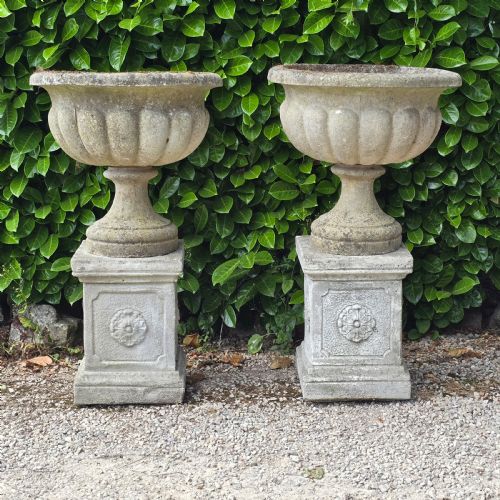
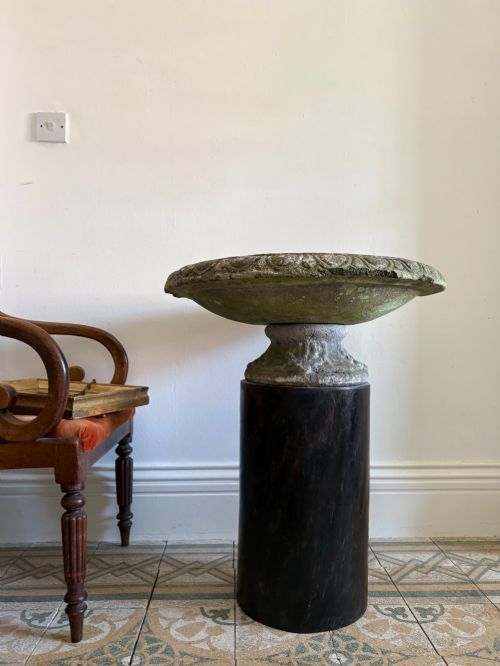
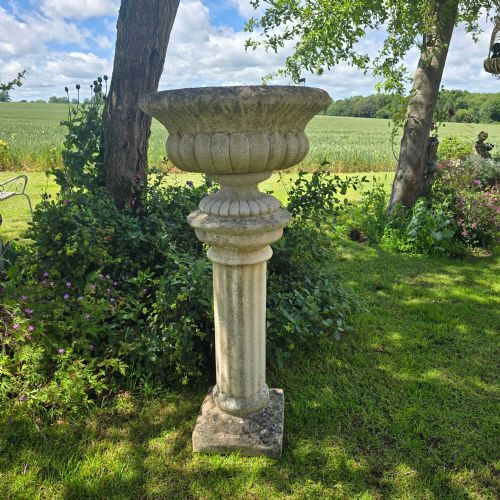
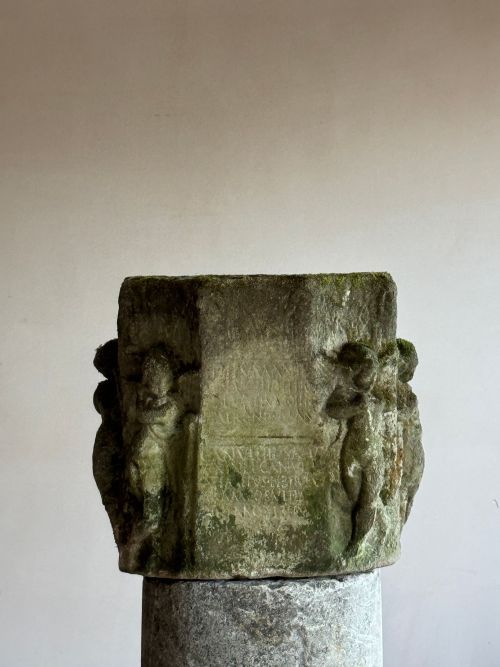
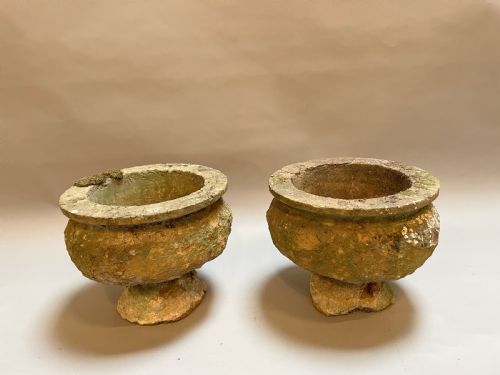
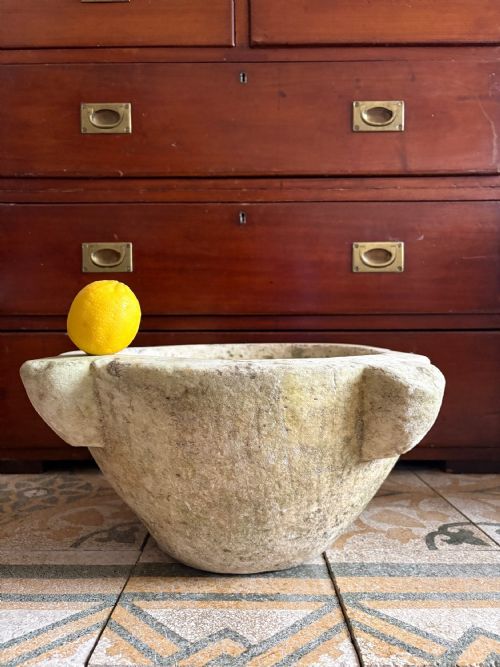
A grey stone urn typically manifests as a garden ornament, planter, or campana vessel designed for exterior display. The selection on this page spans utilitarian mortars, monumental tazzas, and classical revival garden urns resting on matching plinths.
Most examples originate from the eighteenth and nineteenth centuries, alongside early twentieth-century interpretations in cast stone and reconstituted media. Buyers encounter both single statement pieces and matched pairs shaped by neoclassical or Victorian taste.
How grey stone urn pieces were made
Makers shaped these objects from natural materials including limestone, soft stone, white marble, and carved stone using traditional masonry techniques. Surface details emerge from direct chisel work on quarried blocks or through the casting of durable reconstituted stone mixes.
Cast iron and plaster also appear among the forms, replicating the classical silhouette of turned urns and campana profiles. Natural weathering and historic repairs frequently contribute to the patinated surface texture of surviving examples.
Listings feature materials spanning white marble, limestone, cast stone, and reclaimed parliamentary stone from the Blitz.
What varies in quality in grey stone urn pieces
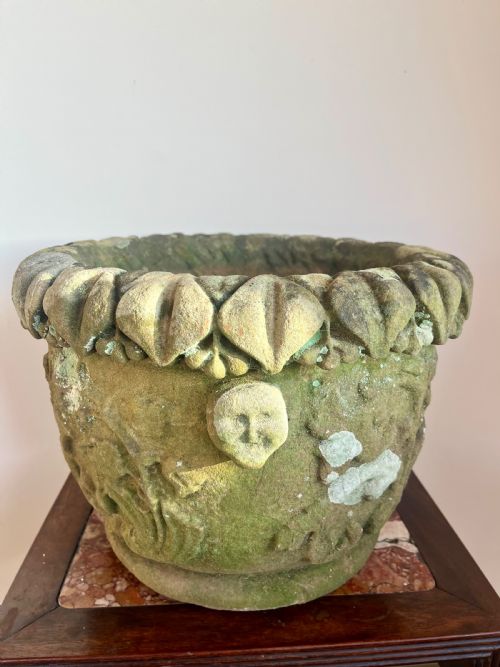
Quality rests upon the crispness of classical detailing, such as carved foliage, handles, and proportioned fluting. Superior pieces display deliberate hand-carving or precise casting that retains architectural integrity across weathering.
The degree of surface integration matters greatly, where organic lichen growth and natural patination enhance the stone rather than obscure structural losses. Matched pairs with original plinths command stronger architectural presence than single, mismatched elements.
Andrew Handyside
The Grey Stone Urn Glossary
- Campana form
- A bell-shaped garden vessel widening towards the rim with scroll handles. This classical silhouette dominates nineteenth-century terrace ornaments.
- Plinth
- A heavy rectangular or square base supporting an urn or statue. These elevate the vessel to improve garden sightlines.
- Tazza
- A shallow cup or bowl on a pedestal, often carved from marble in the neoclassical style. Such pieces served decorative functions in historic gardens.
- Reconstituted stone
- A durable composite of crushed stone and binder moulded into architectural ornaments. It replicates natural carved stone at scale.
Grey Stone Urn: Frequently Asked Questions
How do I care for a stone urn outdoors?
Position the urn on stone feet or a plinth to prevent ground moisture absorption during winter months.
Keep drainage holes clear and avoid harsh chemical cleaners that strip historic lichen and weathering.
Are these urns frost proof?
Natural stone and cast stone pieces generally withstand winter conditions if water is not allowed to freeze inside the bowl.
Line large planters with protective material or drain them completely when temperatures drop significantly.
How do I identify the period of a stone urn?
Examine tool marks, weathering patterns, and the stylistic vocabulary of the ornament, such as neoclassical relief or Victorian proportions.
Heavier tool work and softer limestone often indicate earlier eighteenth-century production, while cast stone points toward twentieth-century manufacturing.
Can these urns support heavy planting?
Large stone and cast iron vessels provide stable weight for substantial shrubs and small trees on terraces.
Ensure the base rests on firm, level ground to distribute the combined weight of soil, moisture, and stone safely.