






Stone Urn Plinth
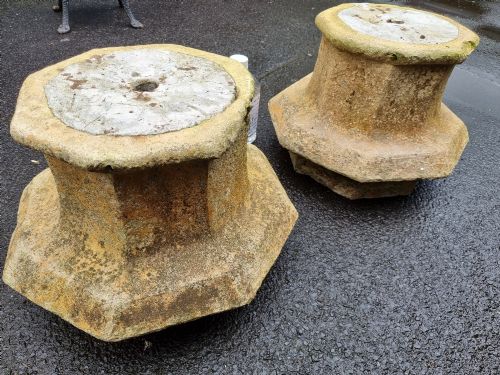
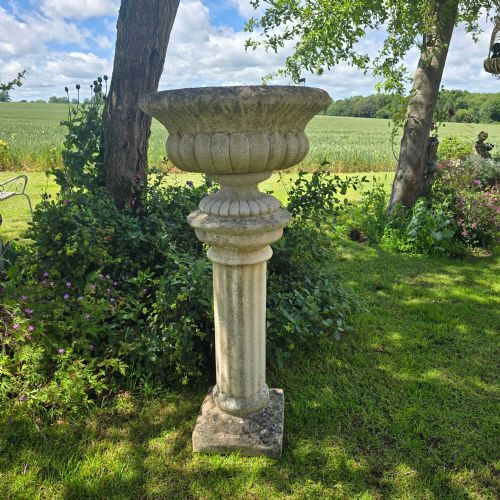
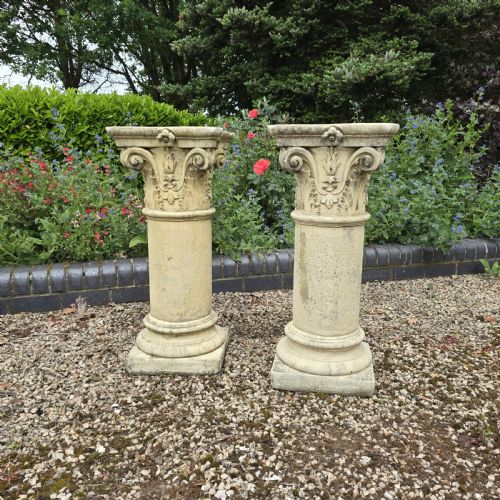
These stone urn plinths provide solid architectural foundations for garden urns, bringing classical form and height to a terrace or lawn.
Stone Urn Plinth
When you search for stone urn plinth, you meet sturdy architectural supports and pedestals designed to elevate garden vessels, planters, and urns. These pieces lift garden ornaments off the ground to create focal points along paths, within courtyards, or at the centre of formal garden layouts.
The versions most common on this page span the nineteenth century and the twentieth century, taking the form of square pedestals, columns, and altars. They often appear paired, supporting campana urns, planters, and classical vases.
Makers drew on various historical idioms, producing pieces in styles ranging from Neoclassical and Gothic Revival to Victorian Classical. Their physical presence introduces formal structure to landscape design through solid masonry and carved stone.
Materials and construction
Makers utilised durable outdoor media, moulding cast stone, reconstituted stone, and composite stone within wooden or metal frames to achieve sharp architectural detail. Others employed traditional banker marks to carve natural materials like marble, carrara marble, and solid stone directly from the block.
Foundries also cast metal variants in iron, producing robust campana forms and planters intended to withstand seasonal weathering. Salt-glazed stoneware and specialised decorative stones like Ashford black marble appear where finer decorative surfaces were required.
Stone Urn Plinth Retail Price Guide 2026
Typical asking prices for stone urn plinth among the pieces listed under this phrase on Sellingantiques today, from the lower quarter to the upper quarter. They describe what is for sale here now, not the wider market.
Some nineteenth-century cast stone urns come equipped with goat mask handles and lotus leaves, ready to host your prize geraniums.
Assessing quality
Quality rests in the crispness of the moulding and the depth of hand-carved acanthus leaves, fluting, and architectural enrichment. Finer examples show sharp relief work and balanced proportions that maintain structural visual weight without feeling clumsy.
The choice of material and the natural weathering process dictate the surface character over time. Pieces formed from dense stone or well-compacted composite mixes retain their structural edges and decorative integrity far better than softer alternatives.
Andrew Handyside·Selim Bright
The Stone Urn Plinth Glossary
- Campana
- A bell-shaped garden urn with an everted rim and a pedestal foot. This form originates from ancient Roman metal and ceramic vessels.
- Torchere
- A tall stand or pedestal originally intended to support a torch or lamp. In garden and interior settings, it functions as a display column.
- Tazza
- A shallow cup or basin mounted on a stem and foot. These decorative vessels often sit atop pedestals as garden focal points.
- Salt Glazed
- A ceramic finish created by throwing common salt into the kiln during high-temperature firing. This produces a durable, slightly textured glassy coating.
Stone Urn Plinth: Frequently Asked Questions
What holds a stone urn plinth upright on uneven ground?
These heavy pedestals rely on their own substantial weight and a flat, level base to stay stable outdoors. Setting them on a compacted aggregate or paved foundation prevents sinking.
Larger stone and cast iron examples require no mechanical fixings unless placed in exposed, windy locations where additional anchoring may be sensible.
Can these plinths stay outside all winter?
Cast stone, reconstituted stone, and cast iron withstand normal winter weather well, especially when the material is dense and properly cured. Natural marble and softer stones benefit from protection against severe frost expansion.
Ensuring water drains freely from any urn sitting on top prevents ice build-up from cracking the supporting column below.
How do I clean weathered cast stone?
A soft brush and clean water remove loose dirt and organic growth without damaging the surface skin of the stone. Avoid harsh chemical cleaners or pressure washers that strip away the protective weathered patina.
Allowing lichen and moss to remain is common practice, as it enhances the historic character of nineteenth-century garden masonry.
Are these pedestals suitable for indoor use?
Marble and stone pedestals function effectively indoors as display stands for sculpture, lamps, or large floral arrangements. Their classical proportions complement entrance halls and drawing rooms.
Because of their significant weight, checking floor load capacity is wise when positioning heavy stone columns inside a property.