



Grey Sky Painting
Grey sky painting captures atmospheric coastal and rural atmospheres through subdued palettes, offering buyers subtle tonal depth and historic character.
Grey Sky Painting
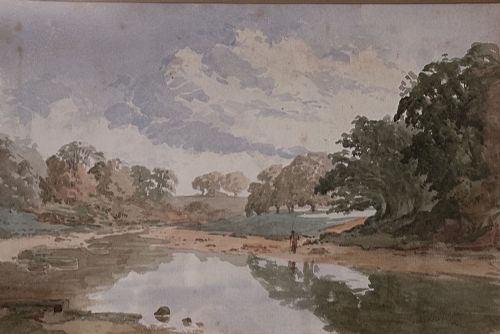
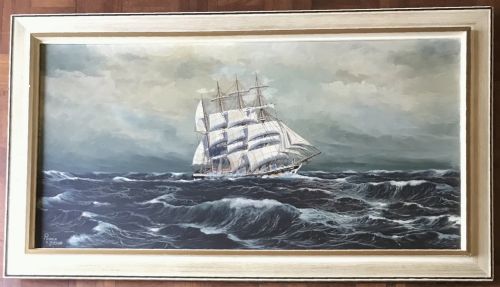
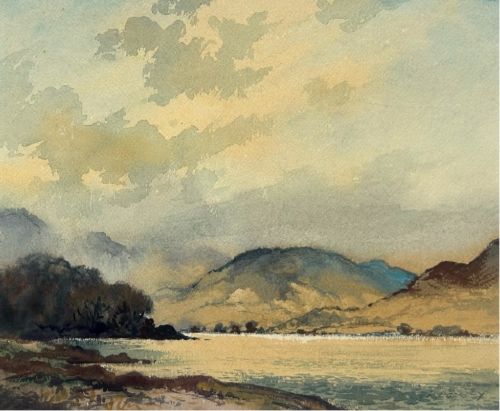
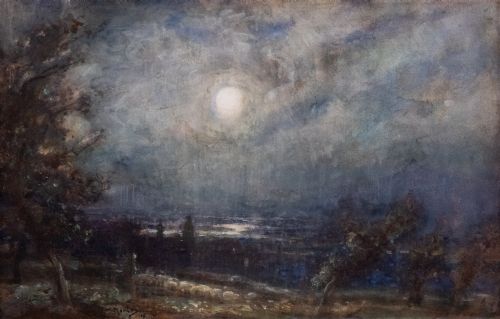
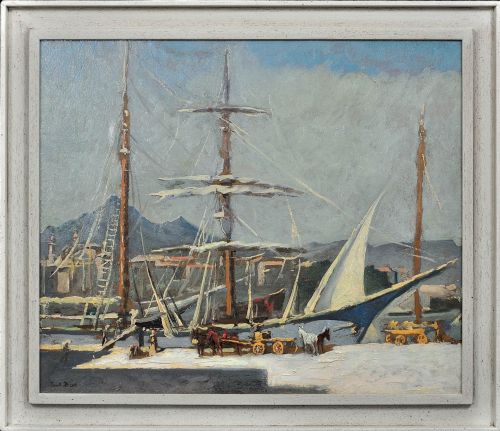
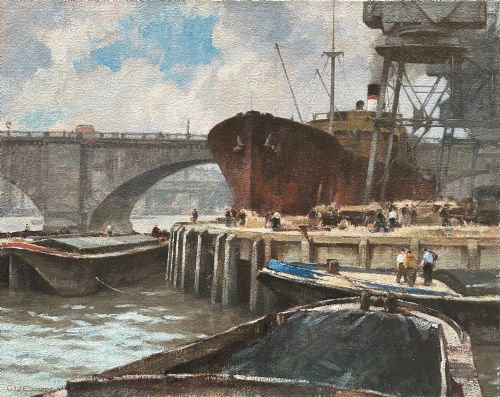
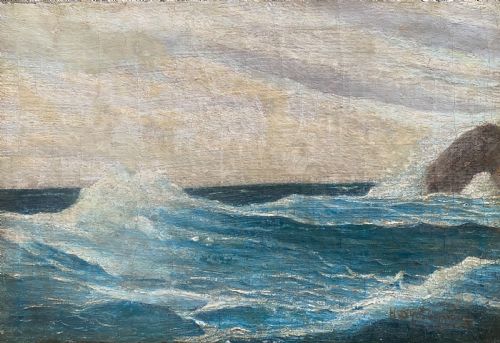
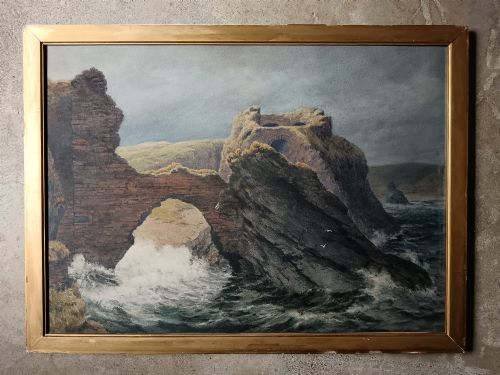
A grey sky painting depicts overcast weather, maritime scenes, and atmospheric landscapes created across the nineteenth and twentieth centuries. These works record coastal views, river banks, and countryside settings under heavy cloud cover, reflecting British Impressionism, Victorian sensibilities, and twentieth-century realism.
The versions met most frequently on this page span watercolours on paper and oil paintings on canvas or panel, originating from periods between eighteen ninety and nineteen fifty. Artists utilise muted tones to render cloud formations, sea havens, and quiet estuaries with notable sensitivity to light and weather.
How they were made
Makers applied oil paint or watercolour onto prepared canvas, paper, wood panels, or board, building atmospheric effects through layered pigment. Artists handled brushes to capture the shifting light of overcast days, deploying wet-in-wet techniques in watercolours and textured impasto in oils.
Supports range from traditional woven canvas stretched over wooden frames to sturdy wood panels and heavyweight paper sheets. Framing often incorporates wood mouldings that complement the tonal restraint of the painted surface.
Listings feature works created across multiple decades, utilising canvas, paper, and wood panels for both oils and watercolours.
What varies in quality
The success of a piece depends upon the artist's handling of tone and perspective, where subtle shifts in pigment convey distance and moisture in the air. Superior works demonstrate confident brushwork that captures movement in clouds, water, and foliage without relying on rigid outlines.
Compositional balance and the preservation of the painted surface separate accomplished works from routine topographical records. Greater depth is achieved when the artist balances the weight of heavy skies against the terrestrial elements below.
Robert Leslie Howey·John E. Aitken·Thomas William Morley·Paul Bret·Cyril Walduck Edwards·John Moxon·Charles William Adderton·Cuthbert Crossley·Herbert Royle·James Orrock·William Grant Murray·Robert Finley McIntyre·Ernest Higgins Rigg·Florence Hess·George Hamilton Constantine·A. G. Hayward·Paul Jones·Edmund Morris Wimperis·Thomas James Lloyd·William Miller Frazer·Kershaw Schofield·Fred Lawson·Paul Jean Clays·Owen Bowen·Claude Muncaster
The Grey Sky Painting Glossary
- Canvas
- A heavy woven fabric stretched across a wooden frame to serve as a support for oil paint. It provides a flexible yet resilient surface for textured brushwork.
- Watercolour
- A painting method where fine pigment is suspended in a water-soluble binder applied to paper. It relies on the white of the paper to show through translucent washes.
- Impressionism
- An artistic approach focusing on light, atmosphere, and fugitive effects rather than precise detail. Practitioners capture momentary conditions of weather and illumination.
- Panel
- A flat piece of wood used as a rigid support for painting instead of fabric canvas. It offers a stable surface favoured for detailed landscape and coastal works.
Grey Sky Painting: Frequently Asked Questions
What periods do these paintings date from?
These works originate primarily from the nineteenth and twentieth centuries, spanning Victorian production through to mid twentieth-century modernism.
Most examples reflect the artistic movements of the Edwardian era and interwar decades, capturing historical rural and coastal environments.
How should I display a watercolour?
Watercolours require careful placement away from direct sunlight to prevent the fading of delicate pigments on paper.
Glazing with conservation glass protects the surface from atmospheric moisture and dust while maintaining visibility.
What subjects appear in these scenes?
Common subjects include coastal harbours, fishing boats at anchor, winding rivers, and expansive moorland under heavy clouds.
Artists focused on the quiet moods of British and European landscapes, recording everyday rural and maritime life.
How do oil paintings differ from watercolours?
Oil paintings utilise slow-drying pigmented oils on canvas or wood panels, allowing for rich textures and deep tonal layering.
Watercolours employ water-soluble pigments on paper, producing transparent washes and lighter atmospheric effects.