
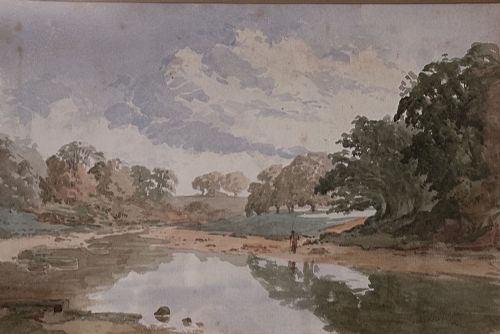
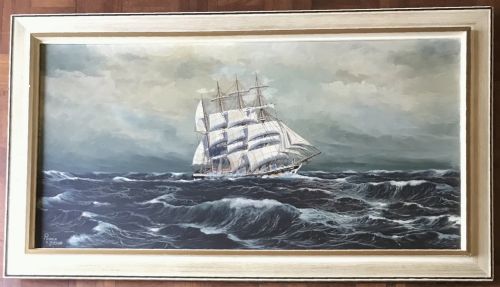
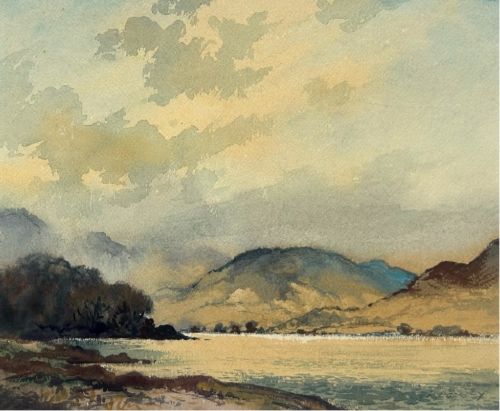
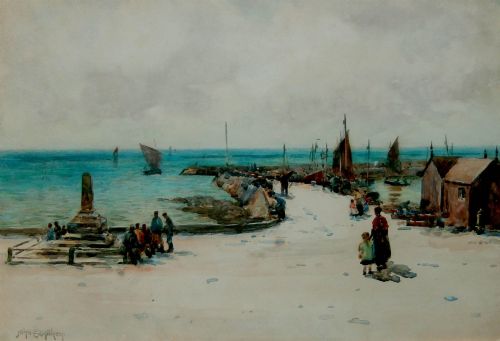
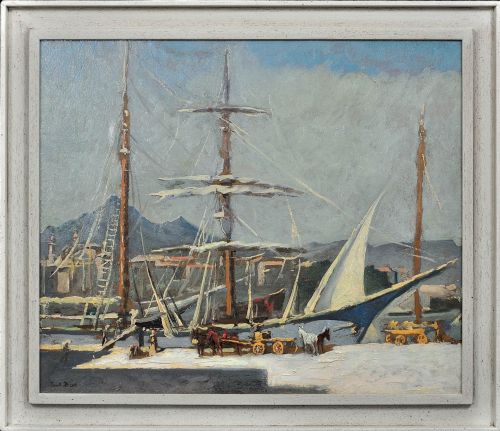
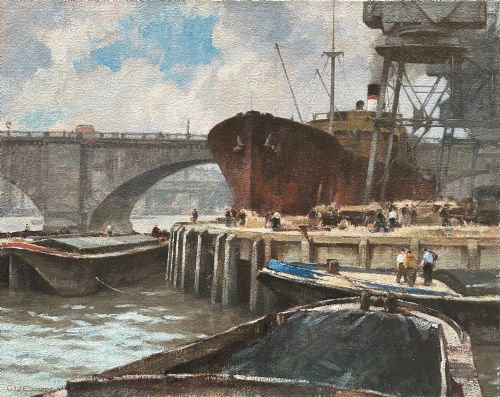
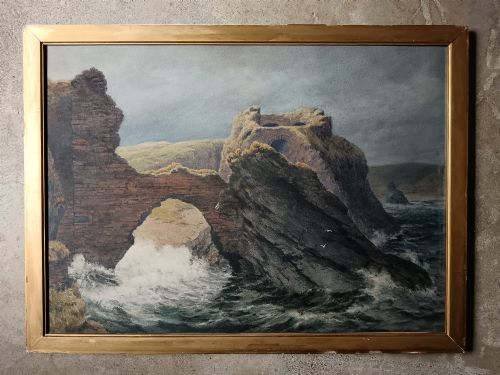


Grey Sky Landscape Artwork
Grey sky landscape artwork captures the atmospheric light of overcast British and European days through expressive paintings and watercolours.
Grey Sky Landscape Artwork
When you search for grey sky landscape artwork, you encounter paintings and watercolours depicting coastal scenes, rivers, estuaries, and countryside views dominated by heavy cloud cover and subdued weather. These works range from nineteenth-century watercolours to mid-twentieth-century oils on canvas and board.
The pieces on this page lean heavily into British and European traditions, including British Impressionism, Scottish Impressionism, and twentieth-century realism. You will frequently find coastal harbours, northern moors, and river scenes where the weather dictates the entire palette.
Materials and methods
Artists rendering these overcast vistas relied primarily on oil paint and watercolour applied to canvas, paper, wood panels, and board. Oil pigment allowed for heavy impasto and layered brushwork to build up dense storm clouds, while watercolour offered fluidity for transparent washes of grey and white.
Support materials varied by period, with nineteenth-century works frequently utilising heavy paper or stretched canvas, and later twentieth-century pieces incorporating board and panel. Frame construction typically involved wood, matching the period of the painting.
The listings feature oil paint, watercolour, and pastel on canvas, paper, and wood across periods spanning the nineteenth and twentieth centuries.
Assessing quality in these works
Quality rests in the artist's command of atmospheric tone and brushwork, where capturing the weight of an overcast sky requires subtle shifts in hue rather than flat grey pigment. Superior pieces demonstrate confident handling of light breaking through cloud cover, giving depth to otherwise sombre vistas.
The strength of the composition and the fidelity of the topographical detail further separate accomplished works from routine topographical sketches. Stronger paintings maintain structural integrity in the landscape while conveying the damp, heavy atmosphere of the scene.
Robert Leslie Howey·John E. Aitken·Paul Bret·Cyril Walduck Edwards·John Moxon·Charles William Adderton·Cuthbert Crossley·Herbert Royle·James Orrock·William Grant Murray·Robert Finley McIntyre·Ernest Higgins Rigg·Florence Hess·George Hamilton Constantine·A. G. Hayward·Paul Jones·Edmund Morris Wimperis·Thomas James Lloyd·William Miller Frazer·Kershaw Schofield·Fred Lawson·Paul Jean Clays·Owen Bowen·Claude Muncaster·Nora Munro Summers
The Grey Sky Landscape Artwork Glossary
- Impressionism
- A style of painting that emphasises spontaneous brushstrokes and the shifting effects of light and colour. In landscape art, this approach captures fleeting weather conditions and atmospheric moisture.
- Watercolour
- A painting method in which the paints are made of pigments suspended in a water-based solution. Artists apply these transparent washes to paper to achieve luminous sky effects.
- Oil paint
- A slow-drying paint consisting of pigment particles suspended in a drying oil. This medium allows for thick impasto application and extensive blending.
Grey Sky Landscape Artwork: Frequently Asked Questions
What periods do these artworks cover?
The selection spans from the nineteenth century through to the 1960s, encompassing Victorian works, early twentieth-century pieces, and mid-century modernism.
Most items date from the Victorian era up to the mid-twentieth century, reflecting established British and European painting traditions.
Are these paintings executed on canvas?
Surviving supports include traditional stretched canvas, heavy paper for watercolours, and wooden panels or boards.
Each material reflects the preferred medium of the artist and the specific demands of oil or watercolour painting during the period.
How do I identify a regional landscape?
Many pieces include specific topographical titles referencing locations such as Yorkshire, Scotland, Lancashire, or European coastal harbours.
Signatures, inscriptions on the reverse, and stylistic markers further help pinpoint the exact geographical focus of the artwork.
How should I frame and display them?
Works on paper typically require conservation mounting under glass to protect the watercolour medium from moisture and light damage.
Oil paintings on canvas or board benefit from traditional wooden frames that complement the period aesthetic without overwhelming the composition.