
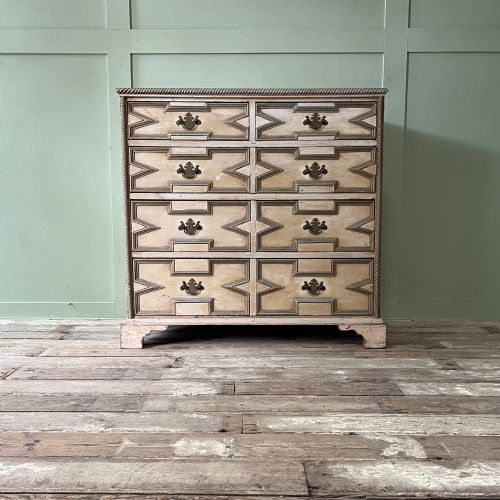
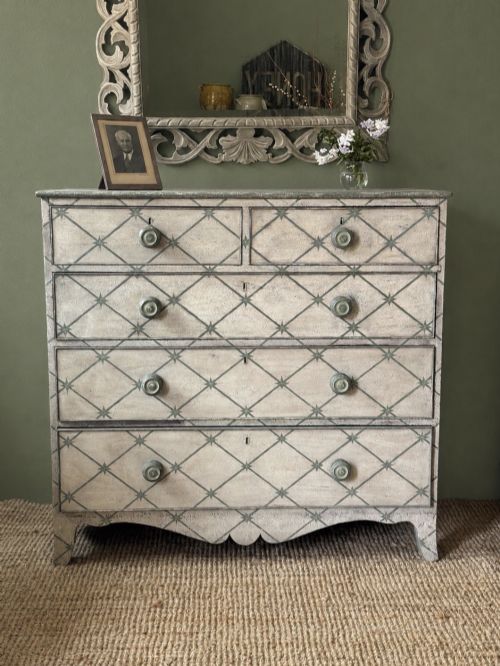
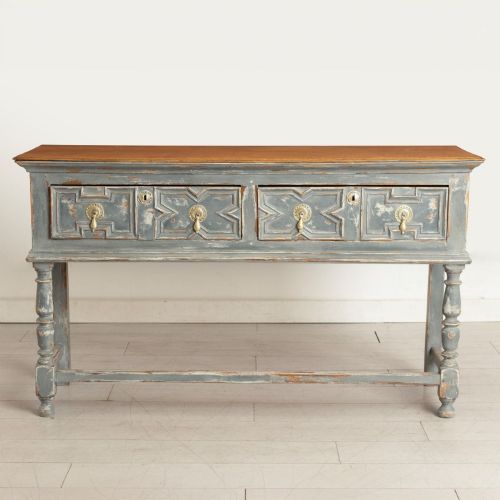
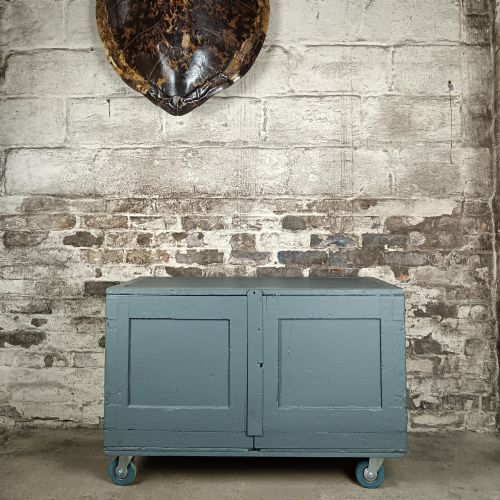




Grey Painted Chest
A grey painted chest brings understated continental elegance and practical storage to a room through centuries of painted woodwork traditions.

Understanding the Grey Painted Chest
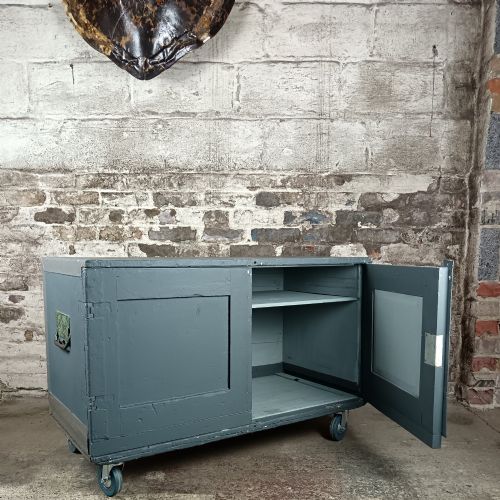
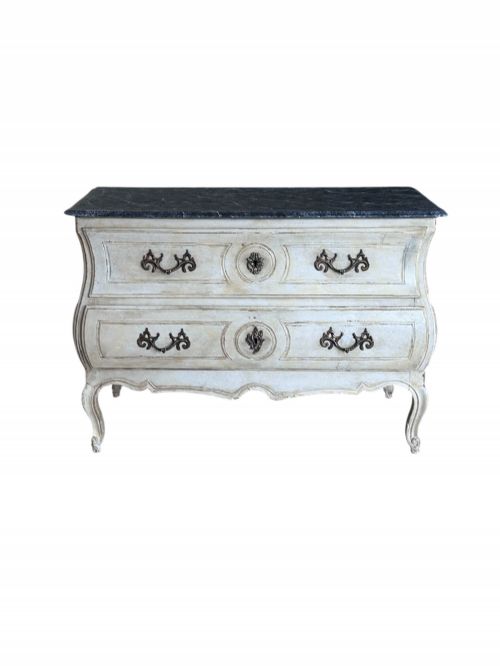
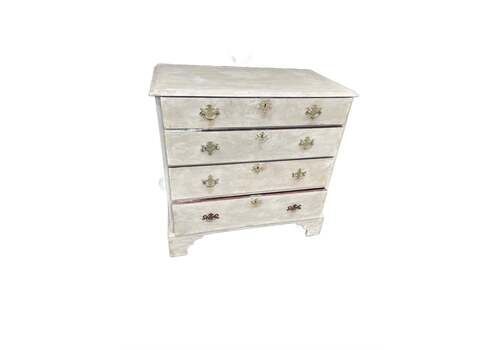
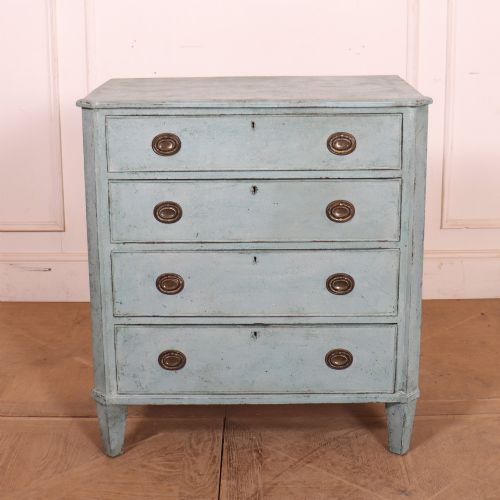
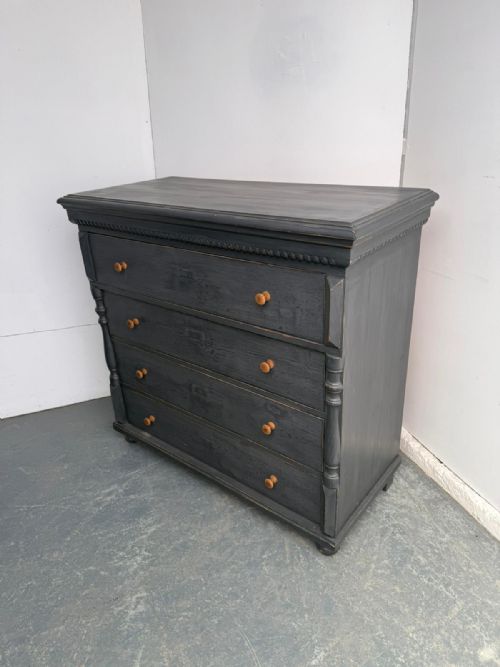
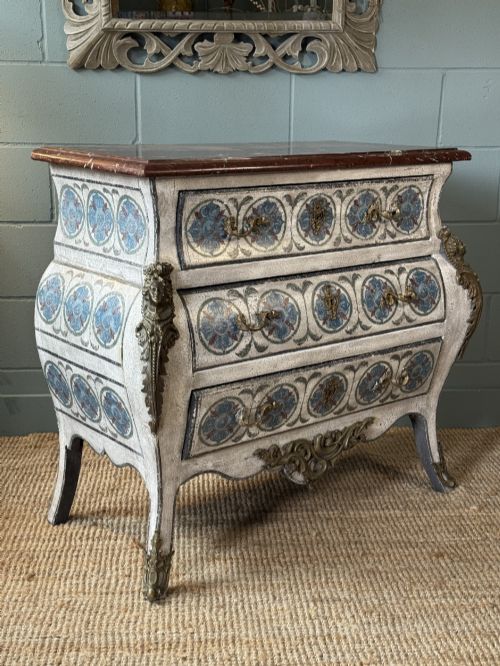
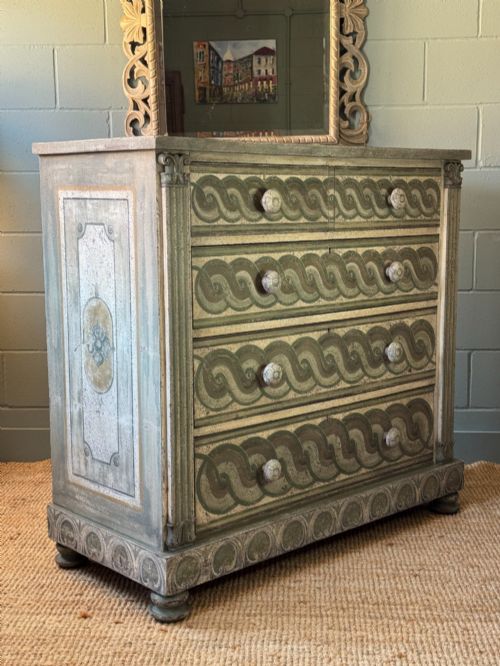
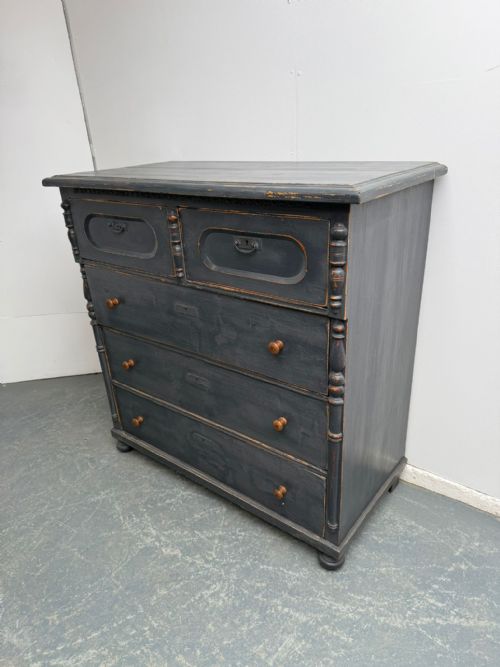
A grey painted chest spans multiple periods and regional styles, from nineteenth-century Victorian pieces to eighteenth-century French and Dutch commodes. Buyers encounter diverse forms, including four-drawer chests, serpentine fronts, and marble-topped commodes originating from workshops across Europe.
The finish defines the aesthetic, often appearing as original Hungarian paint, Swedish grey schemes, or hand-redecorated surfaces on solid ash, pine, and oak. These pieces function primarily as bedroom or hallway storage while carrying distinct decorative influences from French provincial, Gustavian, and Italian neoclassical design traditions.
Evidence shows a strong representation of nineteenth-century items alongside earlier eighteenth-century examples and later 1920s French carved oak pieces. Baltic pine and mahogany carcases frequently support these muted grey decorative schemes, blending utilitarian storage with refined provincial craftsmanship.
Materials and Construction
Carpenters constructed these chests using durable timbers such as pine, ash, oak, and occasionally exotic woods for structural carcases and drawer linings. Hand-applied paint layers in various shades of grey were then built up over the bare wood, sometimes accompanied by gilt detailing or Chinoiserie motifs.
Hardware details typically include brass handles and escutcheons that complement the painted wooden surfaces. Marble tops appear on specific continental commodes, providing a contrasting stone slab fitted directly to the timber frame.
Retail Price Guide 2026
Typical UK retail prices for grey painted chest, calculated from the Sellingantiques database of over a million retail prices indexed since 2003. This retail price guide relies exclusively on Sellingantiques data; no external sources or auction records are used, so the figures do not describe the wider market.
Listings feature woods including pine, oak, ash, and marble alongside painted finishes spanning the eighteenth, nineteenth, and early twentieth centuries.
Judging Quality and Character
Quality rests in the integrity of the underlying timber construction and the authenticity of the painted surface, whether aged through decades of use or applied by hand. Superior examples demonstrate balanced proportions, clean drawer operation, and harmonious integration of hardware with the painted finish.
Regional execution dictates much of the character, distinguishing refined Italian neoclassical or French serpentine commodes from sturdy Baltic pine or Victorian utility pieces. The depth of the paintwork and the preservation of original decorative elements ultimately separate standard utilitarian storage from exceptional decorative furniture.
Edwards and Roberts
The Grey Painted Chest Glossary
- Commode
- A low chest of drawers or cabinet, often originating from continental Europe and associated with eighteenth and nineteenth-century neoclassical or provincial styles.
- Serpentine
- A shape of furniture front that curves outward in the centre and inward at the sides, demanding considerable woodworking skill to execute.
- Gustavian
- The Swedish interpretation of French neoclassical style, characterised by lighter proportions, restrained carving, and pale grey or white paint finishes.
- Chinoiserie
- The European imitation of Chinese artistic traditions, featuring painted motifs of figures, landscapes, and flora often applied over coloured grounds.
- Escutcheon
- A protective plate surrounding the keyhole of a drawer or cabinet door, frequently cast in brass to complement the surrounding timber and paint.
Frequently Asked Questions
What is a grey painted chest?
A grey painted chest is a storage piece finished with pigmented paint over timber substrates like pine, oak, or ash. These items range from nineteenth-century Victorian drawers to eighteenth-century continental commodes.
They reflect various regional aesthetic traditions, including Gustavian, French provincial, and Dutch styles. The painted finish softens the appearance of heavy timber furniture for domestic interiors.
How were these chests used historically?
Historically, these chests provided essential bedroom and living space storage for garments, linens, and personal possessions. Finer commodes also served as decorative side tables in grand reception rooms.
Marble-topped versions offered durable surfaces for washing apparatus or displaying ornaments. Their versatile design allowed them to function across multiple domestic settings.
How do I live with a grey painted chest?
Living with a grey painted chest involves placing it in hallways, bedrooms, or living areas where its neutral tone complements surrounding decor. Regular dusting and careful handling of the painted surfaces maintain the finish over time.
Avoid placing damp items directly onto painted or wooden tops to prevent surface degradation. The neutral grey palette integrates easily with both modern and traditional interior schemes.
How do I tell periods apart?
Differentiating periods relies on examining construction methods, hardware styles, and distinct design vocabularies. Eighteenth-century pieces often feature serpentine fronts and elaborate provincial carving, while Victorian examples tend toward sturdier proportions.
Gustavian and neoclassical pieces display restrained symmetry and specific paint layering techniques. Timber selection also shifts between periods, moving from early Baltic pine and oak to later nineteenth-century ash.