
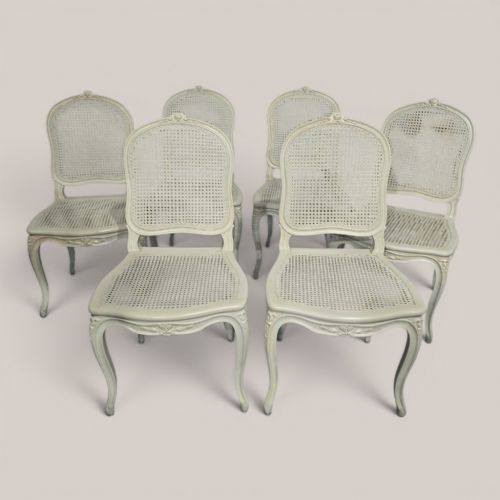
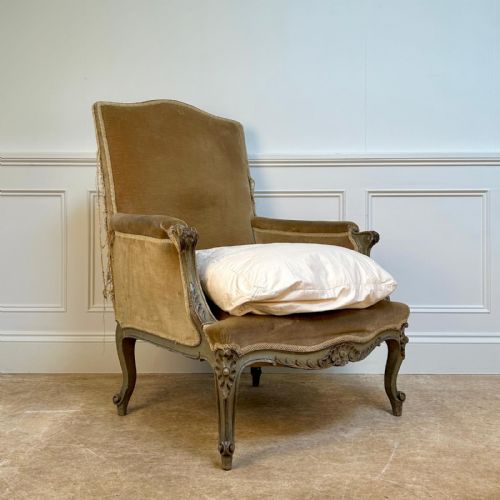
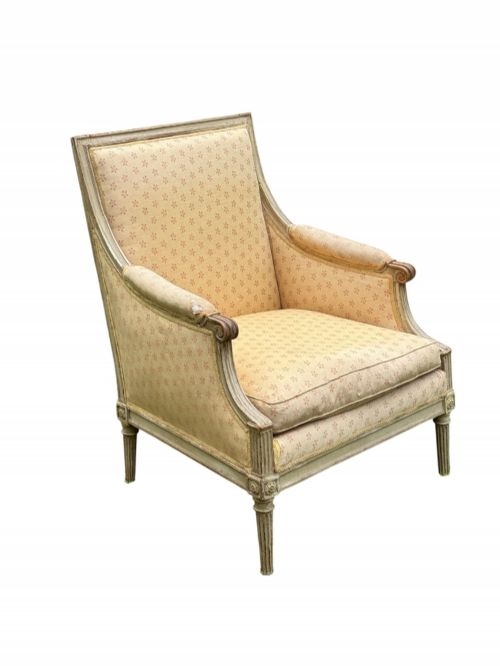
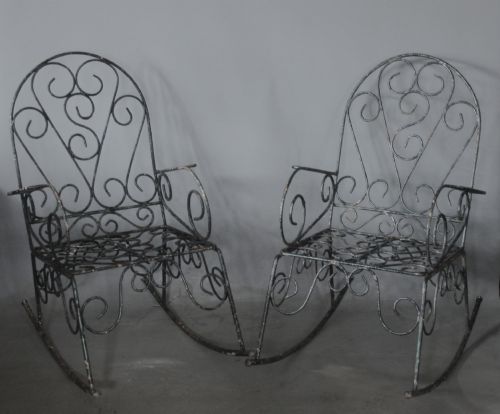


Grey Painted Chairs
Grey painted chairs bring continental elegance to a room, offering muted tones and traditional forms from French and Italian workshops.
Grey Painted Chairs
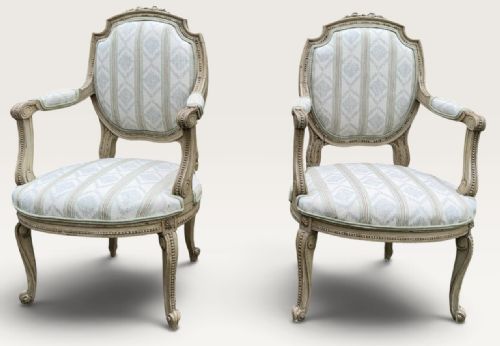
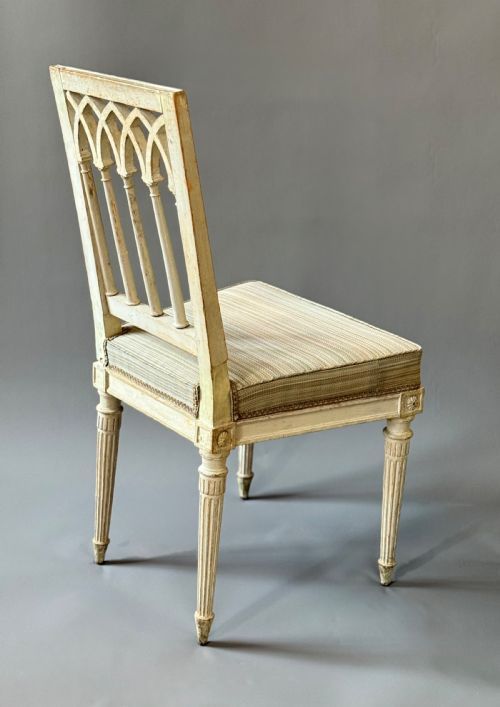
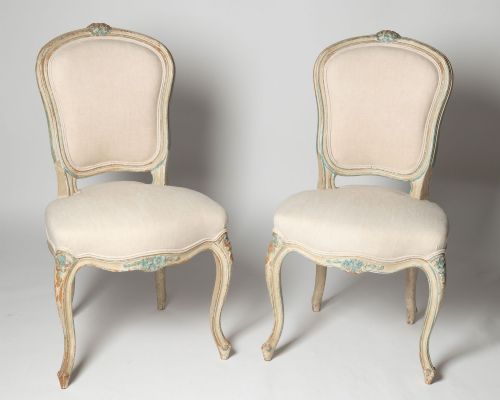
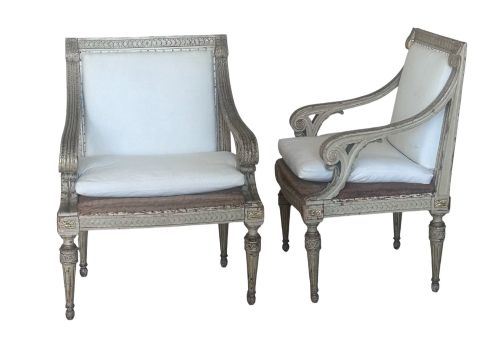
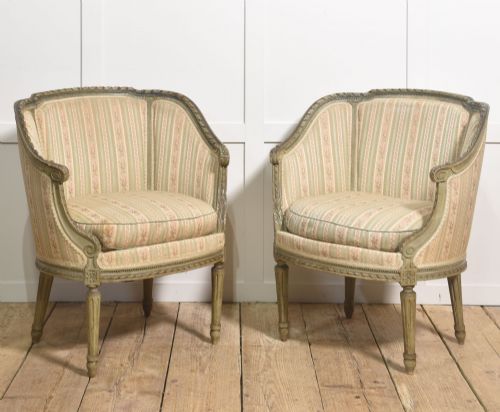
When you search for grey painted chairs, you encounter a selection spanning from the eighteenth century to the twentieth century, with a strong emphasis on continental pieces. The most common forms on this page are French armchairs, side chairs, and dining chairs originating from nineteenth-century and early twentieth-century periods.
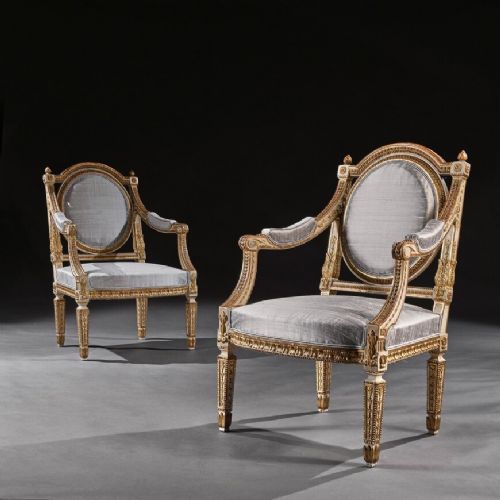
The inventory includes regional variations such as Italian Neoclassical armchairs, Piedmontese seating, and English designs influenced by French styles. Buyers frequently find pairs and sets suited for salons, dining rooms, and bedrooms.
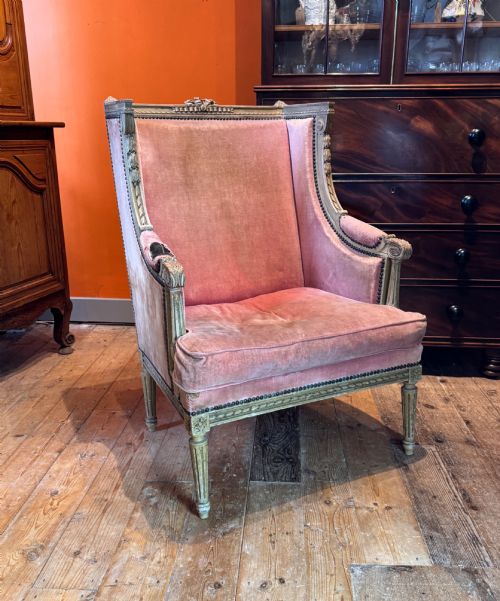
Forms extend beyond standard seating to encompass bergères, tub chairs, settees, and hall chairs. Many retain their original or early painted surfaces, displaying the patination accumulated over generations.
How they were made
Construction relies heavily on native timbers such as beech, oak, walnut, and pine, shaped by joiners before the application of decorative schemes. Carved details on frames often incorporate gesso layers to provide a smooth ground for subsequent paint finishing.
Surfaces receive layers of paint, sometimes accented with parcel gilt highlights to accentuate carved mouldings and neoclassical motifs. Upholstery methods involve traditional stuffing techniques finished in linen, textile, needlepoint, or cane panels.
Listings feature grey painted chairs spanning the eighteenth, nineteenth, and twentieth centuries, utilising beech, oak, pine, and gesso.
What varies in quality
The distinction between ordinary and superior pieces rests on the integrity of the original painted surface and the crispness of the wood carving. Surviving paint that retains its untouched patination elevates a piece above those with later or overpainted coats.
Proportion and structural refinement also dictate worth, as seen in the balance of fluted legs, carved arm supports, and the harmony of matched sets. Pieces retaining period upholstery materials or authentic cane work demonstrate higher levels of original craftsmanship.
Henri Jacob
The Grey Painted Chairs Glossary
- Bergère
- An enclosed upholstered armchair with wooden framing and a solid or upholstered back. These often feature cane sides and loose cushion seats.
- Fauteuil
- An open-arm armchair with exposed wooden armrests and upholstered back and seat. Originating in France, this form typifies formal interior seating.
- Gesso
- A plaster-based mixture applied to wood surfaces to create a smooth preparation layer for gilding or painting. It allows crisp detail in carved ornaments.
- Parcel Gilt
- A decorative technique where specific carved elements are highlighted with gold leaf while the main body remains painted. This contrasts metallic gleam against matte colour.
- Sgabello
- A light wooden chair featuring solid supports instead of legs, commonly used in hallways during earlier periods. The form provides a rigid, architectural profile.
Grey Painted Chairs: Frequently Asked Questions
Are these chairs comfortable for daily use?
Most antique seating is designed with upright postures in mind, reflecting the formal habits of past centuries. Bergères and armchairs offer generous proportions, though dining models feature firmer support.
Upholstered panels and cushions can be maintained or renewed by professional conservators to suit modern seating preferences without altering the historic frame.
How do I care for original painted surfaces?
Original paint requires gentle maintenance using a dry cloth or a very soft brush to remove dust. Moisture and chemical cleaning agents should be avoided to preserve the historic finish.
Placing chairs away from direct sunlight and dramatic temperature shifts prevents the timber from moving and the paint from flaking over time.
Can I mix different French styles together?
Mixing pieces from Louis XV, Louis XVI, and later Revival periods is a traditional approach to interior decoration. The shared use of grey painted finishes provides a unifying visual link across varying decades.
Matching scale and wood tones helps integrate disparate chairs around a single dining table or within the same salon arrangement.
How do I distinguish original paint from later decoration?
Original paint displays subtle wear, craquelure, and integration with the underlying gesso and timber that develops naturally over decades of use. Brush marks, historic patination, and wear patterns around touch points indicate genuine age.
Later or repainted surfaces often appear uniform, opaque, and lack the gradual thinning over high spots seen on authentic period pieces.