
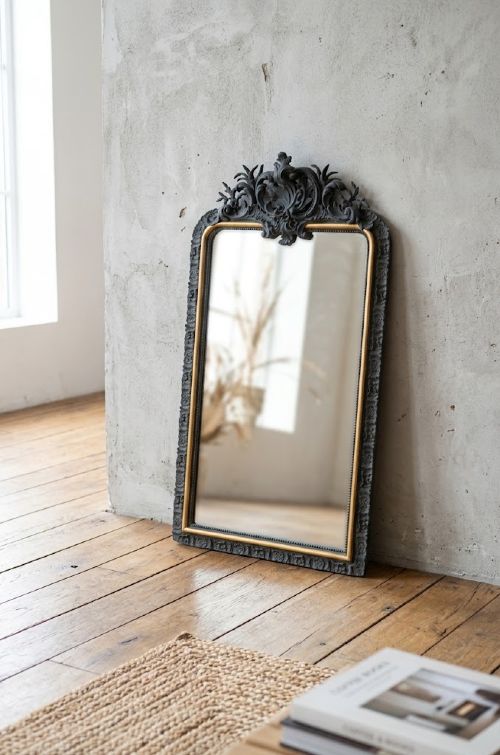
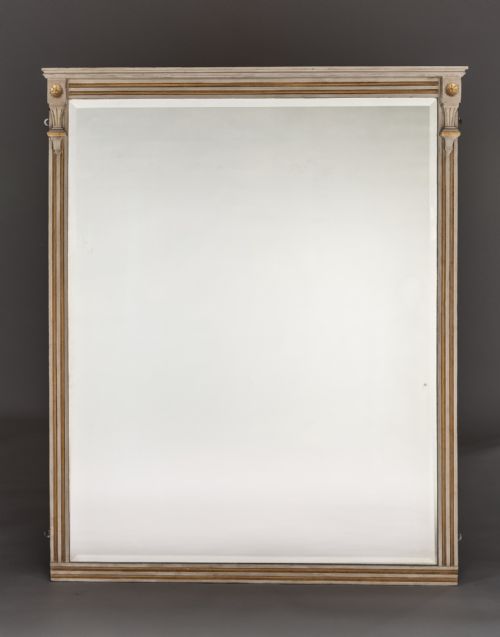
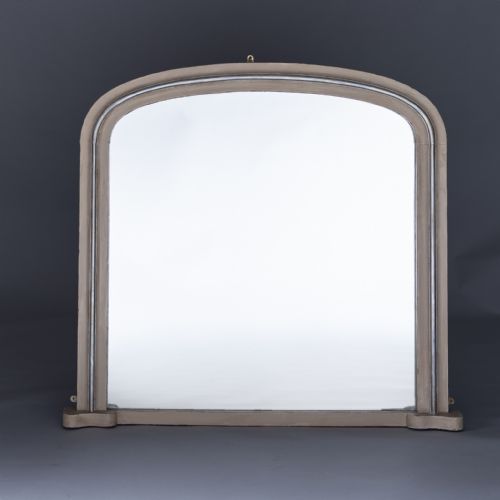

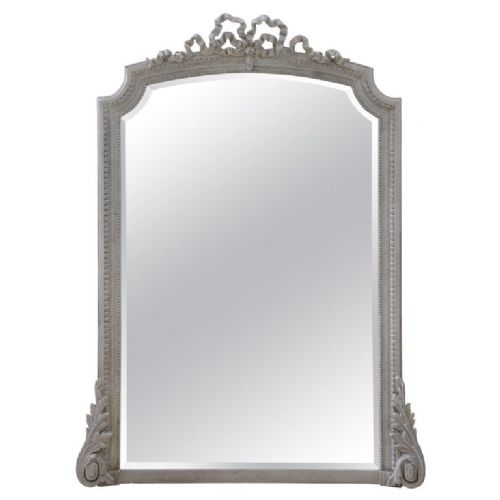


Grey Overmantel Mirror
A grey overmantel mirror brings architectural weight and muted colour to a room, hung above a fireplace or along a principal wall.
Grey Overmantel Mirror
A grey overmantel mirror is designed to command the space above a chimney breast, drawing the eye upward with generous proportions and arched or shaped tops. These pieces originate predominantly from the nineteenth century, spanning Victorian English workshops and French provincial or chateau interiors.
The format varies from simple rectilinear frames to elaborate trumeau panels complete with decorative relief work, columns, or parcel gilding. Most examples encountered here combine painted wooden frames with traditional gesso mouldings finished in subtle tones of grey.
How they were made
Makers shaped structural timber into robust frames, applying layers of gesso to build up high-relief decorative motifs such as scrolls, ribbons, and classical details before applying paint. Gold or silver leaf was frequently used for parcel-gilding or parcel-silvering to highlight raised carvings against the painted grey ground.
Original mirror glass, including mercury glass variants, was set securely within these carved wooden housings, often complemented by decorative panels or carved pediments at the crest.
Listings span periods from eighteen-fifty to nineteen-twenty, featuring English Victorian and French stylistic influences across wooden and gesso forms.
What varies in quality
Quality rests in the depth and crispness of the carved wood and gesso ornamentation, where hand-tooled relief panels display superior definition compared to simpler moulded alternatives. The integration of original painted surfaces and well-preserved parcel-gilt details determines the aesthetic integrity of the piece.
The weight of the timber framing and the clarity or character of the underlying glass plate also distinguish standard room mirrors from substantial architectural overmantels.
The Grey Overmantel Mirror Glossary
- Overmantel
- A large mirror specifically designed or proportioned to hang on the wall directly above a fireplace mantelpiece. These pieces often feature wide horizontal or vertical dimensions to balance the hearth below.
- Trumeau
- A decorative wall mirror incorporating a painted or carved panel above the glass plate. These often reflect French neoclassical or empire taste.
- Gesso
- A plaster-like mixture applied to wood frames and carved into intricate decorative reliefs. It provides a smooth base for subsequent painting and gilding.
- Parcel-gilt
- A surface treatment where specific carved details are partially highlighted with gold leaf while the rest of the frame remains painted. This technique accentuates the depth of the mouldings.
- Mercury glass
- An early form of mirror glass produced by pouring a silvering amalgam between double-walled blown glass. It develops a characteristic mottled foxing over time.
Grey Overmantel Mirror: Frequently Asked Questions
Where should an overmantel mirror be hung?
An overmantel mirror is traditionally mounted centrally on the chimney breast directly above the fireplace surround, where its scale anchors the room.
Alternatively, large examples work effectively as standalone floor or wall mirrors in reception rooms to amplify natural light.
How do I identify a French nineteenth-century mirror?
French nineteenth-century mirrors often display distinct stylistic markers such as trumeau panels, Rococo Revival curves, or Empire architectural columns.
Makers from this period frequently utilised carved wood and gesso finished with subtle painted grey grounds and parcel gilding.
What is parcel-gilding on these frames?
Parcel-gilding involves applying gold leaf selectively to raised carved elements on the frame rather than covering the entire surface.
This technique creates contrast against the painted grey wood underneath.
Are these mirrors heavy to hang?
These pieces incorporate substantial timber frames, carved wood, gesso, and glass, resulting in considerable weight.
Secure wall fixings and proper load-bearing wall anchors are necessary for safe installation.