

Grey Maritime Painting
Grey maritime painting captures coastal waters and vessels under overcast skies across the nineteenth and twentieth centuries.
Grey Maritime Painting
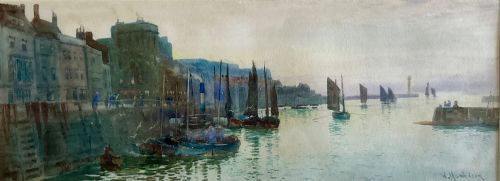
A grey maritime painting focuses on coastal scenes, harbours, and open seas rendered through a restrained palette of muted tones. Buyers encounter framed watercolours and oil paintings originating from British and European hands during the Victorian, Edwardian, and mid twentieth-century periods.
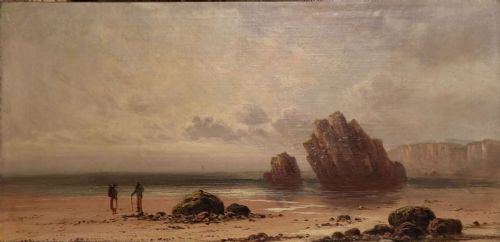
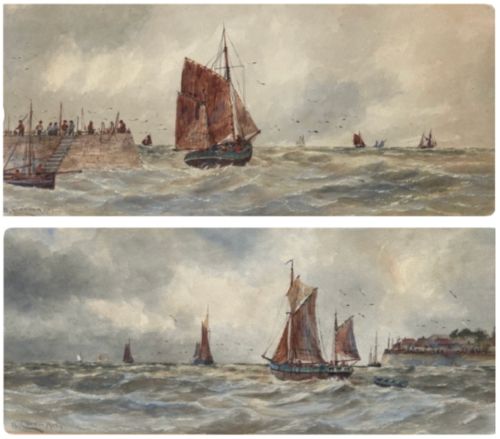
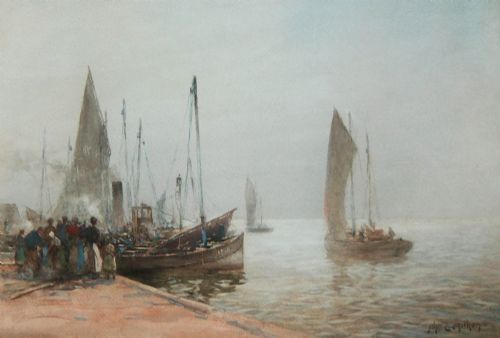
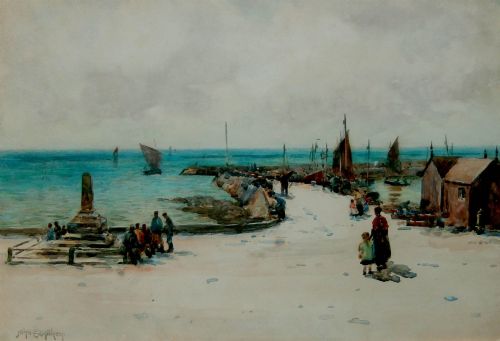
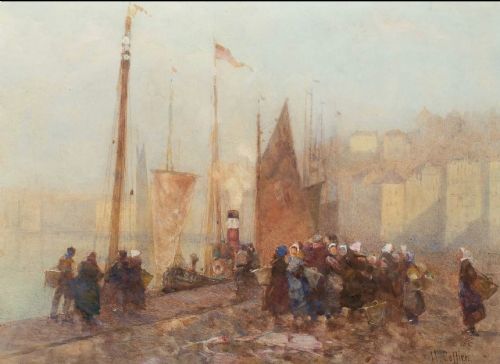
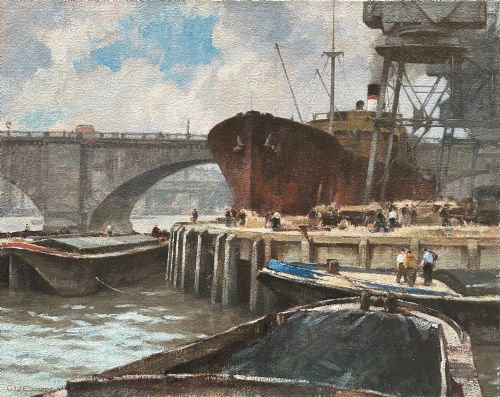
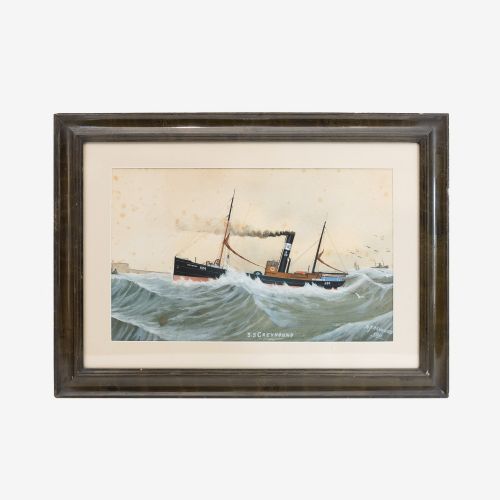
The subjects range from working fishing boats and barges to naval vessels and stormy shorelines. Many works document specific locations such as Yorkshire fishing ports, tidal rivers, and international harbours under overcast or moody atmospheric conditions.
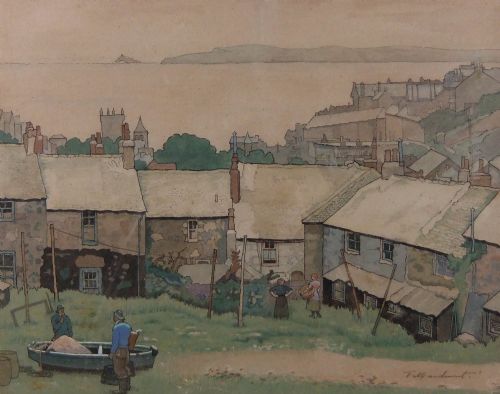
Most selections on this page balance topographical record with painterly interpretation. Artists captured the movement of water and the grit of maritime labour using traditional pigments on canvas, paper, or board.
Materials and methods
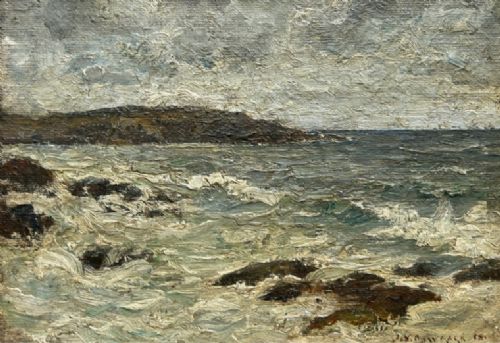
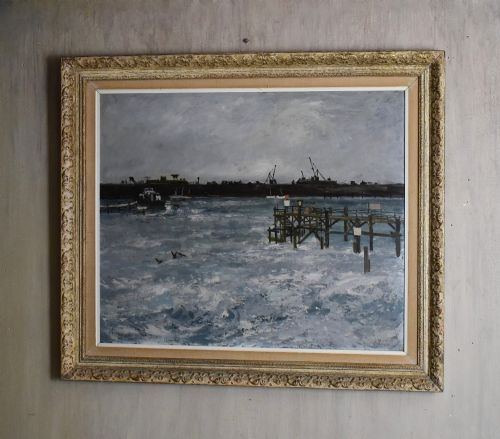
Makers utilised oil paint on canvas or board to build textured surfaces, sometimes employing impasto techniques to render churning waves and heavy skies. Watercolours combined with bodycolour or gouache on paper allowed artists to capture transparent washes alongside sharp details of rigging and architecture.
Framed presentation typically involved wood surrounds, protecting works executed on paper under glass while oil paintings remained exposed on stretched canvas. Support materials reflect standard studio practices of the nineteenth and twentieth centuries, employing prepared wood panels and heavy-weave canvases.
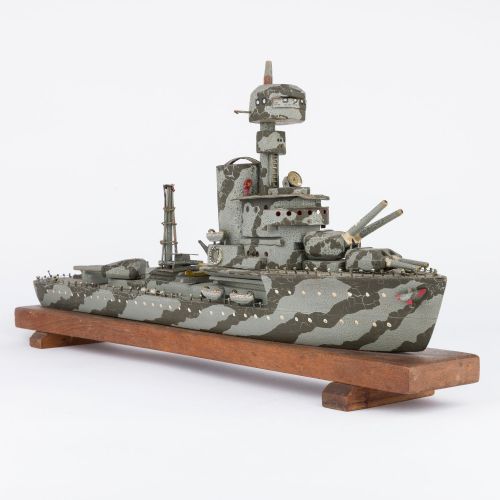
One ironclad battleship portrait doubles as a sailor's sentimental tribute to his shipmates, complete with a hand-lettered dedication.
Factors of distinction
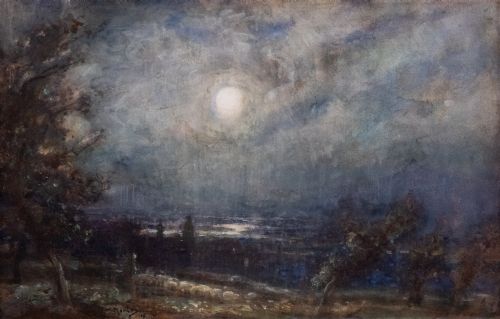
Execution and atmosphere separate accomplished works from routine topographical records. The finest pieces demonstrate a confident handling of light and shadow within a restricted monochromatic or muted palette, conveying movement and depth without relying on excessive detail.
Provenance and artist attribution elevate certain works, particularly when signed by established regional painters or exhibited practitioners of maritime art. The relationship between the medium and the subject matter dictates visual success, such as oil applied with heavy texture to capture a turbulent sea.
Kenneth Cozens·William Cannon·James E Aitken·Thomas William Morley·Peter Brannan·Paul Bret·Hector Caffieri·Cyril Walduck Edwards·Thomas Maidment·William Matthison·Alexander Harwood·Frank Kelsey·Charles William Adderton·Eric Tufnell·Vincenzo D Esposito·Raymond Picque·Fred Pailhes·Thomas Bush Hardy·Ernest Dade·Edward Seago·Arthur Tucker·Robert Leslie Howey·Tom Clough·Edward Henry Eugene Fletcher·William Greaves
The Grey Maritime Painting Glossary
- Impasto
- Paint applied thickly to a canvas or board, leaving visible brush or palette knife strokes that add physical texture. This technique is frequently observed in oil paintings depicting rough seas.
- Gouache
- An opaque water-based paint used alongside watercolour to create solid areas of tone and highlight. It allows artists working on paper to introduce dense whites and greys into maritime skies.
- Barque
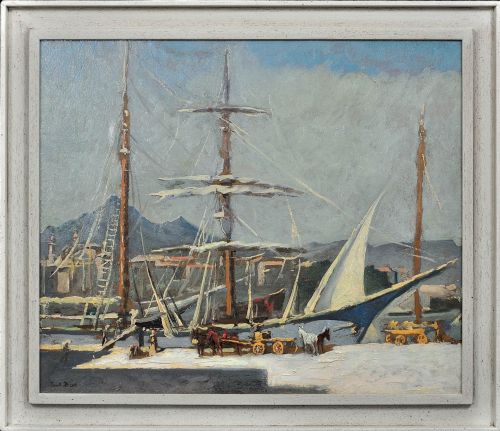
- A sailing vessel with three or more masts, where the aft mast is rigged fore-and-aft and the others are square-rigged. These ships frequently feature as subjects in nineteenth and twentieth-century marine art.
- Barge
- A flat-bottomed boat built for carrying heavy cargo on rivers and canals, commonly depicted in British coastal and estuarine scenes. Thames barges and old trading craft appear regularly in maritime watercolours and oils.
- Seascape
- A work of art that depicts the sea, coastal views, or ships in open water. This genre encompasses both calm harbour scenes and dramatic portrayals of shipwrecks and storms.
Grey Maritime Painting: Frequently Asked Questions
What subjects appear in grey maritime paintings?
These works depict coastal landscapes, busy harbours, fishing boats, and naval vessels under overcast skies. Artists recorded working ports, estuarine traffic, and dramatic sea encounters around British and European shores.
Subjects range from calm anchorages with moored barques to turbulent high tides and stormy waters against rocky cliffs.
How should I frame and display these watercolours?
Works on paper require framing under glass with acid-free mounts to protect the pigment from moisture and ultraviolet light. Display them away from direct sunlight to preserve the delicate grey and muted washes.
Oil paintings on canvas or board need stable indoor environments with moderate humidity and minimal direct exposure to heat sources.
How do I distinguish between watercolours and oil paintings?
Watercolours are executed on paper, often showing transparent washes and visible paper texture beneath thin pigment layers. Gouache or bodycolour may be added for opaque highlights.
Oil paintings utilise viscous paint applied to canvas, wood panels, or board, resulting in a heavier surface texture and a more reflective finish.
What periods do these maritime artworks represent?
The selection spans from the early nineteenth century through the Victorian and Edwardian eras into the mid twentieth century. Pieces from the nineteen-fifties and sixties introduce more abstract or impressionistic interpretations of coastal scenes.
Victorian and Edwardian works often provide detailed topographical records of specific harbours and traditional vessels.