


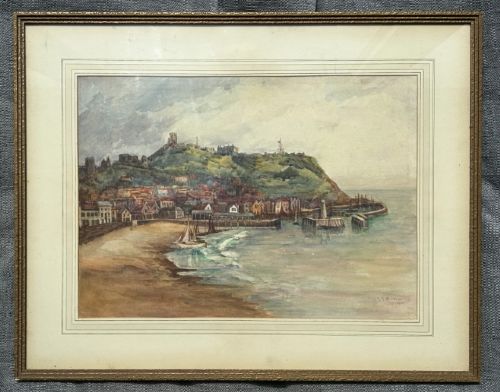


English Marine Artwork
When you search for english marine artwork, you encounter historical paintings capturing coastal scenes, harbours, and seascapes.
English Marine Artwork
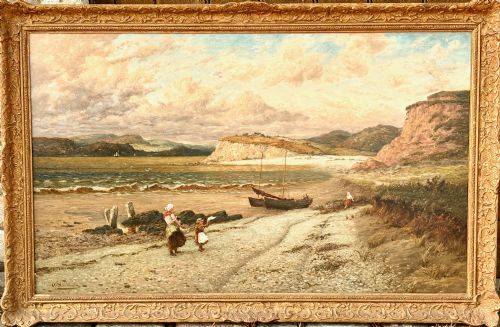
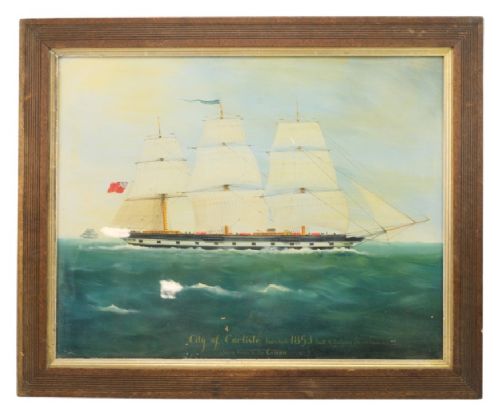
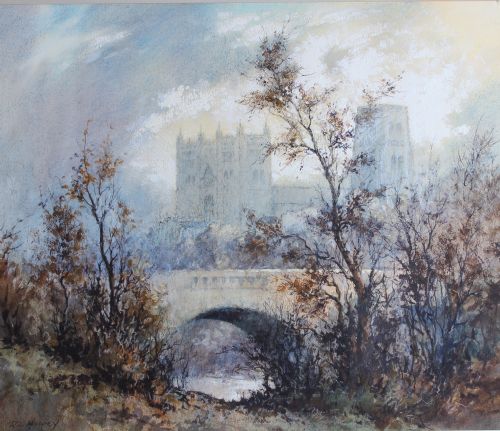
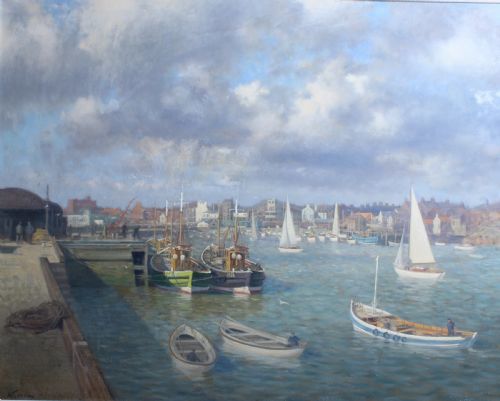
English marine artwork encompasses painted depictions of coastal views, fishing vessels, harbours, and open waters originating from British hands. These pieces range from detailed nineteenth-century watercolours to mid-twentieth-century oil paintings on canvas and board.
The selections most commonly met on this page date from the Victorian period through to the mid-twentieth century. They frequently portray recognisable locations along the British coastline, including Yorkshire harbours, Cornish ports, and southern coastal piers.
Makers and painters represented span local West Country artists, regional topographical painters, and members of British art schools. Their works record the changing maritime trades, coastal architecture, and shipping of past eras.
How they were made
Artists utilised traditional media such as oil paint applied to canvas, wood, card, and board, alongside watercolour pigment on paper. Oil paintings often demonstrate layered brushwork to render choppy seas and atmospheric skies, while watercolours rely on fluid washes and precise pencil underdrawing.
Surviving examples are frequently housed within period gilt wood frames that complement the scale and subject of the painting. The combination of pigment, ground support, and framing reflects standard nineteenth and twentieth-century studio practices.
Several Victorian artists clearly painted while enduring sea spray, capturing salty gusts and dramatic skies directly onto their paper.
What varies in quality
The distinction between standard examples and superior works rests upon the artist's handling of light, movement, and atmospheric depth within the marine subject. Stronger pieces convey the specific motion of waves and the weight of weather rather than relying on formulaic topographical recording.
Condition and preservation of the original surface also influence the standing of a piece, particularly the stability of oil on canvas or the retention of vibrant watercolour pigment without excessive fading.
James Orrock·William Banks Fortescue·Robert Leslie Howey·Walter Goodin·F A Roylance·Alfred George Morgan·John Bedloe Goddard·William Edward Webb·Charles Napier Hemy·Richard Harry Carter·James Fry·Fred Lawson·George Hamilton Constantine·John Bell·Frederick William Hattersley·Frederick William Booty·Charles Harmony Harrison·William Wyld·Alfred Henry Vickers·Percy Brooke·Thomas Bush Hardy·Joseph Newington Carter·Lennard Lewis·Frank Rousse·James Watson
The English Marine Artwork Glossary
- Watercolour
- A painting method where fine pigment is suspended in a water-based solution and applied to paper. It allows for translucent washes and delicate tonal gradations.
- Impasto
- Paint applied in thick layers that stand out distinctly from the surface. This technique imparts tangible texture to waves, sails, and clouds.
- Seascape
- A work of art depicting the sea, coastal views, ships, or marine activities. It forms the primary subject category for these coastal paintings.
- Gilt wood
- Timber framing finished with a thin layer of gold leaf or metallic gilt. These frames are typical of nineteenth-century fine art presentation.
- Topographical
- Depicting specific real-world locations with a degree of accuracy. Many marine works record recognisable towns, harbours, and coastal landmarks.
English Marine Artwork: Frequently Asked Questions
What subjects appear in english marine artwork?
These works depict coastal landscapes, busy fishing harbours, sailing vessels, and stormy seas along the British coastline. Artists recorded everyday maritime life alongside notable coastal architecture.
Scenes frequently capture specific locations in Yorkshire, Cornwall, Dorset, and East Anglia, reflecting the diverse character of Britain's shores.
How do I care for antique paintings?
Antique watercolours and oil paintings require stable indoor environments away from direct sunlight and excessive humidity. Protecting works behind glass helps shield paper supports from airborne pollutants.
Original gilt wood frames benefit from gentle dusting with a dry, soft cloth without liquid cleaners or abrasive materials.
How are nineteenth-century paintings dated?
Dating relies upon artist signatures, exhibition labels, framing styles, and stylistic evidence within the clothing or vessels depicted. Many pieces bear contemporary inscriptions on the reverse or mount.
Archival records for regional British artists provide biographical windows that help narrow the period of execution.
What is the difference between oil and watercolour marine works?
Oil paintings utilise viscous pigments on canvas or board, allowing for rich texture, deep shadows, and reworked details. Watercolours employ translucent pigments on paper, producing lighter, more immediate atmospheric effects.
Oils were typically framed without glass for direct viewing, whereas watercolours required glass protection from atmospheric moisture.