




Grey Marble Chest
A grey marble chest brings weight and calm proportion to a room, offering deep drawers beneath a cool stone surface.
Grey Marble Chest
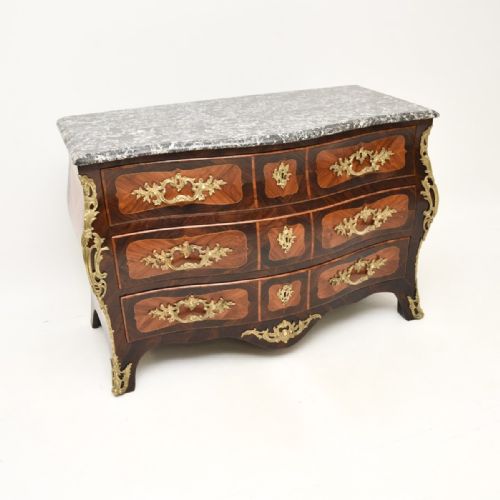
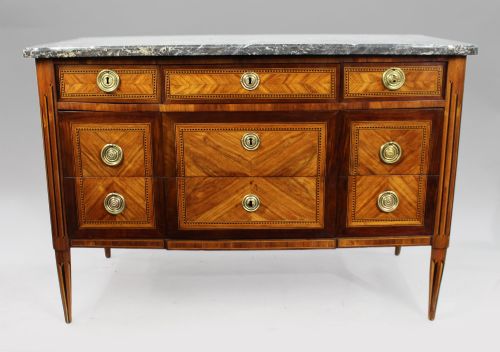
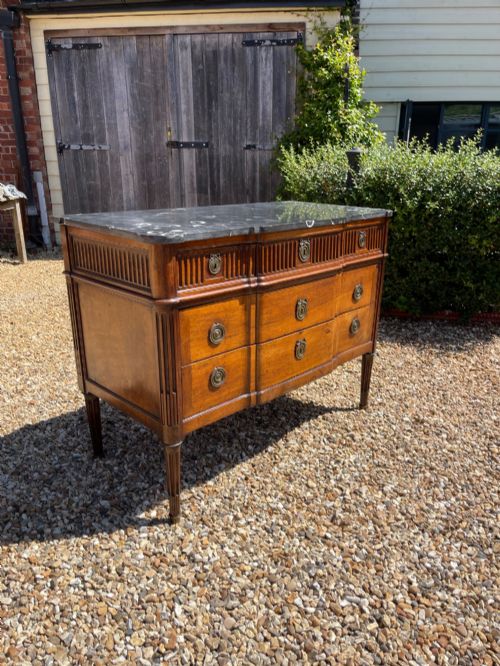
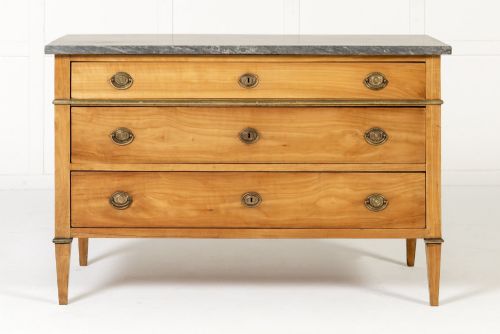
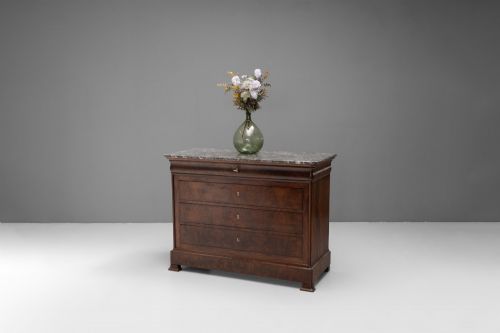
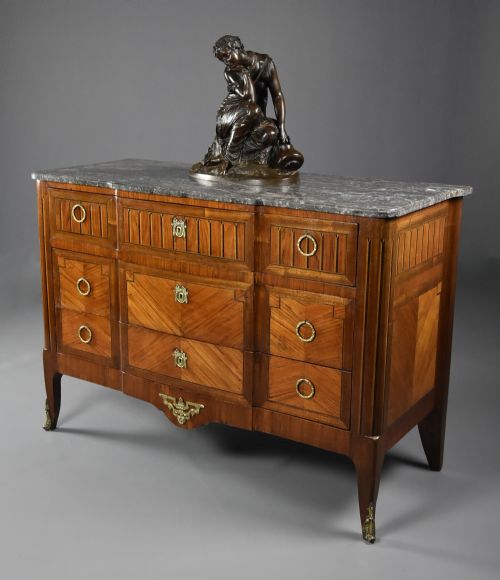
A grey marble chest typically presents as a French commode or chest of drawers dating from the eighteenth and nineteenth centuries, topped with thick stone. The form serves primarily for bedroom storage, utilising wide drawer configurations across various regional styles.
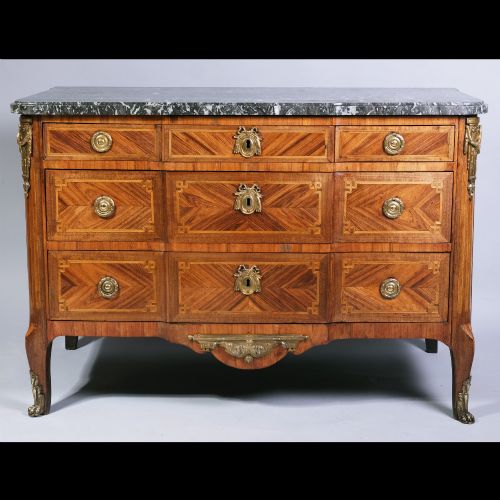
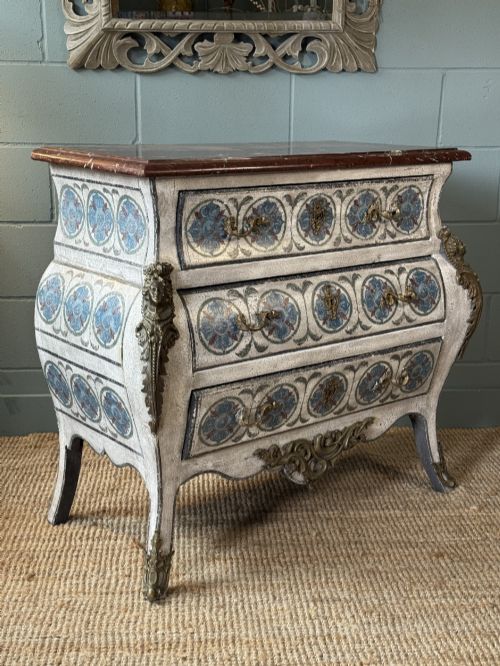
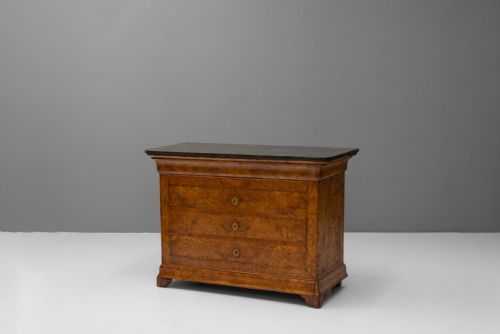
Examples on this page span the Louis periods, including Louis XV and Louis XVI, alongside simpler provincial and cherrywood pieces. Buyers frequently encounter nineteenth-century walnut and mahogany carcasses fitted with heavy grey marble slabs.
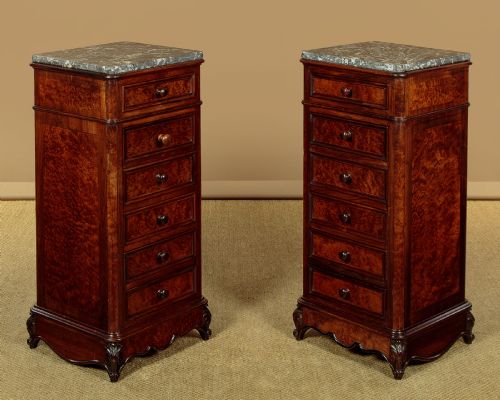
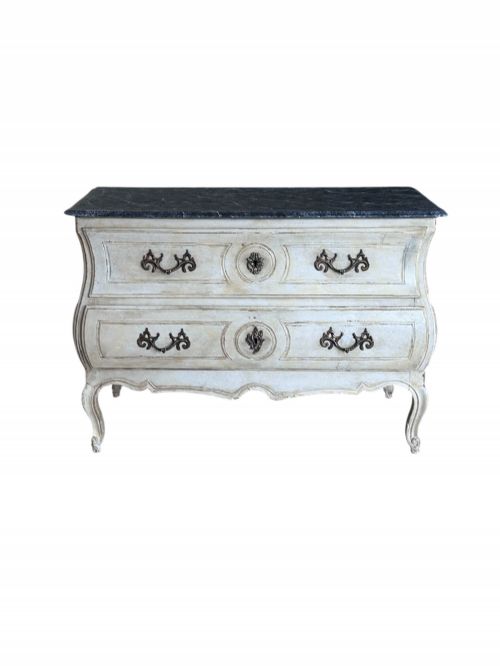
The combination of timber bodies and stone tops appears across continental workshops, encompassing bombé shapes, straight fronts, and taller semainiers. Each piece balances functional capacity with the decorative presence of natural grey stone.
Assessing quality and distinction
Quality rests in the harmony between the stone top and the timber base, where thick, well-figured grey marble matches the proportion of the carcass. Superior pieces show precise parquetry work and original bronze or brass mounts that integrate cleanly with the drawers.
Construction depth dictates longevity, seen in substantial drawer linings and tight joinery rather than surface polish alone. Provincial items rely on honest regional carpentry, while formal revival pieces depend on the crispness of their veneers and bronze detailing.
Listings feature walnut, mahogany, and cherrywood carcasses paired with grey marble across eighteenth and nineteenth-century French and continental periods.
Jacques Bircklé
The Grey Marble Chest Glossary
- Commode
- A low chest of drawers, particularly of French origin, typically fitted with a stone top. The form developed through successive royal periods into standard domestic furniture.
- Bombe
- A swelling, convex furniture shape characteristic of eighteenth-century case pieces. This curved profile requires specialised shaping of both the wooden carcass and the fitted marble top.
- Parquetry
- Geometric wood inlay forming patterned surfaces on drawer fronts and panels. Artisans arrange contrasting timbers like walnut and tulipwood to create decorative geometric displays.
- Semainier
- A tall, narrow chest of drawers traditionally designed with seven drawers, one for each day of the week. These pieces often feature a marble top above stacked storage.
- Ormolu
- Gilt bronze mounted onto furniture as decorative handles, feet, and escutcheons. The technique involves applying finely ground gold amalgam to cast bronze.
Grey Marble Chest: Frequently Asked Questions
How do I clean a grey marble top?
Wipe the stone surface using warm water and a soft cloth, avoiding acidic cleaners that etch polished marble. Regular dusting prevents everyday grime from settling into the natural pores of the stone.
Dry the surface thoroughly after washing to maintain the sheen. Stubborn marks require specialist neutral soap rather than harsh household chemicals.
Are the marble tops original to the chests?
Many nineteenth-century and eighteenth-century pieces retain their heavy stone slabs, which sit unattached on the wooden frame. Replacement tops happen due to historical breakage, so examining the underside for matching wear helps confirm authenticity.
The edges and corners of the marble should align naturally with the timber overhang beneath it.
How do I tell Louis XV from Louis XVI styles?
Louis XV pieces lean towards curves, cabriole legs, and asymmetrical mounts, showcasing fluid movement across the drawer fronts. The later Louis XVI style introduces strict symmetry, fluted columns, and neoclassical straight lines.
Drawer proportions also shift from organic serpentine shapes to orderly rectangular forms as tastes transitioned toward the end of the eighteenth century.
Where should I place a marble chest at home?
Bedrooms and hallways suit these chests well, providing sturdy surfaces that resist everyday wear from lamps and objects. The cool stone top handles daily use while the deep drawers accommodate linens and clothing.
Ensure the floor is level before positioning the piece, as the combined weight of timber and marble demands a stable foundation.