


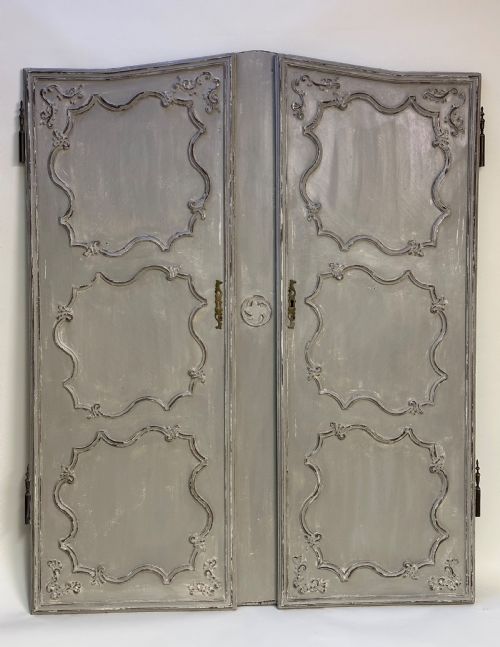
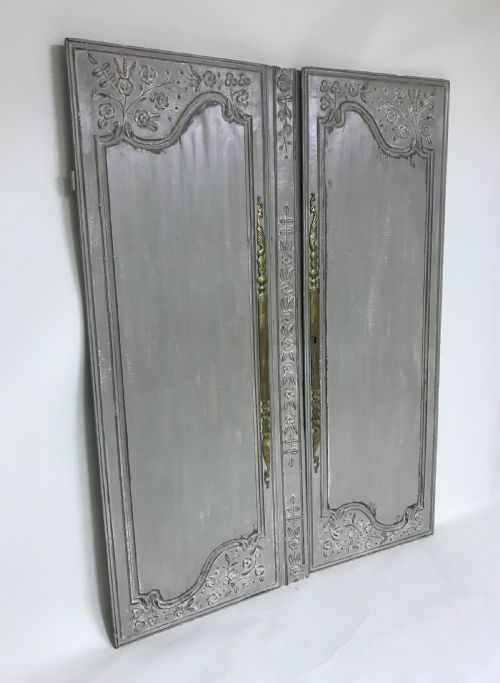


Grey French Carved Panels
Grey french carved panels bring architectural grace into a modern interior, offering aged painted finishes and intricate handwork.
Grey French Carved Panels
Grey french carved panels encompass architectural salvage, wall plaques, armchairs, and mirrors originating from France across the nineteenth and early twentieth centuries. When searching for grey french carved panels, buyers generally encounter full-sized doors, cabinet doors, wall panels, and trumeau mirrors featuring historic painted surfaces.
The objects stem predominantly from periods including the mid nineteenth century, the 1870s, the 1890s, and into the early twentieth century around 1900 to 1920. Pieces such as open armchairs integrate wool needlepoint panels alongside timber frames, merging structural woodwork with textile arts.
Origins range from provincial farmhouses to chateau interiors, displaying styles that span French Provincial, French Chateau, Rococo Revival, and Louis XVI. The dominant form on this page is the paired door format, often showing layers of historic grey paint over walnut, cherrywood, or general timber.
How they were made
Carpenters and carvers shaped these pieces using traditional hand-carving techniques on solid timbers such as walnut and cherrywood. Surfaces were frequently treated with layers of paint, creating the characteristic grey tones seen across the surviving architectural elements.
Metal components like brass and iron appear in functional fixings and mirror surrounds, complementing the timber structures. Needlepoint inserts in seating utilise wool worked by hand before being mounted into carved wooden frames.
The listings on this page span the mid nineteenth century through to the 1920s, featuring timber, paint, iron, and brass.
What varies in quality
Depth and precision of the hand-carving separate standard vernacular joinery from sophisticated chateau work. Crisp relief work in foliage, scrolls, or classical motifs indicates skilled workshop production.
The integrity of the original painted surface dictates much of the visual character. Panels retaining undisturbed historic grey paint hold greater stylistic coherence than those stripped or heavily recoated.
The Grey French Carved Panels Glossary
- Trumeau mirror
- A wall mirror featuring an upper panel decorated with painting or carving, often integrated into architectural boiserie. These pieces served as focal points above mantelpieces in nineteenth-century salons.
- Architectural salvage
- Elements rescued from older buildings, including doors, panels, and architraves, repurposed for interior decoration. They preserve historic craftsmanship and materials from demolished structures.
- Wool needlepoint
- A form of canvas work stitched with wool yarn, frequently seen inset into nineteenth-century chair backs and armrests. This textile technique provided durable, decorative panels for seating furniture.
- Louis XVI Style
- A neoclassical design movement characterised by straight lines, symmetry, and classical motifs such as ribbons, urns, and fluting. It experienced revivival periods throughout the nineteenth century.
- French Provincial
- A style reflecting regional interpretations of Parisian furniture and architectural details, prioritising rustic charm and practical utility. Pieces often combine simpler construction with local timber species like cherrywood.
Grey French Carved Panels: Frequently Asked Questions
How do I hang a heavy carved wooden panel?
Heavy architectural panels require secure fixing directly into wall studs or masonry using appropriate steel brackets and heavy-duty fixings. Distributing the weight evenly prevents warping or structural strain on the historic timber.
Consult a professional installer to assess the wall type and panel weight before mounting large architectural salvage pieces securely.
Can I use painted doors as room dividers?
Pair of french doors and large architectural panels adapt well to use as sliding room dividers or decorative screens within an interior layout. Their finished surfaces on both sides make them suitable for spaces where the reverse remains visible.
Ensure proper track systems are fitted to support the substantial weight of solid wood doors safely.
How do I clean historic painted wood?
Dust surfaces gently with a soft, dry cloth to remove loose particles without disturbing delicate or flaking paint layers. Avoid harsh chemical cleaners or excessive moisture that might soften aged oil-based or water-based paints.
Test any cleaning method on a hidden area first to ensure the historic finish remains stable.
How can I tell a nineteenth-century panel apart from a reproduction?
Examine the back of the panel for tool marks, hand-cut joinery, and the natural oxidation of aged timber. Authentic nineteenth-century pieces display wear patterns consistent with decades of use and historic hand tools.
Check the paint layers under magnification to identify genuine craquelure and organic ageing rather than artificial distressing.