




Vintage Carved Panel Pair
These vintage carved panel pair selections unite architectural salvage and decorative wall art, offering matching symmetry for balanced interior schemes.
Vintage Carved Panel Pair
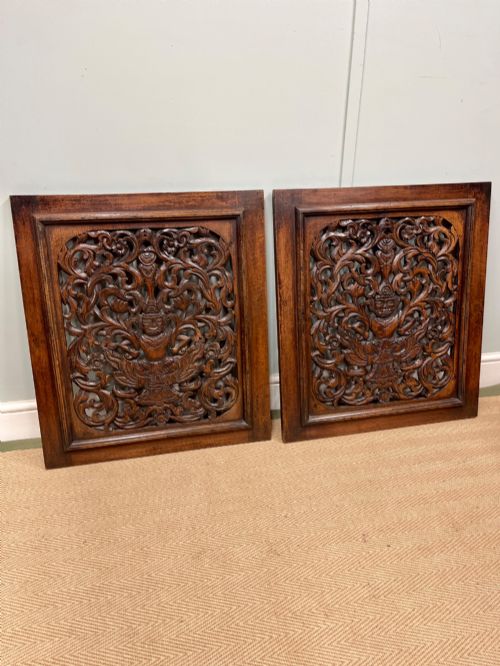
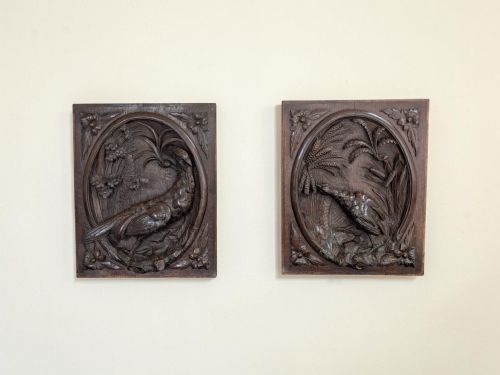
A vintage carved panel pair brings architectural symmetry and decorative depth to interior spaces, drawing from diverse regional traditions and historical periods. Buyers seeking a vintage carved panel pair will encounter architectural salvage, wall plaques, and cabinet elements rather than standard home furnishings.
The selections span the nineteenth century through the mid twentieth century, encompassing French provincial motifs, Chinese Qing style woodwork, and Burmese craftsmanship. Oak, walnut, and painted wood dominate the available forms, reflecting structural timber usage across different centuries.
How they were made
Carpenters and artisans utilised solid timber including oak, walnut, and mahogany, shaping the material with hand chisels and gouges to achieve low and high relief decoration. Surface finishes range from natural waxed timber to painted wood, occasionally incorporating inlaid mother-of-pearl, abalone, and foilage details.
Structural integrity relied on traditional joinery methods appropriate to architectural salvage, furniture doors, and wall plaques. Painters and gilders added surface colour and protective layers where the aesthetic scheme demanded it.
What varies in quality
The distinction between standard items and superior examples lies in the crispness and depth of the hand carving, where skilled depth creates genuine shadow and three-dimensional form. Superior execution shows confident handling of motifs without mechanical uniformity.
The selection of timber grain and the preservation of original surface treatments also govern the merit of each piece. Intricate inlay work and balanced proportions elevate the visual presence of matched panels.
The Vintage Carved Panel Pair Glossary
- Architectural salvage
- Building elements removed from older structures for reuse in interior decoration or restoration projects. These items retain historical patination and construction marks.
- Relief carving
- Sculpture technique where figures or patterns project from a flat background surface. This method creates dimensional texture on wooden panels and architectural doors.
- Qing style
- Design aesthetics associated with the Qing Dynasty, frequently characterised by meticulous hand carving and inlaid decorative elements. Such pieces often depict natural subjects like birds and foliage.
- French provincial
- Rural decorative styles originating in provincial France, favouring local fruitwoods, oak, and understated hand-carved ornamentation. The aesthetic values practicality combined with regional charm.
Vintage Carved Panel Pair: Frequently Asked Questions
How do I hang a heavy wooden panel pair?
Heavy panels require secure fixing directly into wall studs or masonry using appropriate steel brackets that bear the weight safely.
Distributing the load evenly across both pieces ensures the symmetry of the pair remains level and secure over time.
Can these panels be used outdoors?
Most antique wooden panels are intended for interior display where temperature and humidity fluctuations remain minimal. Exposure to external weather conditions will degrade timber integrity and original surface finishes.
Protecting the wood from moisture preserves the carved details and historic patination.
How should I clean antique carved wood?
Dust surfaces gently with a dry, soft cloth to remove everyday particles without disturbing the underlying timber or wax. Avoid chemical sprays and excessive water which can damage aged finishes.
Applying a specialist microcrystalline wax occasionally helps nourish dry wood and maintain a protective barrier.
Are these panels always sold together?
Items listed as a pair are offered as matched sets to preserve their decorative symmetry and historical relationship. Separating them disrupts the balanced visual effect intended for architectural placement.
Keeping both pieces together maintains their utility for framing focal points in a room.