




French Relief Carved Plaques
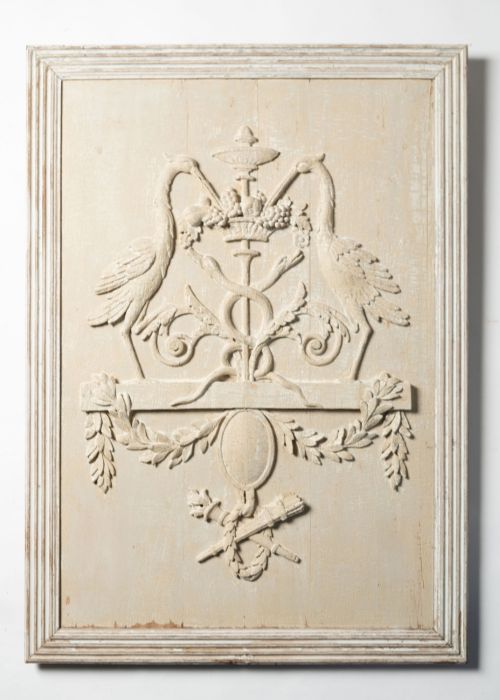
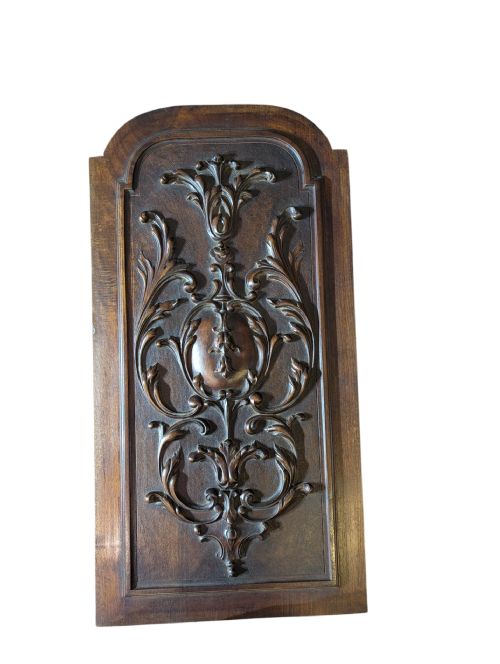
These French relief carved plaques are substantial wooden wall panels bearing deep hand-carved ornamentation, offering instant architectural presence and historical texture to a room.
French Relief Carved Plaques
French relief carved plaques encompass wall panels, architectural salvage, and over-door decorations drawn primarily from the seventeenth, eighteenth, and nineteenth centuries. A buyer hunting for these pieces will frequently encounter oak, walnut, and fruitwood panels that reflect distinct historical design movements.
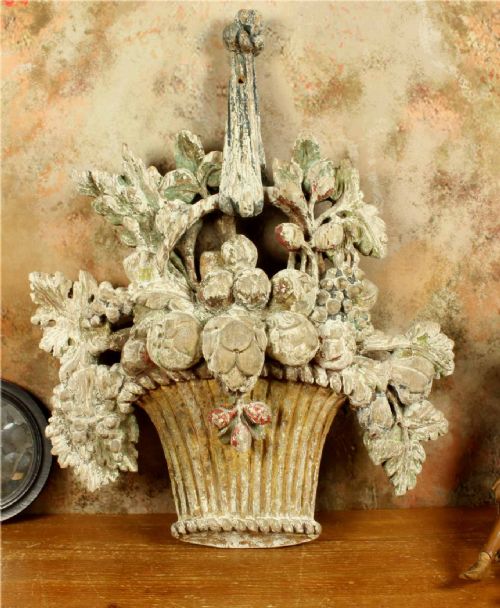
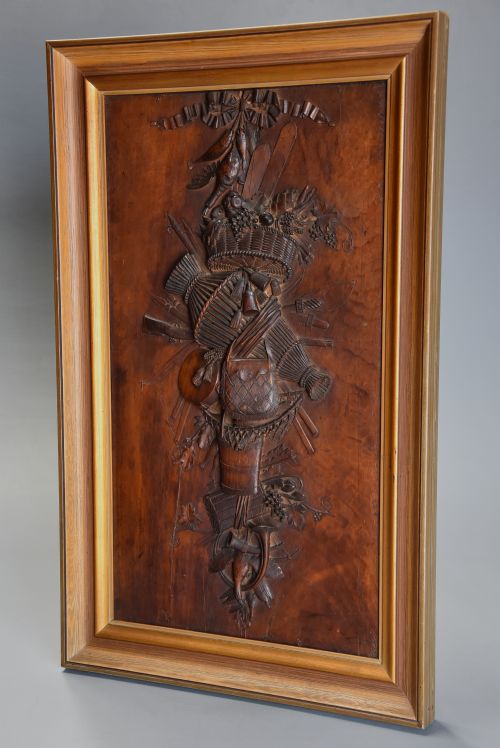
The selections span styles from French Chateau and Baroque to Neoclassical and Louis XIII, often manifesting as floral baskets, figurative scenes such as the Baptism of Christ, or elaborate trophy carvings. Most examples function readily as standalone wall art or integrated architectural elements.
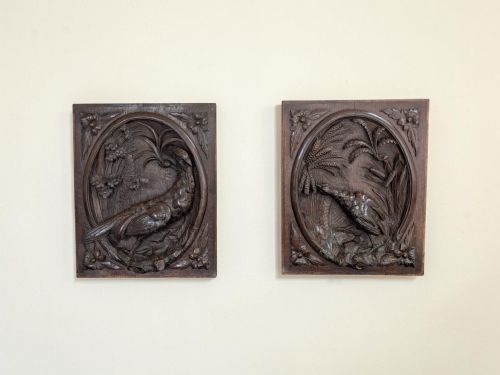
The inventory on this page demonstrates that these items appear singly or as pairs, ranging from standard decorative wall reliefs to monumental exhibition-quality works. Each piece preserves the hand-carved execution characteristic of its respective period.
How they were made
Artisans worked timber such as oak, walnut, and fruitwood, removing material by hand to build up three-dimensional depth. This subtractive carving method created crisp edges and varied planes across the wooden surface.
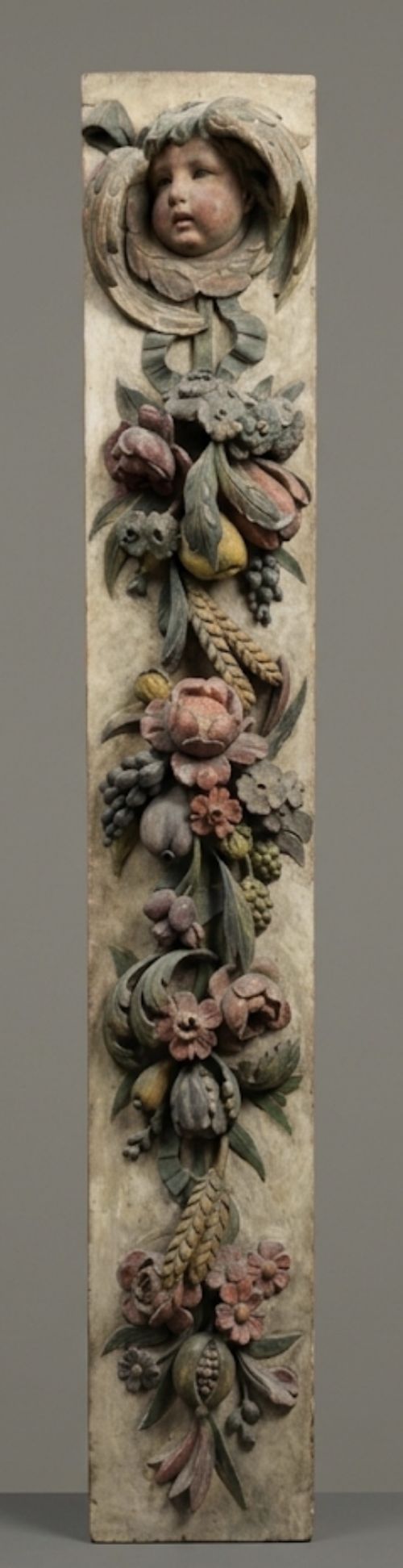
Certain panels incorporate gesso layers and paint, adding polychrome colour and contrasting textures to the carved wooden substrate. Such surface treatments accentuate the undercut details of floral baskets and figurative reliefs.
Listings span periods from the 17th century through to 1900, with oak, walnut, and fruitwood as the primary timber materials.
What varies in quality
Quality rests in the crispness and depth of the hand-carved execution, distinguishing work executed by a skilled hand from simpler commercial output. Finer examples display subtle undercutting and confident management of human figures or botanical forms.
The choice and preservation of timber dictate much of the character, with dense walnut or exhibition-grade fruitwood retaining sharper architectural lines than softer woods. Monumental scale and complex iconographic subjects, such as figurative baptism scenes, mark out the upper tier of the range.
The French Relief Carved Plaques Glossary
- Relief carving
- A sculptural technique where figures or ornamentation project from a flat wooden background. The depth of this projection determines whether the work is classified as low or high relief.
- Polychrome
- The practice of decorating architectural elements and panels in multiple colours of paint. This finish was frequently applied over gesso and timber to enhance visual drama.
- Trophy carving
- An ornamental arrangement depicting symbolic objects such as musical instruments, hunting gear, or floral baskets grouped together. These motifs were popular for over-door panels and decorative wall art.
- Architectural salvage
- Elements rescued from older buildings, including wall panels and over-door carvings. These pieces retain their original function as part of a larger interior scheme.
French Relief Carved Plaques: Frequently Asked Questions
How were these wall plaques originally used?
These carved panels typically adorned the walls and over-door spaces of grand interiors, serving as focal points within rooms.
They functioned as permanent architectural decoration, integrating woodwork with the structural design of French chateaux and period homes.
What woods do these carved panels use?
The listings show a reliance on traditional hardwoods, primarily oak, walnut, and fruitwood. These timbers provided the stability necessary for deep hand-carving.
Painted wood and gesso surfaces also appear among the pieces, offering alternative finishes to bare timber.
How do I hang a heavy wooden panel?
Given the substantial weight of timber wall reliefs, secure wall fixings directly into studs or masonry are essential. Many panels feature integrated structural framing or require custom mounting brackets.
Consulting a professional installer ensures the piece is supported safely without damaging the antique wood.
Can I date a panel by its style?
Styles offer a reliable indicator of period, with seventeenth-century pieces showing heavy Louis XIII influence and eighteenth-century items displaying Baroque or Rococo traits. Nineteenth-century works often revisit these earlier aesthetic movements.
Comparing the carving depth and timber choice alongside the stylistic clues helps narrow down the origin.