





Green Woven Wall Hanging
These heavy green woven wall hanging pieces bring centuries of European textile artistry straight to your interior.
Green Woven Wall Hanging
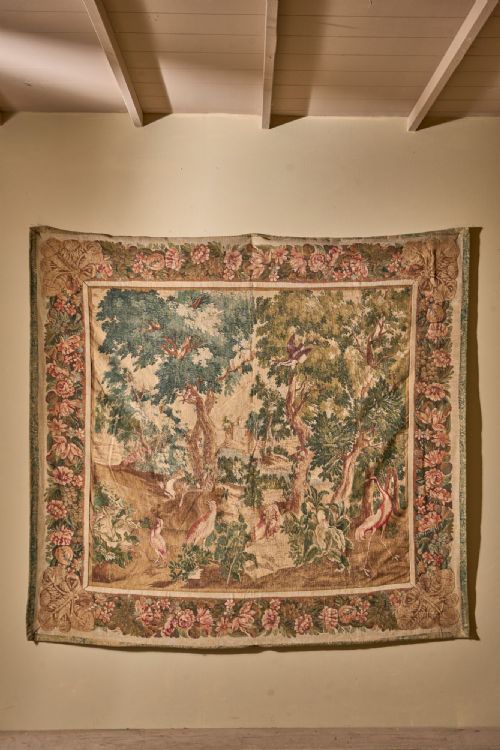
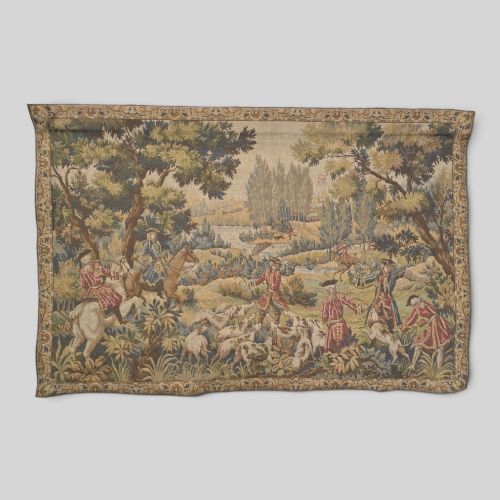
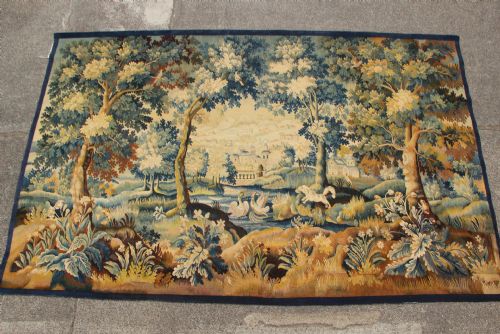
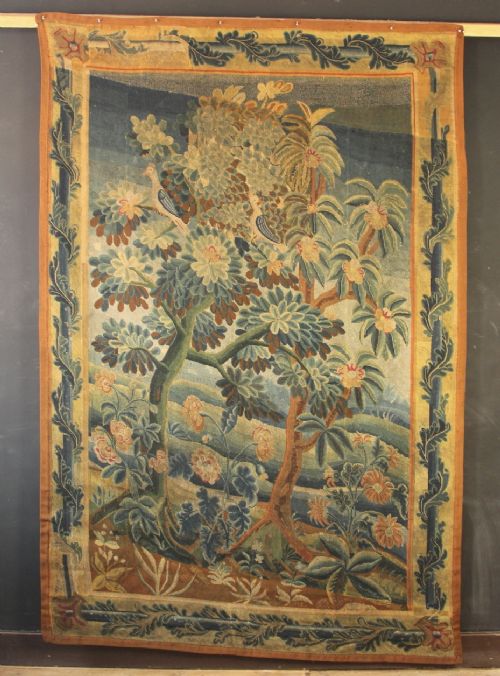
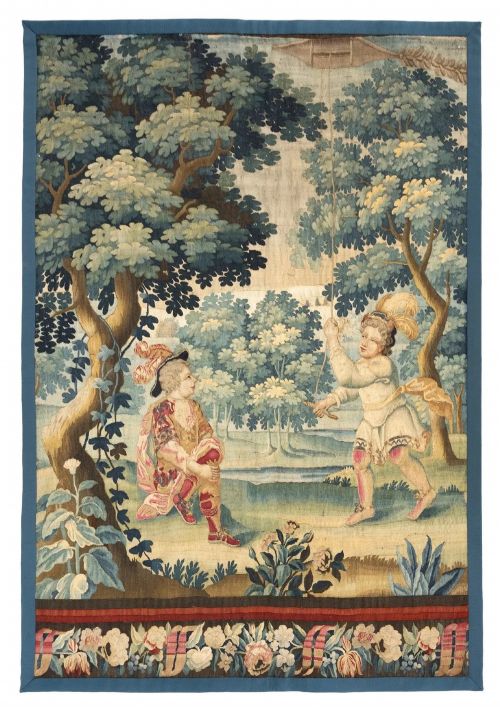
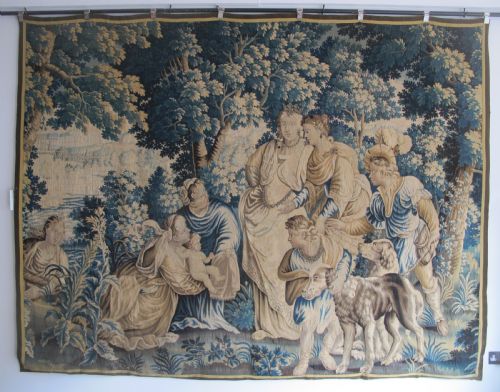
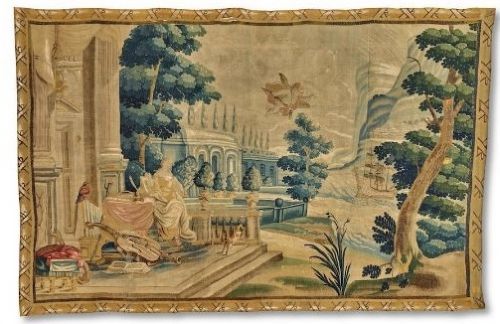
A green woven wall hanging on this page typically takes the form of a historic tapestry or needlework panel originating from European workshops. You will frequently encounter Flemish and French examples depicting verdure landscapes, pastoral scenes, or mythological subjects. The selection spans centuries of textile production, from sixteenth-century fragments to nineteenth-century interpretations.
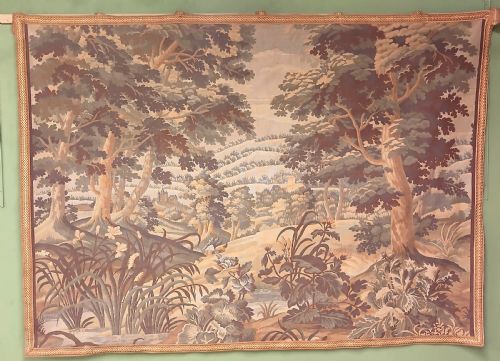
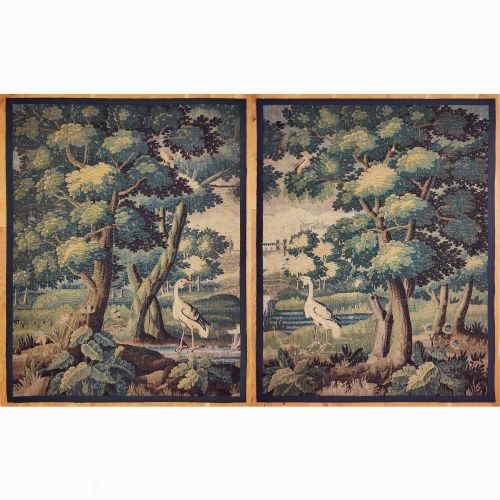
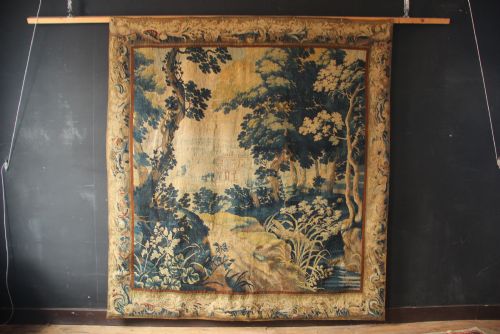
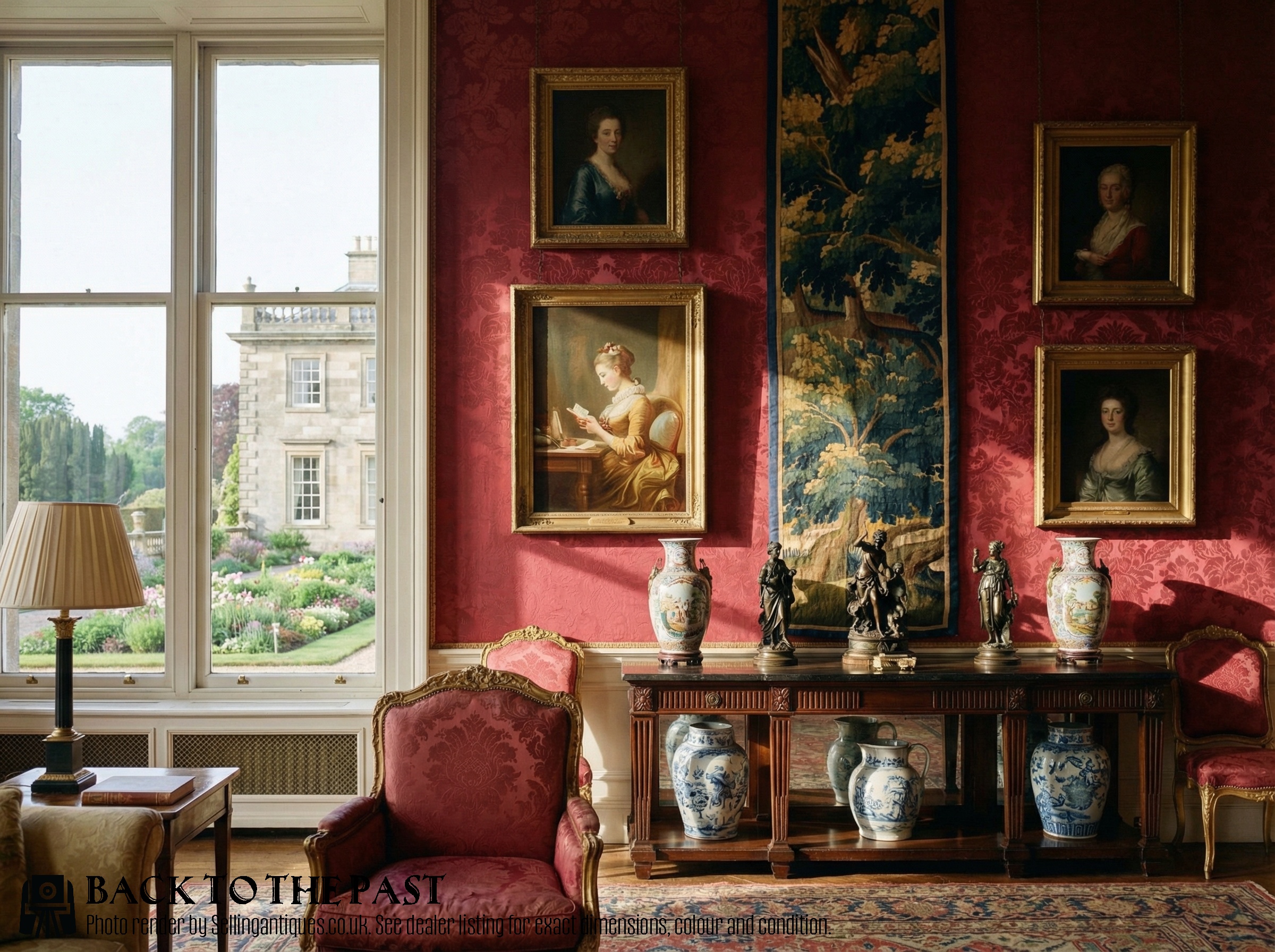
Many of these textiles function as wall tapestries and long panels designed to insulate and decorate large stone or plastered rooms. Verdure designs dominate the selection, bringing woodland foliage, trees, and garden vistas into domestic interiors. These woven panels range from intimate fragments to grand scale compositions covering several metres.

How they were made
These textiles rely primarily on wool, silk, cotton, and linen fibres spun and dyed into deep verdant tones. Weavers built the pictorial surfaces by hand on looms, interlocking coloured threads to create complex botanical and figural imagery. Some pieces incorporate needlework techniques on canvas grounds, adding fine detail to pastoral and architectural motifs.
Wooden framing occasionally supports later panels or fragments to facilitate hanging on domestic walls. Gilt accents sometimes appear on structural mounts or framing elements associated with nineteenth-century presentations. The integrity of each piece depends entirely on the tension and quality of the historic textile weave.
Several seventeenth-century woodland panels include discreetly woven game parks where tiny stitched stags graze undisturbed beneath green boughs.
What varies in quality
The density and fineness of the weave dictate the crispness of the foliage and figures within a verdure landscape. Superior examples display subtle tonal gradations across green wool and silk threads, creating depth in woodland scenes. Earlier seventeenth-century pieces often demonstrate complex pictorial composition executed by skilled handweavers in Flemish and French centres.
Condition and intact borders separate exceptional panels from heavily restored or fragmented textiles. The survival of original margins and rich dye saturation preserves the intended impact of the woven design. Scale also influences desirability, as grand architectural pieces demand substantial craftsmanship over vast areas.
The Green Woven Wall Hanging Glossary
- Verdure tapestry
- A woven wall hanging dominated by plant motifs, foliage, trees, and natural landscapes. These scenes often include small birds or animals hidden among the leaves.
- Aubusson
- A style and provenance originating from the French town renowned for its hand-woven tapestries and carpets. These works frequently incorporate floral elements and pastoral figures.
- Audenaarde
- A historic centre of tapestry production in Flanders famous for verdure and landscape wall panels. Pieces from this region often date from the seventeenth and eighteenth centuries.
- Needlework tapestry
- A textile created by stitching yarn through a canvas mesh by hand rather than utilising a loom. This technique produces pictorial wall hangings with distinct textural qualities.
- Fragment
- A surviving portion of a larger historic textile panel. These pieces are often mounted or framed for display on domestic walls.
Green Woven Wall Hanging: Frequently Asked Questions
How do I hang a heavy tapestry?
Most large wall hangings require a robust wooden batten or metal rod secured directly to wall studs. Weight should be distributed evenly along a fabric sleeve or mounting loops stitched to the reverse.
Avoid hanging textiles in direct sunlight or damp environments to protect natural wool and silk fibres from fading and deterioration.
How do I clean an antique tapestry?
Historic textiles require gentle professional conservation rather than standard domestic cleaning methods. Regular light surface dusting using a soft brush with low suction helps prevent particle buildup.
Water and chemical cleaning agents can damage delicate wool, silk, and linen threads and should be avoided entirely.
Where were these wall hangings made?
The pieces originate primarily from European weaving centres in France and Flanders, particularly Aubusson and Audenaarde. Workshops in these regions produced hand-woven wall hangings for domestic and institutional interiors across several centuries.
German and broader European traditions also contributed to the survival of early needlework panels.