

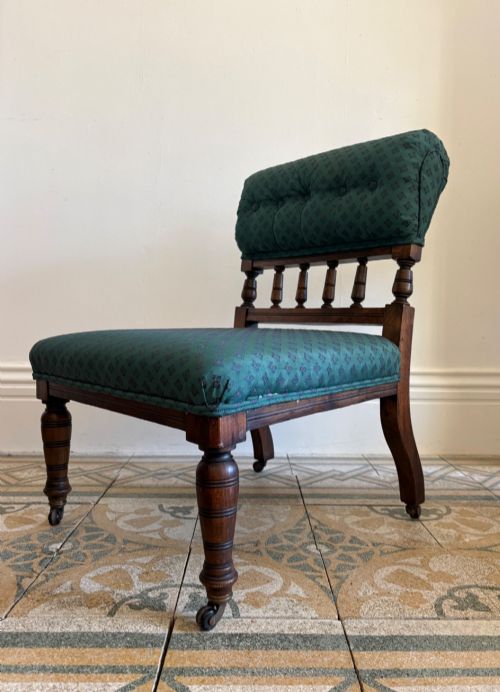
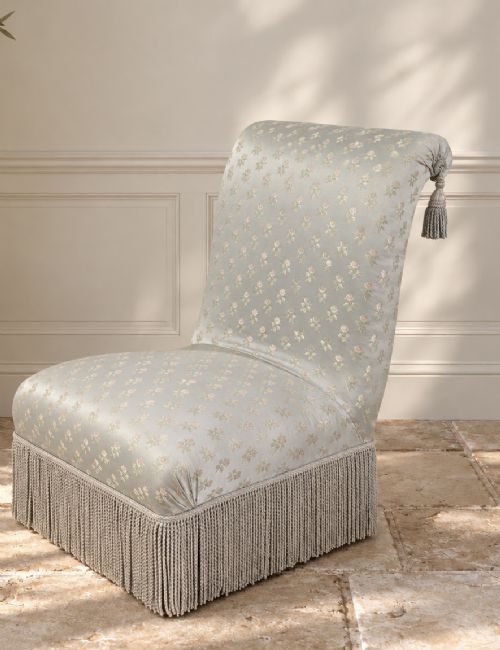
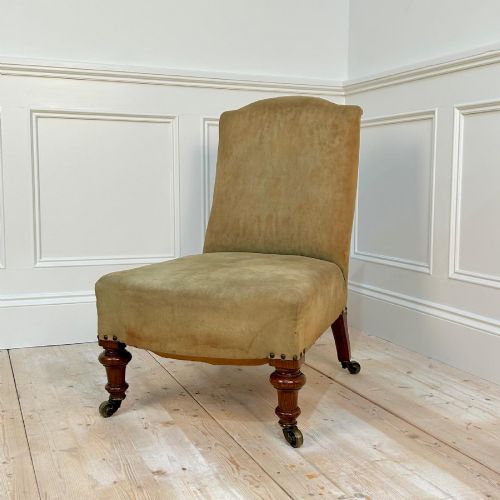
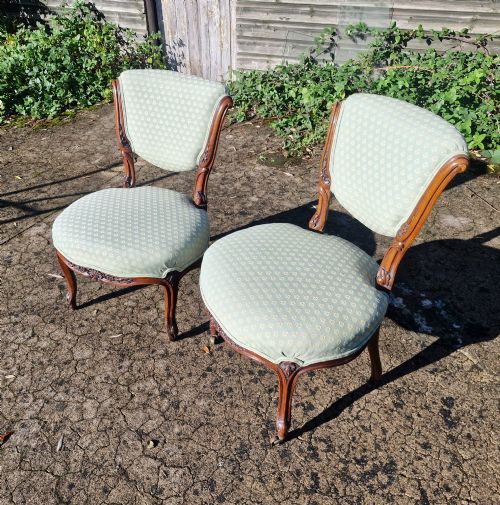
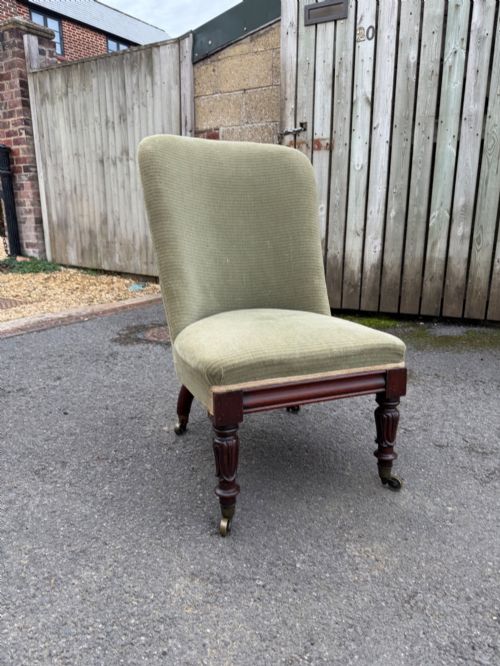
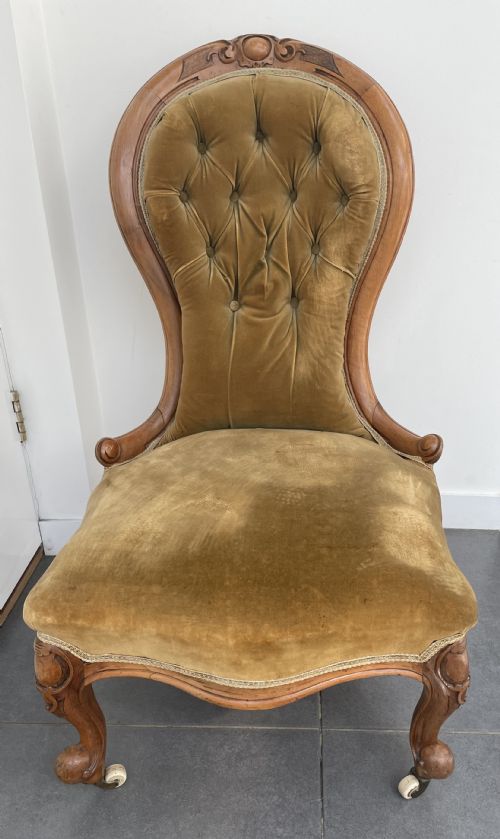
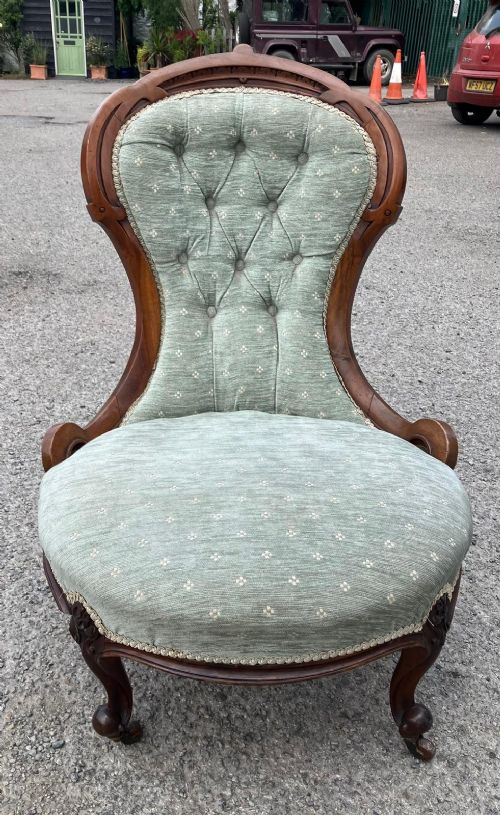
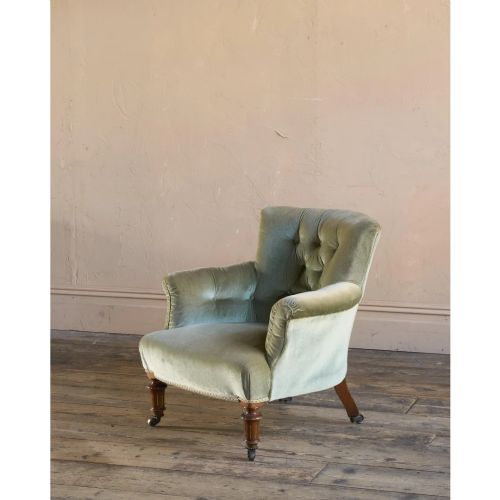
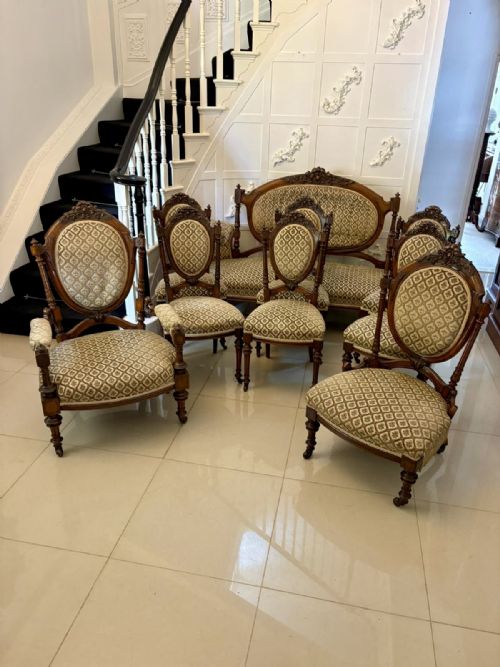


Green Upholstered Nursing Chair
A green upholstered nursing chair is a low-seated Victorian or 19th-century bedroom chair designed for comfort, and you want one for its compact charm and historical character.
Green Upholstered Nursing Chair
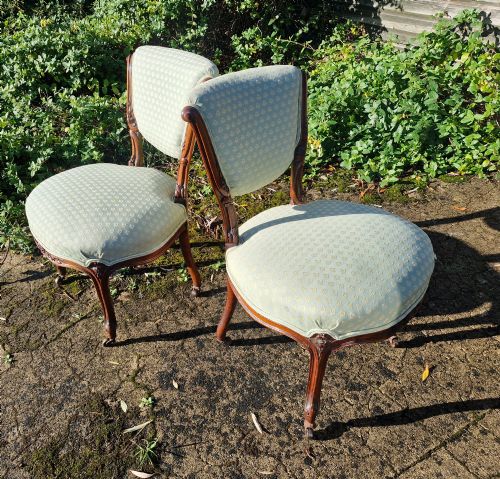
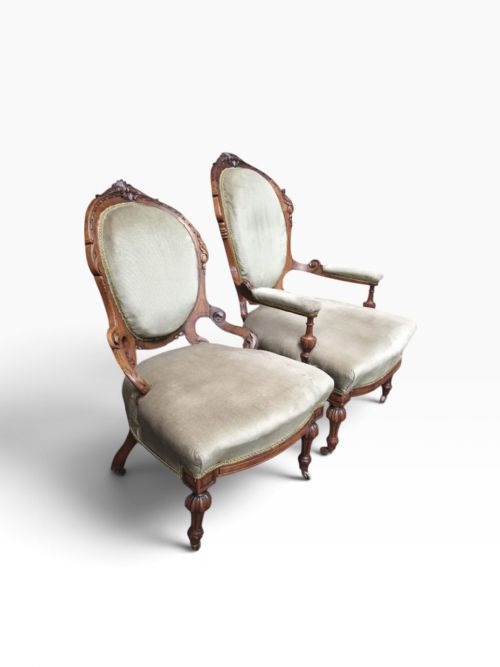
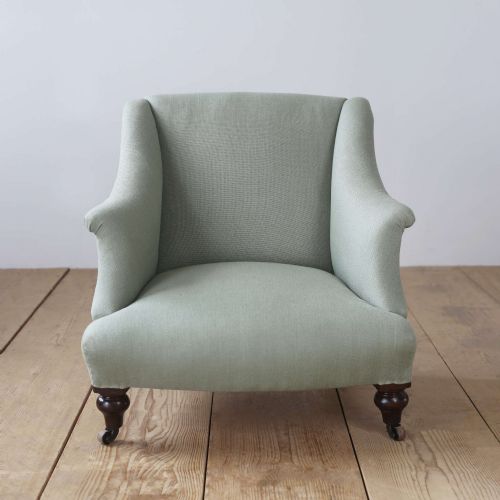
A green upholstered nursing chair is a low-slung seat typically encountered from the Victorian period, along with related 19th-century bedroom and slipper chair forms. These pieces sit low to the ground to allow mothers to nurse infants in comfort before open hearths or within private chambers.
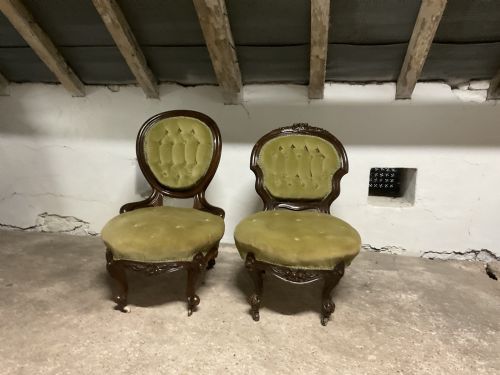
Most examples found here date from the mid to late 19th century, constructed in walnut, mahogany, or rosewood, and upholstered in various textiles including velvet, linen, and tapestry. The low proportion and upholstered back distinguish these bedroom seats from larger drawing room armchairs.
How they were made
Frames are turned or carved from dense hardwoods like walnut, mahogany, and rosewood, frequently incorporating decorative details such as barley twist turnings or bobbin legs. Upholstery techniques involve securing fabric and textile covers over internal padding, often finished with button-backed detailing or brass castors.
Wood elements are shaped in styles ranging from Victorian Rococo Revival and Aesthetic Movement to Regency and early Victorian. Metal components like brass joinery and castors provide structural support and mobility to the low wooden frames.
Green Upholstered Nursing Chair Retail Price Guide 2026
Typical asking prices for green upholstered nursing chair among the pieces listed under this phrase on Sellingantiques today, from the lower quarter to the upper quarter. They describe what is for sale here now, not the wider market.
Listings feature walnut, mahogany, and rosewood frames paired with velvet, linen, and tapestry textiles across Victorian, Georgian, and Regency periods.
What varies in quality
The distinction between ordinary and finer examples rests upon the crispness of the timber carving and the sophistication of the wood frame construction, such as exhibition quality walnut framing versus simpler ebonised finishes. Carved ornamentation, sturdy joinery, and the integrity of the original wood ground determine the standing of each piece.
Proportion and execution define the hierarchy among these chairs, where diminutive or exhibition quality pieces demonstrate superior cabinet-making skill. The sophistication of the turned legs, scroll backs, and structural framework separates standard bedroom seating from finer salon and drawing room examples.
Gillows
The Green Upholstered Nursing Chair Glossary
- Nursing chair
- A low-seated chair from the 19th century designed for bedroom or fireside use. Its reduced height facilitates comfortable sitting.
- Slipper chair
- A bedroom chair standing low to the floor without arms, originating in the 18th and 19th centuries. These pieces were traditionally used while dressing.
- Barley twist
- A spiral turning technique used on wooden chair legs and supports. This decorative form appears frequently on mid-Victorian frames.
- Button back
- An upholstery method where depressions are created by pulling twine through padding and securing it with buttons. This creates a tufted surface texture.
- Occasional chair
- A movable seat intended for sporadic use in a parlour, bedroom, or drawing room. These items complement larger suites of furniture.
Green Upholstered Nursing Chair: Frequently Asked Questions
What is a green upholstered nursing chair?
A green upholstered nursing chair is a low Victorian bedroom seat designed for comfortable seating near a fireplace or in a private chamber. These antique pieces combine exposed timber frames with textile coverings in various shades of green.
Such chairs provide a compact alternative to larger parlour armchairs. Their low stature distinguishes them from standard dining or drawing room seating.
Where were these chairs used?
These chairs were traditionally placed in bedrooms, dressing rooms, and nurseries during the 19th century. Their low profile made them practical for personal quarters and private domestic spaces.
Today, buyers place them in bedrooms, studies, and smaller sitting rooms where space is limited. Their modest proportions allow them to fit easily into modern interiors.
How do I tell Victorian from Georgian chairs?
Victorian chairs often feature heavier walnut or mahogany frames with elaborate carving, button-backed upholstery, and turnings like barley twist legs. Georgian and Regency pieces display simpler, more restrained classical lines with linear mahogany or rosewood structures.
Examining the wood species, joinery methods, and upholstery style clarifies the period of manufacture. Late 19th-century examples also introduce ebonised finishes and Aesthetic Movement details.
Are these chairs comfortable for daily use?
These chairs offer a firm seat due to their period padding and low height. While designed for domestic tasks in the 19th century, modern users often employ them as accent seating.
The supportive wooden frame and upright back encourage proper posture. Their compact dimensions make them suitable as occasional reading chairs.