



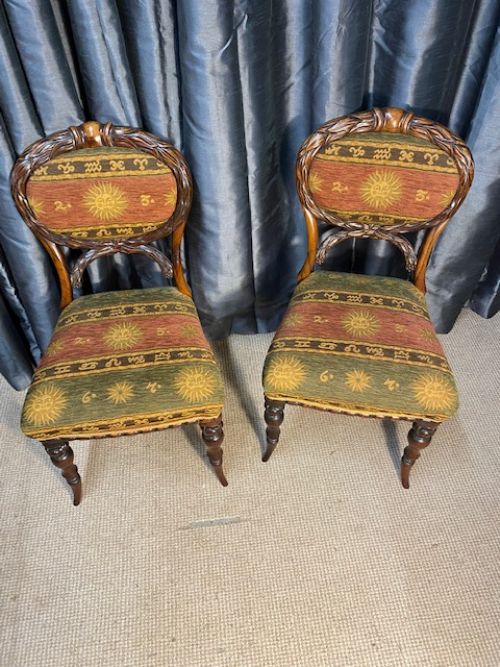

Green Patterned Accent Chair
A green patterned accent chair brings personality and seating depth to a room, drawing on Victorian and Edwardian forms upholstered in patterned textiles.
Green Patterned Accent Chair
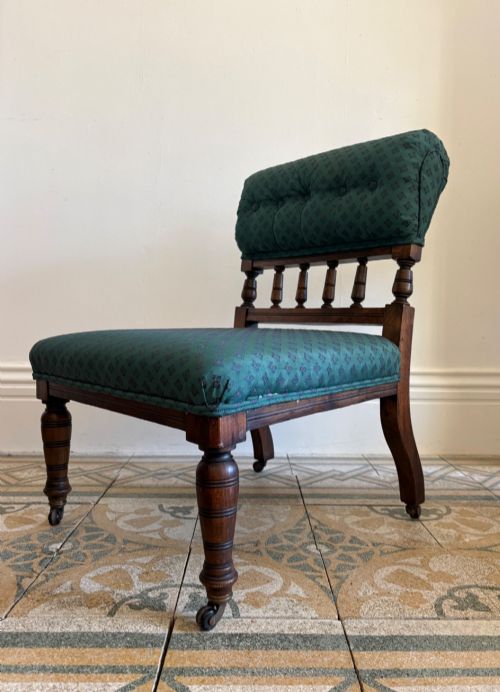
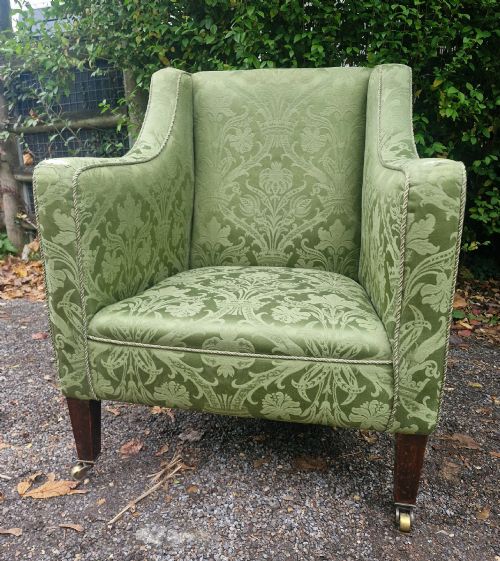
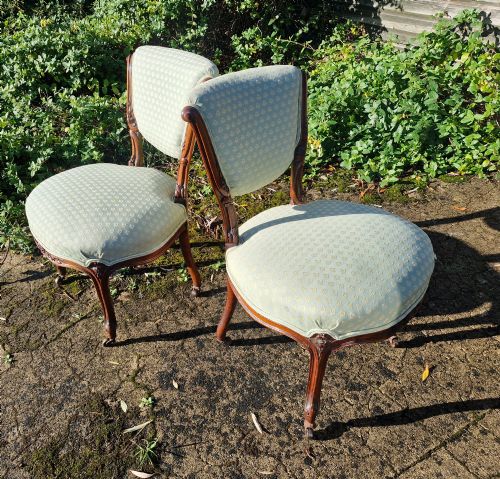
A green patterned accent chair encompasses various nineteenth and early twentieth century seating forms, including nursing chairs, bedroom chairs, and open armchairs. These pieces bring functional seating and distinct textile patterns into domestic spaces.
The selections available here range from Victorian walnut frames to Edwardian mahogany designs and Art Deco bentwood pieces. Each green patterned accent chair utilises historical woodwork combined with patterned upholstery fabric.
Buyers frequently encounter nineteenth century nursing chairs and bedroom chairs amongst these listings, often featuring exposed timber frames in mahogany, walnut, or rosewood. These smaller scale armchairs serve as decorative and practical additions to sitting rooms and chambers.
How they were made
The structural framework relies on traditional timber construction using mahogany, walnut, rosewood, and bentwood. Joinery techniques from the nineteenth and early twentieth centuries ensure durability in these armchairs and side chairs.
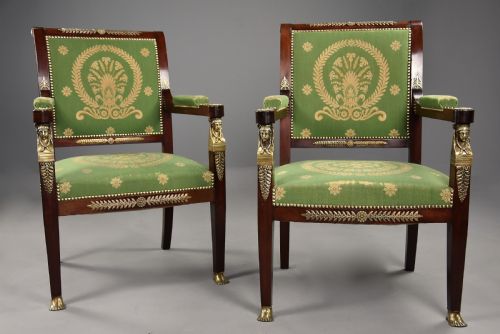
Upholstery fabric and textiles form the surface layer, frequently paired with internal padding and occasionally brass details. Frames are shaped according to Victorian, Edwardian, Art Deco, and French Empire styles.
Green Patterned Accent Chair Retail Price Guide 2026
Typical asking prices for green patterned accent chair among the pieces listed under this phrase on Sellingantiques today, from the lower quarter to the upper quarter. They describe what is for sale here now, not the wider market.
Several chairs were designed low to the floor for nursing infants, unwittingly inventing the ultimate nineteenth-century lounging posture.
What varies in quality
The refinement of the timber framing and the execution of period styles dictate the distinction between standard and superior examples. Finer pieces demonstrate careful carving in walnut or mahogany alongside well-balanced proportions.
The integration of the upholstery with the wooden frame determines the overall integrity of the piece. Original or sympathetic textile choices enhance the character of the seating.
The Green Patterned Accent Chair Glossary
- Nursing chair
- A low-seated upholstered armchair designed originally for nursery use or comfortable sitting near firesides. These typically feature compact dimensions and supportive backrests.
- Fauteuil
- An open-arm armchair with a wooden frame where the sides are typically uncovered. This French seating form often reflects classical revival styles.
- Bentwood
- Wood that has been heated and bent into curved structural shapes. This technique creates lightweight yet resilient chair frames.
- Aesthetic Movement
- A late nineteenth century design style emphasising visual beauty over narrative content. Pieces from this period often display refined lines and artistic textile choices.
Green Patterned Accent Chair: Frequently Asked Questions
What is a green patterned accent chair used for?
These chairs provide both additional seating and a decorative focal point in a room. They suit bedrooms, studies, and drawing rooms where a smaller scale armchair is required.
Their patterned upholstery introduces colour and texture into an interior scheme while offering comfortable support.
How do I identify a Victorian armchair?
Victorian armchairs typically feature substantial timber frames made from walnut or mahogany. They often display period revival details or Aesthetic Movement design elements.
The construction methods and specific wood types help date these pieces to the nineteenth century.
Are these chairs suitable for daily use?
Many of these pieces function well for regular seating when the frame and upholstery remain sturdy. Consideration should be given to the scale and structural integrity of each individual chair.
Placing them in appropriate settings ensures they withstand everyday domestic activity.
What woods were used in these frames?
Cabinet makers utilised hardwoods such as mahogany, walnut, and rosewood for their strength and grain patterns. Bentwood was also employed for specific curved designs during the twentieth century.
These materials provide the foundational structure beneath the textile upholstery.