


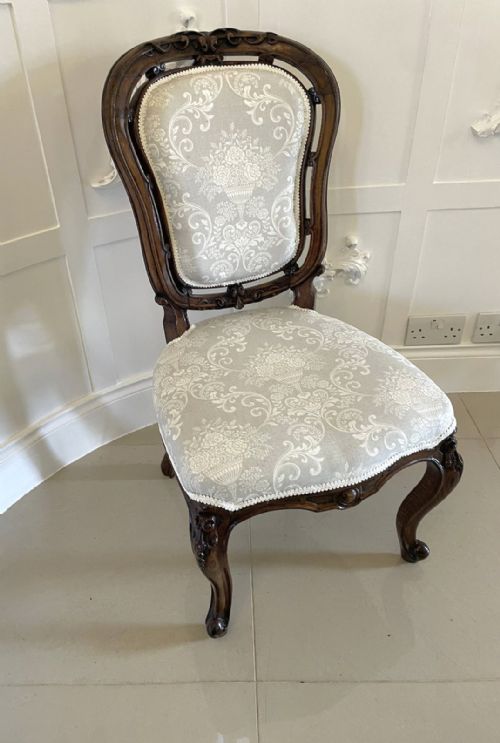


Dark Walnut Bedroom Chair
A dark walnut bedroom chair brings rich tone and compact seating to a dressing room or parlour.
Dark Walnut Bedroom Chair
A dark walnut bedroom chair encompasses a variety of intimate seating forms including side chairs, nursing chairs, and occasional chairs designed for personal chambers. These pieces emerge primarily from Victorian, Edwardian, and nineteenth-century workshops, alongside earlier eighteenth-century Italian country examples. You will frequently encounter carved balloon backs, ladies chairs, and fireside seating upholstered in fabrics such as velvet, needlepoint, and textile.
The selection ranges from elaborate revival styles to simpler domestic forms, sometimes appearing alongside matching bedsteads or dressing furniture. Walnut remains the defining timber across the inventory, providing a deep, dark ground for hand-carved details and applied decoration. Buyers searching for this phrase seek both functional seating and decorative presence suited to private rooms.
How they were made
Cabinetmakers utilised solid walnut and veneered construction to build these chairs, shaping frames with cabriole legs, carved backs, and structural brass elements where appropriate. Timber selection focused on rich grain patterns, which were polished to a dark finish that heightened the natural warmth of the wood.
Upholstery techniques involved traditional stuffing secured beneath top covers of velvet, needlepoint, or patterned textiles. Hand-carving adorned the crest rails and frames of Victorian and Edwardian pieces, requiring skilled joinery to ensure stability in relatively compact forms.
Dark Walnut Bedroom Chair Retail Price Guide 2026
Typical asking prices for dark walnut bedroom chair among the pieces listed under this phrase on Sellingantiques today, from the lower quarter to the upper quarter. They describe what is for sale here now, not the wider market.
One Edwardian suite includes twin bedsteads that match the bedroom chair, proving that matching sets extend even to private chambers.
What varies in quality
The distinction between ordinary and superior examples lies in the crispness of the hand-carving and the integrity of the walnut frame. Chairs featuring deeply carved balloon backs, elegant cabriole legs, and well-executed joinery demonstrate a higher level of cabinetmaking skill.
Originality of the upholstery and the retention of period textiles influence the character of each piece. Finer examples display harmonious proportions and careful finishing to both structural and decorative elements.
The Dark Walnut Bedroom Chair Glossary
- Balloon back
- A chair back shaped in an open oval resembling a balloon, popular during the Victorian period. This design allowed for comfortable support while showcasing the grain of the timber.
- Cabriole leg
- A furniture leg that curves out and then tapers inward, finishing in a foot. This form derives from classical furniture design and appears frequently on quality seating.
- Needlepoint
- Canvas worked with wool or silk threads in counted-thread embroidery to create durable decorative upholstery. It was widely used for seat covers on domestic chairs.
- Nursing chair
- A low-seated chair designed for feeding infants or personal grooming in a bedroom. The lower height facilitated ease of use in private chambers.
Dark Walnut Bedroom Chair: Frequently Asked Questions
Where did these chairs stand?
These chairs were placed in private bedrooms, dressing rooms, and boudoirs for personal use during dressing or resting.
Their compact proportions allowed them to fit comfortably beside dressing tables, washstands, or firesides without crowding the chamber.
How do I date a chair?
Dating relies on observing stylistic markers such as balloon backs, carved crest rails, and leg forms like cabriole supports. Victorian and Edwardian examples often feature distinct carving motifs that separate them from earlier eighteenth-century country pieces.
Construction methods and timber choice also offer clues, as nineteenth-century workshops utilised machine assistance alongside hand joinery.
Are they comfortable for daily use?
Most pieces were designed for resting or dressing rather than prolonged lounging, possessing upright backs and firm period-style padding.
Their scale suits modern bedroom placement or as occasional seating in smaller sitting rooms.
What is walnut?
Walnut is a dense, hard timber prized for its rich dark colour and varied grain patterns. It took fine carving well and dominated high-end furniture production across multiple centuries.
Over time, exposure to light deepens the patina of the wood, enhancing its visual depth.