

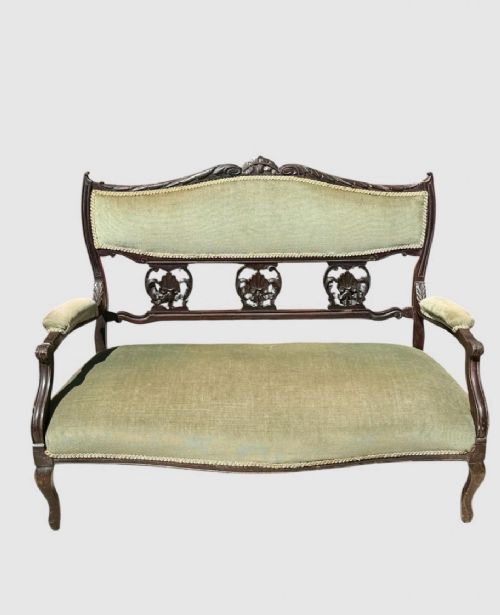


Green Upholstered Couch
A green upholstered couch brings rich texture and colour to a room, offering deep comfort through historic forms crafted in walnut, mahogany, and rosewood.
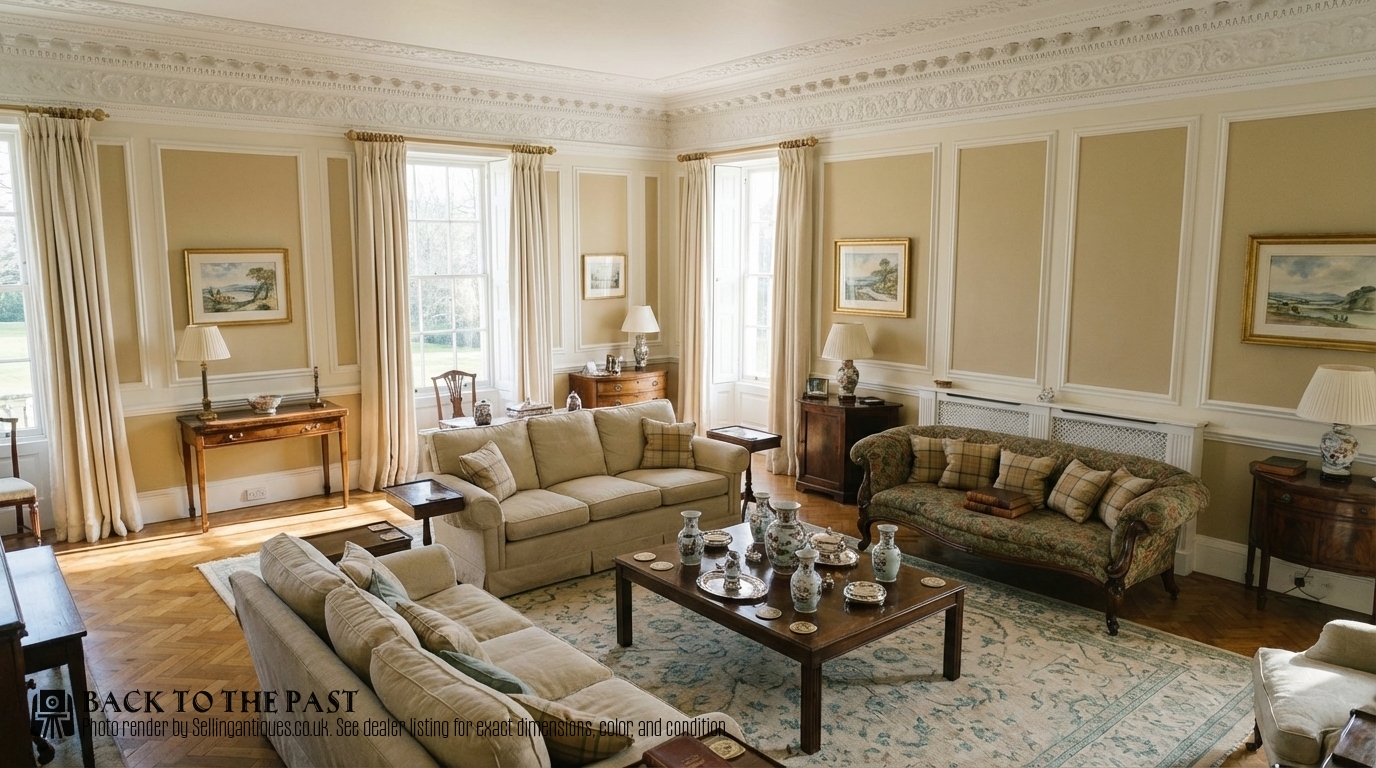
Green Upholstered Couch
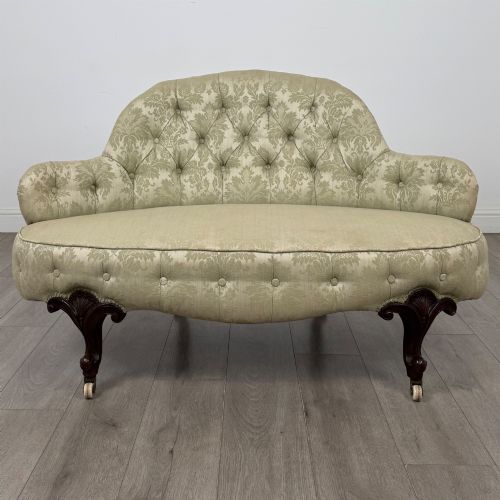
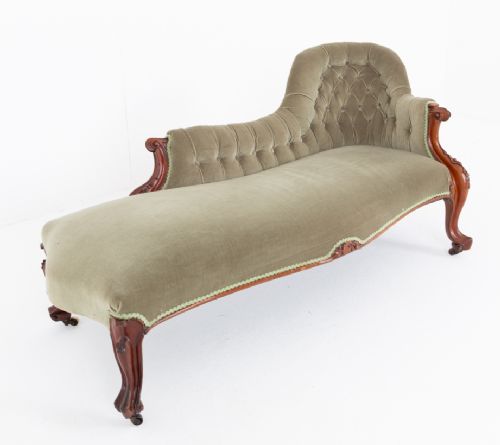
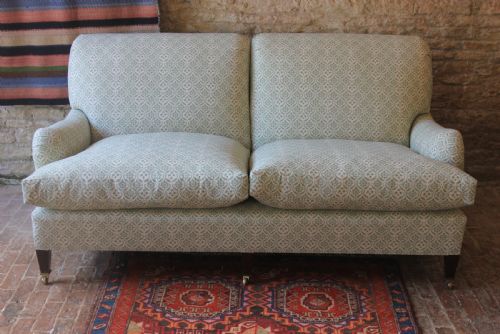
A green upholstered couch encompasses a wide selection of antique and period seating, from button-back Victorian settees to early twentieth-century library sofas. You are most likely to encounter nineteenth-century walnut and mahogany frames, alongside Edwardian designs and later revival pieces.
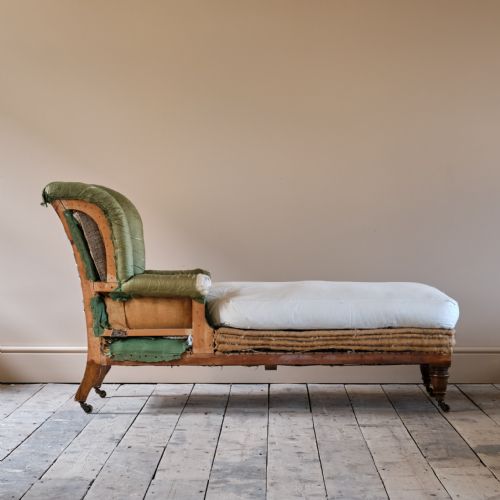
The selection ranges across distinct forms including daybeds, chaise longues, and traditional two-seater or three-seater settees. Makers and workshops from the Georgian period up to the mid-twentieth century shaped these frames with styles spanning Regency scroll ends, Rococo Revival, and English country house comfort.
Whether styled as a French boudoir seat or a large country house sofa, each green upholstered couch reflects the domestic habits of its era. These pieces function as statement items in modern reception rooms while retaining their original historic character.
Materials and Construction
Makers constructed these frames using dense hardwoods such as mahogany, walnut, and rosewood, often carving the timber with elaborate scrollwork or clean structural lines. Brass details appear on castors and mounts, supporting the heavy timber structures of nineteenth-century pieces.
Upholstery relies on traditional textile choices including velvet, silk, and woven fabrics stretched over sprung or stuffed foundations. The combination of solid wood framing and durable fabric layers accounts for the survival of these pieces across centuries.
Green Upholstered Couch Retail Price Guide 2026
Typical asking prices for green upholstered couch among the pieces listed under this phrase on Sellingantiques today, from the lower quarter to the upper quarter. They describe what is for sale here now, not the wider market.
Listings feature green upholstered couches spanning from the 18th century through to the mid-20th century, utilising walnut, mahogany, and rosewood frames.
Factors That Determine Quality
Quality rests upon the integrity of the timber frame and the precision of the carved details, particularly on walnut and mahogany show-wood sections. Pieces with firm, original joinery and well-defined decorative carving sit at the higher end of the range.
The sophistication of the silhouette and the harmony between the wooden frame and its fabric upholstery dictate the visual success of the piece. Master craftsmanship shows in the balanced proportions of lyre-shaped arms, scroll ends, and serpentine fronts.
Howard and Sons·William Birch
The Green Upholstered Couch Glossary
- Chesterfield
- A traditional sofa distinguished by deep button-backed upholstery and rolled arms of the same height as the back. This form provides formal yet comfortable seating.
- Show-wood
- Exposed timber framework on an upholstered piece of furniture, carved or polished to display the grain and colour of walnut, mahogany, or rosewood. It frames the upholstered sections.
- Settee
- A medium-sized upholstered seat with a back and arms, designed for two or more people. The term is often used interchangeably with sofa in nineteenth-century contexts.
Green Upholstered Couch: Frequently Asked Questions
How do I identify a Victorian green couch?
Victorian models typically feature exposed walnut or rosewood frames, intricate carved details, and robust sprung upholstery.
Look for design cues like button backs, scroll arms, and rich timber grains characteristic of the mid to late nineteenth century.
Where should I place a period sofa?
These sofas suit reception rooms, libraries, and large living spaces where their historic proportions can act as a central focal point.
Pairing a antique settee with neutral walls allows the green fabric and timber frame to stand out clearly.
How do I care for antique upholstery?
Protect antique velvet and silk fabrics from direct sunlight to prevent the green tone from fading over time.
Regular light brushing and professional cleaning help maintain the texture of the textile without damaging the underlying stuffing.