
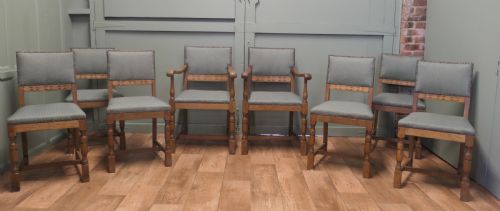
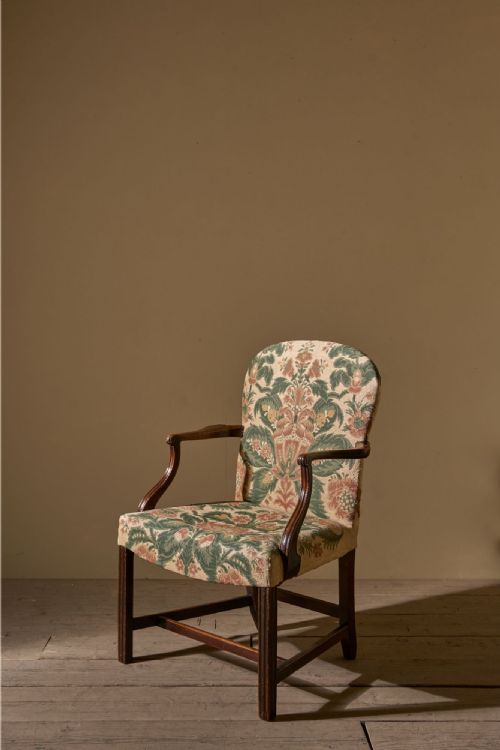
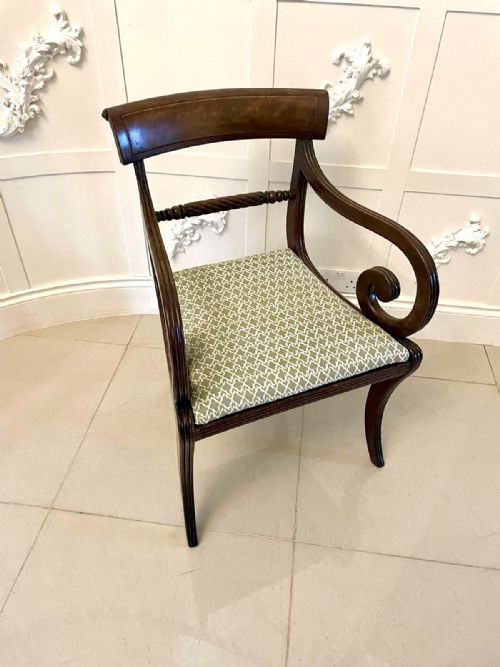
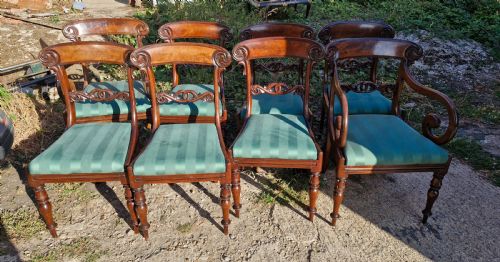
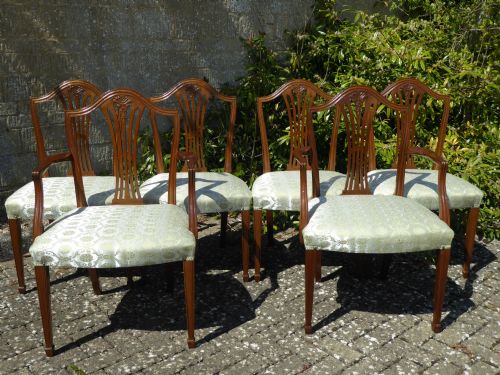


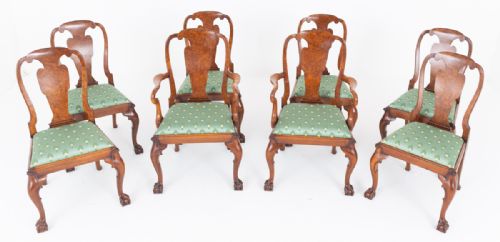


Green Upholstered Carvers
Green upholstered carvers bring functional seating into the room, combining sturdy wooden frames with textile covers for daily use.
Green Upholstered Carvers
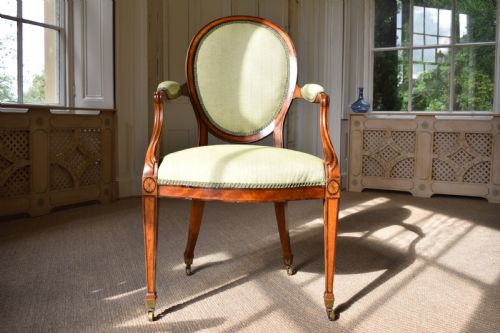
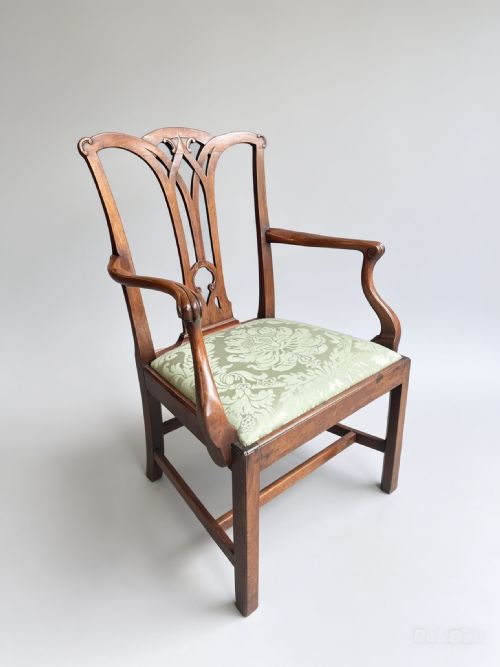
Green upholstered carvers comprise armchairs, dining chairs, desk chairs, and carver armchairs designed with wooden frames and fabric coverings. These seats appear across multiple periods including the Regency era, Georgian period, and Victorian times, alongside twentieth-century revivals.
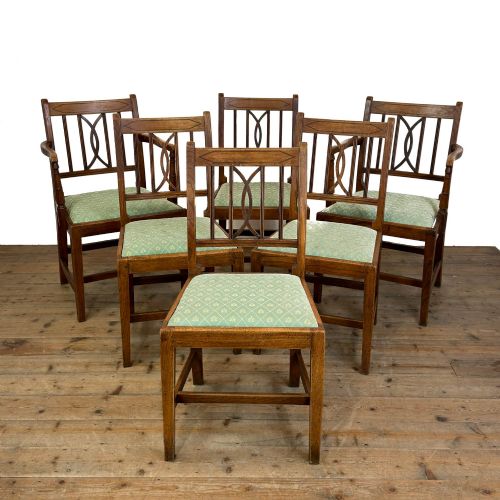
Buyers browsing this selection encounter various timber structures paired with textile elements, ranging from formal dining sets to individual study seats. The designs span from simple country oak frames to ornate walnut and mahogany styles.
Materials and construction methods
Frames are constructed from hardwoods such as mahogany, oak, walnut, and satinwood, occasionally utilising birch or pitch pine. Carpenters shaped these timbers into armchairs and dining seats through traditional joinery and carving techniques.
Upholstery relies on fabric and velvet coverings applied over the internal padding of the seats. Brass details and metal components occasionally appear on desk chairs and specific revival models.
One exceptional Victorian pitch pine example doubles as a Gothic throne armchair for everyday household rulings.
Assessing build and design standards
Quality separates pieces by the precision of the timber carving and the structural integrity of the wooden frame. Hand-carved details and dense hardwoods like mahogany or walnut indicate higher grade execution compared to simpler revival pieces.
The choice of upholstery fabric and the neatness of the textile application influence the overall standard of the finished seat. Pieces with established historical origins or specific regional attribution carry distinct characteristics in their construction.
J. & T. Scott, Edinburgh·Robert Strahan Dublin·Louis Majorelle
The Green Upholstered Carvers Glossary
- Carver
- An armchair, typically designed with arms to match a set of dining chairs, used at the head of a table or as a desk seat.
- Regency
- A style period dating from the early nineteenth century defined by classical restraint and influences from antiquity.
- Georgian
- A period spanning the eighteenth century characterised by distinct architectural and furniture design movements.
- Jacobean Revival
- A later stylistic movement imitating the heavy oak furniture forms of the seventeenth century.
- Upholstery
- The work of providing chairs with padding, springs, webbing, and textile covers.
Green Upholstered Carvers: Frequently Asked Questions
What is a carver armchair?
A carver armchair is an armed seat traditionally made to accompany a set of dining chairs for the head of the table. These chairs also function as desk or study seats.
The listings show carver armchairs produced across various periods, from the eighteenth century through to twentieth-century revivals.
Which woods are used for these chairs?
Makers utilised a variety of hardwoods for the frames, predominantly mahogany, oak, and walnut. Other materials such as satinwood, birch, and pitch pine also appear.
These timbers were selected for their strength and suitability for carving detailed ornamentation.
How do I identify a Regency chair?
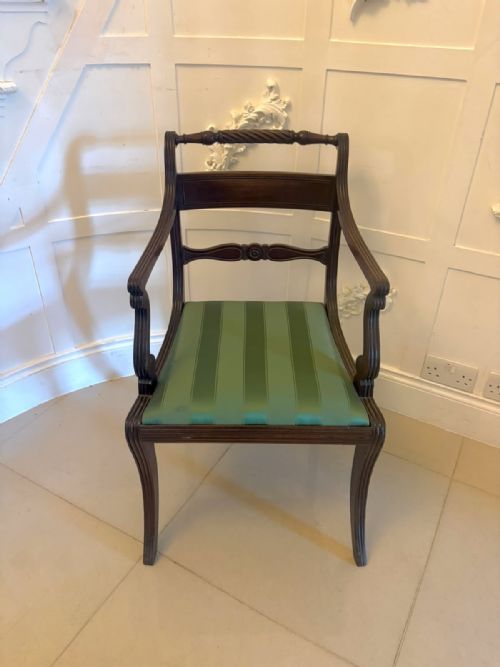
Regency chairs date from the early nineteenth century and often feature classical lines influenced by Greek and Roman design. Mahogany was frequently utilised during this period.
Details such as curved backs and sabre legs help distinguish chairs from this era.
Can these chairs be used at a desk?
Many carver armchairs and desk chairs from the nineteenth and twentieth centuries were built specifically for study or office use. Their armed design offers additional support during prolonged sitting.
Examples include Regency mahogany desk chairs and Victorian walnut desk armchairs.