


Scandinavian Accent Chairs
Scandinavian accent chairs bring striking Nordic form and rich timber grains into a room, offering both sculptural presence and comfortable seating.
Scandinavian Accent Chairs
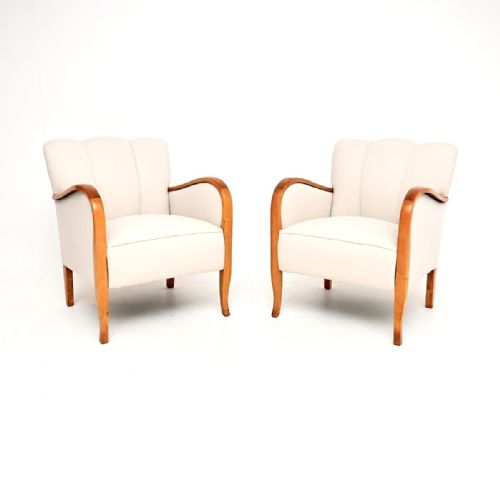
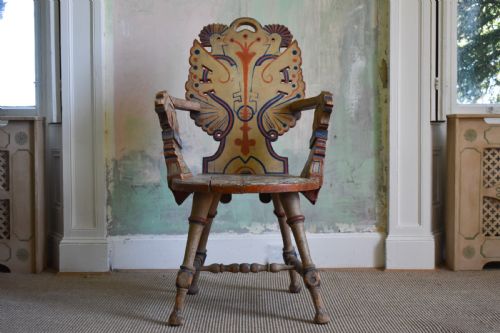
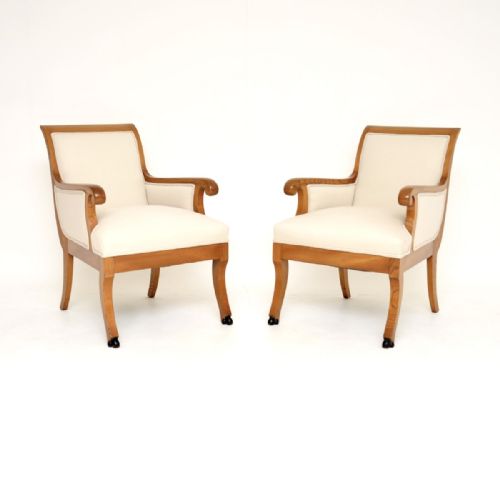
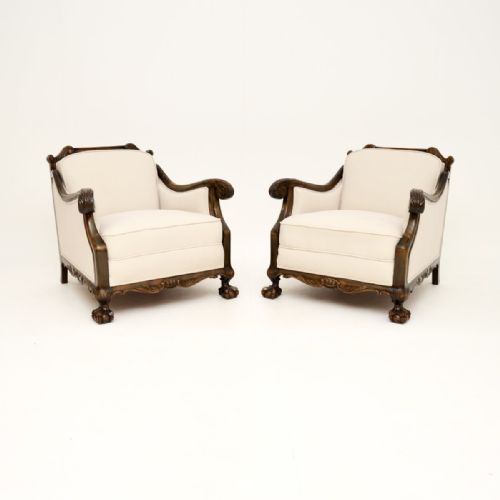
When buyers search for scandinavian accent chairs, they encounter distinctive seating originating predominantly from Sweden across the nineteenth and twentieth centuries. These armchairs range from clean-lined Art Deco pairs to rustic folk art pieces and classic Biedermeier designs.
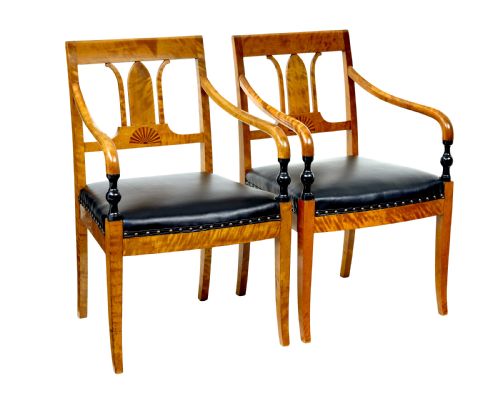
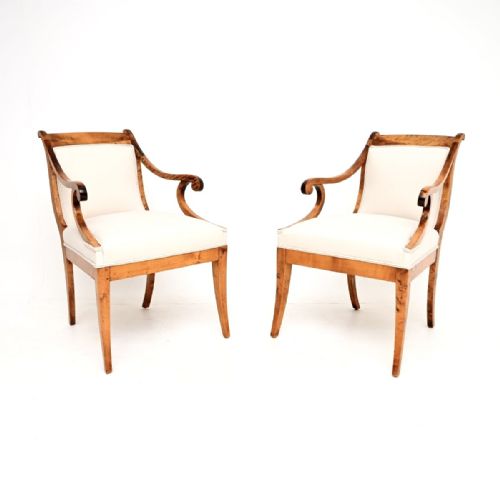
The most common examples on this page are birch and satin birch armchairs dating from the nineteen-thirties and the nineteenth century. Buyers also find painted country chairs, carved early twentieth-century seating, and robust elm models.
These chairs serve as focal points in modern or traditional interiors, prized for their expressive woodwork and distinct historical styles.
How they were made
Maker construction relies heavily on native timbers such as birch, satin birch, and solid elm, often shaped into curved arms and supportive backs. Ebonised wood details provide contrast against lighter timber grains.
Upholstery in fabric and leather cushions the seats, whilst paint finishes transform simpler wooden frames. Carving and sculptural shaping define the transition from folk traditions to refined Art Deco and Neoclassical aesthetics.
Listings feature periods spanning from eighteen-ninety through to nineteen-thirty, with birch as the dominant material.
What varies in quality
Quality in these armchairs rests upon the selection and figuration of the timber, particularly in satin birch and elm pieces where grain patterns elevate the visual impact. The precision of the joinery and the fluidity of carved or sculptural lines separate standard regional work from finer studio output.
Condition of original surface treatments, whether polished wood or period paint, dictates the integrity of the piece. Matching pairs demonstrate superior desirability compared to single chairs.
Anton Rosen
The Scandinavian Accent Chairs Glossary
- Biedermeier
- A Central European and Scandinavian style spanning the nineteenth century, known for utilitarian comfort and emphasis on clean architectural lines and expressive wood veneers.
- Art Deco
- A twentieth-century design movement favouring sleek geometric forms and stylised ornamentation, visible in chairs from nineteen-thirty.
- Satin Birch
- A lustrous timber variety prized for its reflective qualities and golden hue, frequently utilised in high-end Swedish seating.
- Karl Johan
- A Scandinavian neoclassical style dating from the early nineteenth century, drawing inspiration from French Empire design.
- Ebonised Wood
- Timber treated to resemble ebony, providing dark contrast against lighter woods.
Scandinavian Accent Chairs: Frequently Asked Questions
What periods do these chairs come from?
The pieces span from the nineteenth century through to the nineteen-thirties. They include Victorian eras, Edwardian items, and early twentieth-century creations.
Specific dates range across various decades, capturing shifts in Scandinavian design from folk art traditions to Art Deco modernity.
Which woods are most common?
Birch and satin birch appear most frequently in the listings. Elm and ebonised wood also feature prominently across the furniture.
Timber choice often defines the aesthetic, ranging from pale natural grains to painted surfaces.
Are pairs easy to find?
Several listings consist of matched pairs, particularly within the Art Deco and Biedermeier categories. Single armchairs also appear.
Matching sets of four are less common but do occur in the early twentieth-century selections.
How do I identify a Biedermeier chair?
Biedermeier chairs typically showcase smooth wood veneers like birch, focusing on clean construction without excessive ornamentation. They date predominantly from the nineteenth century.
Their proportions prioritise domestic comfort alongside understated elegance.