



Carved Scroll Back Armchairs
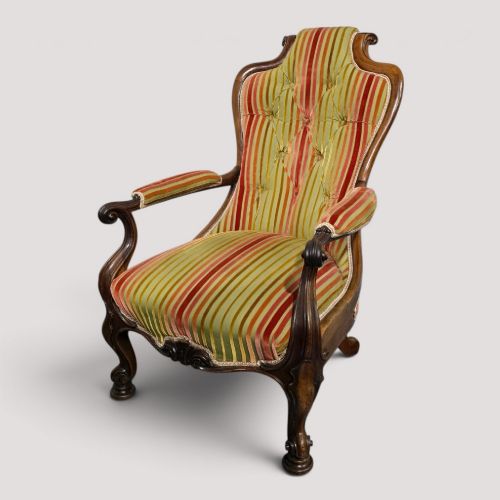
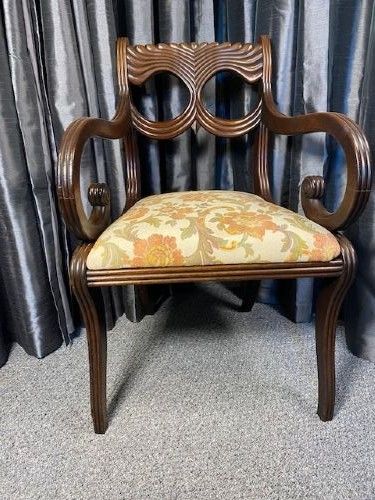
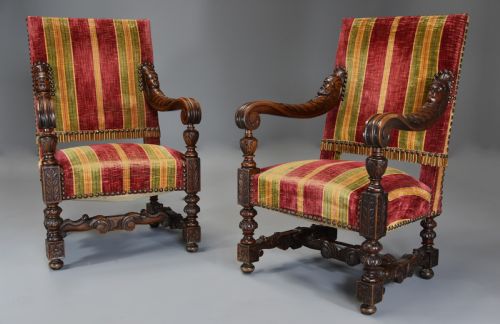
Carved scroll back armchairs bring distinct period presence to a room, offering robust wooden frames paired with sculptural arm and back supports.
Carved Scroll Back Armchairs
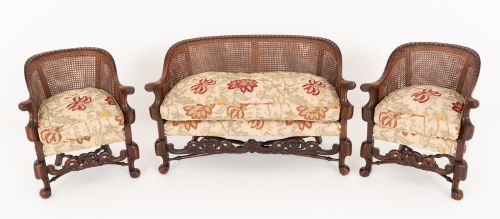
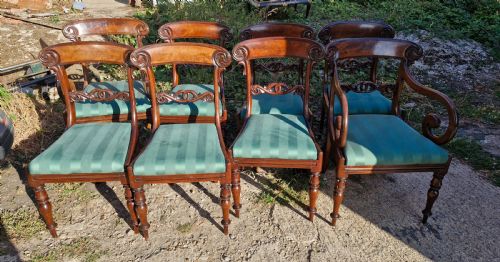
When searching for carved scroll back armchairs, you encounter a wide span of periods from the seventeenth century through the Victorian era and into the early twentieth century. These seating pieces appear frequently in mahogany and walnut, taking forms ranging from single library carvers and desk chairs to large dining sets and occasional chairs.
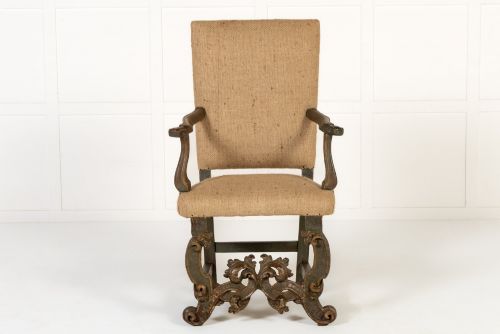
The selection on this page demonstrates various regional interpretations, including English Regency and Victorian designs alongside French Baroque styles and Italian pieces. Buyers often meet distinct iterations like Carolean style high-back chairs and mahogany dining carvers featuring pronounced scroll arms.
Many examples incorporate upholstery in fabric, velvet, and tapestry, combining rigid carved wooden frames with cushioned comfort. Whether you examine a pair of library armchairs or an individual nursing chair, the defining feature remains the curved woodwork of the back and arm terminals.
Distinctions in quality
The calibre of a carved scroll back armchair rests primarily on the depth and crispness of the woodwork, where sharp chisel work denotes superior craftsmanship. Finer examples display harmonious proportions between the heavy scroll arms and the vertical rake of the back, avoiding clumsy joinery or unbalanced scaling.
Selection of timber also marks the division between standard and superior pieces, with closely figured walnut and dense mahogany achieving greater visual depth. The integration of the upholstery into the frame, down to the neatness of the edge finishing, separates workshop productions from master cabinetmaker commissions.
Materials recorded across the inventory include walnut, mahogany, rosewood, birch, and giltwood, alongside various upholstery fabrics and brass elements.
Gillows
The Carved Scroll Back Armchairs Glossary
- Carver
- An armchair, typically designed to match a set of dining chairs, featuring open arms to accommodate wider clothing.
- Showwood
- Exposed wooden framing around an upholstered back or seat, allowing the carved details of the timber to remain visible.
- Carolean style
- A revival or period design reflecting the decorative motifs of the reign of Charles II, characterised by rich carving and high backs.
- Giltwood
- Wood that has been coated with a thin layer of gold leaf or gilt paint, commonly found on decorative Baroque armchairs.
- Cane weaved
- A seating or panel technique utilising woven rattan strips to create a patterned, breathable mesh surface.
Carved Scroll Back Armchairs: Frequently Asked Questions
How do I identify a Regency scroll back armchair?
Regency examples generally rely on dark mahogany timbers, clean architectural lines, and subtle scroll work on the arms rather than heavy overall carving. They frequently appear as single library chairs or as the armchairs belonging to a larger set of dining seating.
Look for sabre legs or turned front supports that reflect the classical revival tastes of the early nineteenth century. The upholstery tends to be lower profile compared to later Victorian padding.
Where should I place a heavy walnut armchair?
These substantial chairs suit studies, libraries, or drawing rooms where their dark timber tones and carved scroll details anchor the room's proportions. A high-backed library armchair works well beside a fireplace or as a standalone reading seat.
Ensure there is sufficient clearance around the arms so the carved scroll terminals remain visible rather than crowded by surrounding furniture.
What is the difference between a nursing chair and a library chair?
Nursing chairs are typically lower to the ground with splayed or open backs designed to allow room for garments of specific historical periods. They often feature sprung or buttoned upholstery and compact proportions.
Library armchairs, by contrast, are built larger and heavier with wider armrests intended for sustained reading and writing comfort, frequently standing on castors for ease of movement.
How do I care for antique wood and upholstery?
Maintain the timber frame by dusting regularly with a soft cloth and applying a sparing amount of quality beeswax periodically to nourish the grain. Keep the chair away from direct sunlight and heat sources to prevent the wood from splitting and the upholstery fabrics from fading.
Vacuum upholstered surfaces gently using a low suction attachment to remove surface dust without disturbing internal stuffing or trimmings.
Can these armchairs be used in modern interiors?
The contrasting textures of carved walnut or mahogany pair effectively with minimalist contemporary spaces, adding historical weight and textural variety. Many collectors mix a single antique carver into a modern seating arrangement to act as a focal point.
Their sturdy construction ensures they remain entirely functional for daily sitting while bringing distinctive period character to a room.