


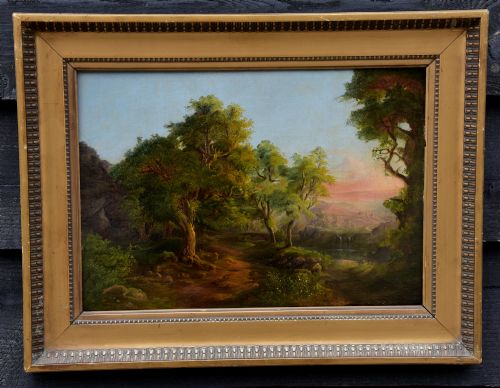
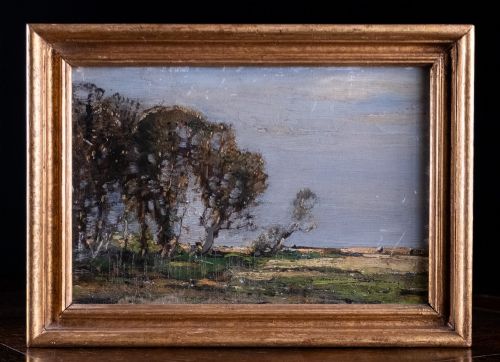
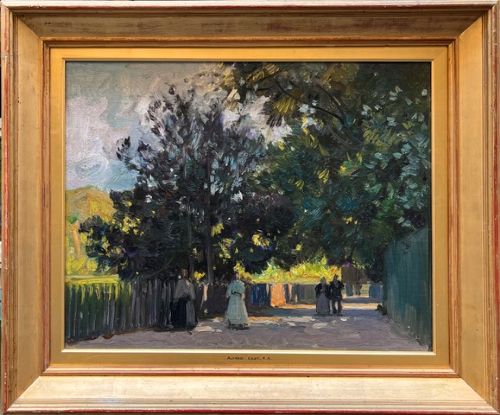
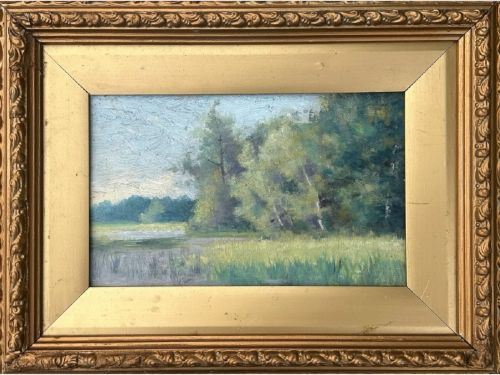
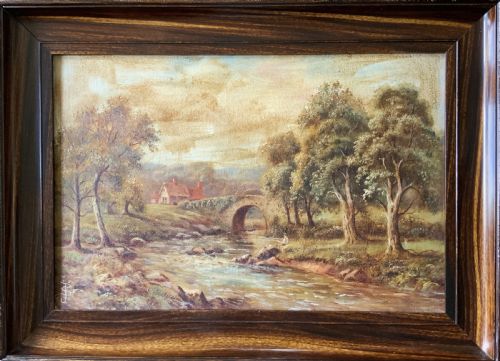

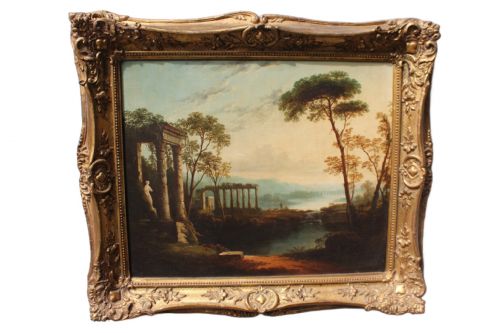


Green Tree Oil Painting
When you seek a green tree oil painting, you find works capturing foliage and landscapes across multiple periods and impressionist styles.
Green Tree Oil Painting
A green tree oil painting portrays woodland scenes, orchards, and country paths through the lens of various historical periods, including Victorian, Edwardian, and mid-century eras.
The selections on this page encompass British Impressionism, Post-Impressionism, and continental European works, capturing natural scenery from the nineteenth and twentieth centuries.
The predominant forms are framed fine art paintings on canvas, board, and panel, depicting trees beside rivers, farms, and rural lanes.
Materials and techniques
Artists built these compositions using oil paint applied to woven canvas, wooden panels, or rigid boards, sometimes enhanced with gesso grounds.
Makers utilised impressionist brushwork and tonal layering to render the light filtering through foliage and the textures of bark and leaves.
Listings feature works created on canvas, board, and panel across the nineteenth and twentieth centuries.
Distinctions in quality
The success of a piece depends on the dexterity of the brushwork and the artist's ability to capture natural light within the foliage and landscape.
Compositional balance and the preservation of the original paint surface and supporting canvas or board determine the overall integrity of the work.
William H Myers·George Graham·Kershaw Schofield·Sir Alfred East·Maud Raphael Jones·Sydney Yates Johnson·William JB Jenkins·John Linnell·Abraham Hulk Jnr·Ernest Higgins Rigg·Frederick W Jackson·Alois Arnegger·Owen Bowen·Hermoine Hammond·Antoine Bouvard·Cuthbert Edmund Swan
The Green Tree Oil Painting Glossary
- Canvas
- A heavy woven fabric stretched across a wooden frame to serve as a painting surface. It provides a slightly flexible support favoured by oil painters for centuries.
- Board
- A rigid flat sheet of wood or composite material used as an alternative to canvas. It offers a firm, stable ground for applying oil paint.
- Gesso
- A plaster mixture applied to wood panels or canvas to prepare the surface for painting. It creates a smooth, absorbent base that holds oil layers securely.
- Impressionism
- A nineteenth-century painting style characterised by relatively small, thin, yet visible brush strokes and an emphasis on accurate depiction of light. It prioritises the overall visual effect rather than meticulous detail.
Green Tree Oil Painting: Frequently Asked Questions
What periods do these paintings span?
The available artworks date from the Victorian and Edwardian eras through the early twentieth century up to the nineteen-fifties.
These pieces reflect shifts in landscape painting traditions across British and European artistic communities.
How should I display a canvas painting?
These works are generally housed in period frames and suit traditional wall mounting in well-lit interior spaces away from direct sunlight.
Protecting the canvas from excessive humidity and temperature fluctuations preserves the stability of both the paint and the support.
What supports were commonly used?
Artists painted on stretched canvas, wooden panels, and rigid boards depending on the period and their personal preference.
Each support medium interacts differently with oil paint over time, contributing to the texture of the finished work.
How do landscape styles differ?
Earlier nineteenth-century works often employ classical composition and detailed rendering, whereas later impressionist pieces focus on loose brushwork and atmospheric light.
Regional variations also emerge between British woodland scenes and Mediterranean olive groves.