

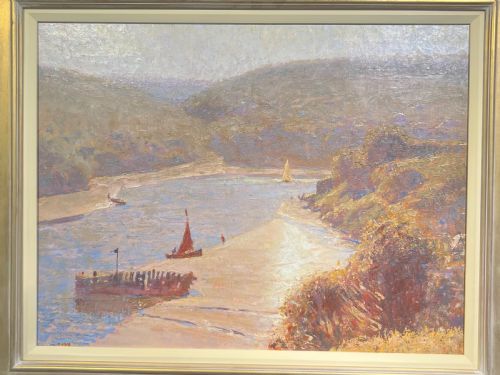
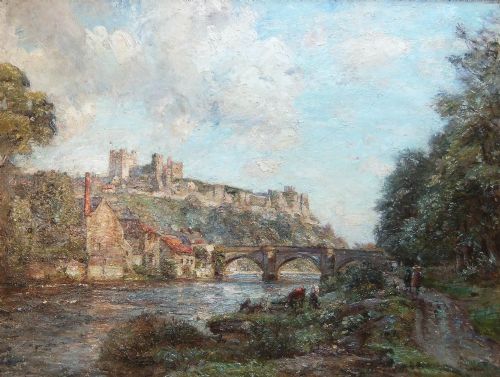


Impressionist River Landscape Oil
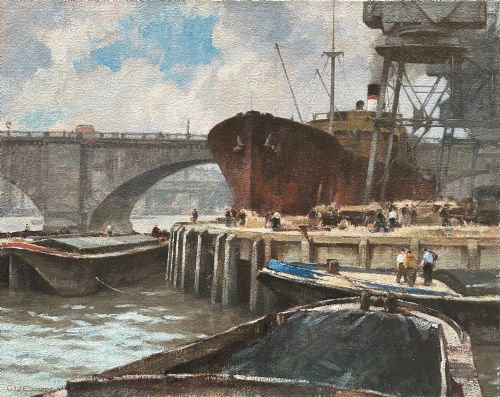
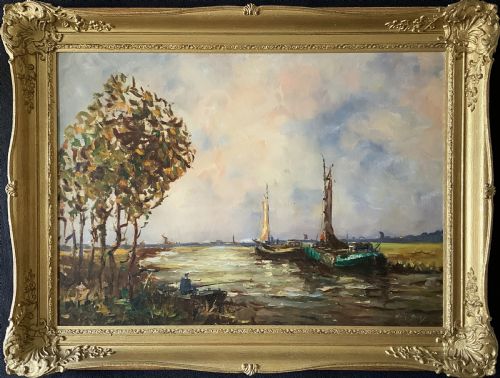
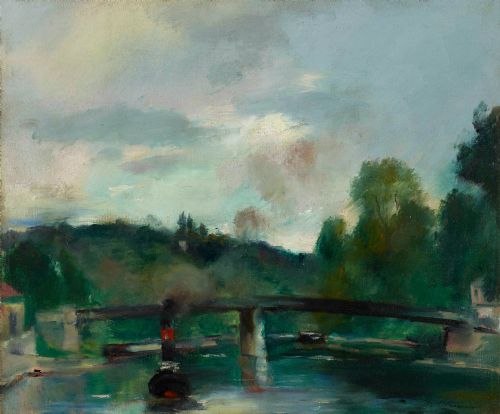
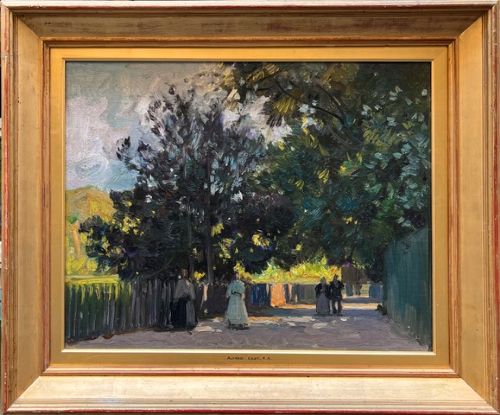
When you search for an impressionist river landscape oil, you are looking for canvases that capture water, light and atmosphere through loose brushwork.
Impressionist River Landscape Oil
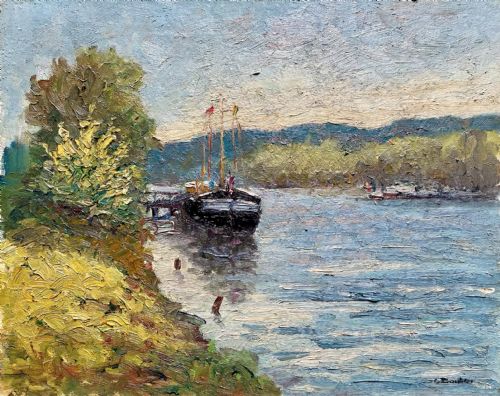
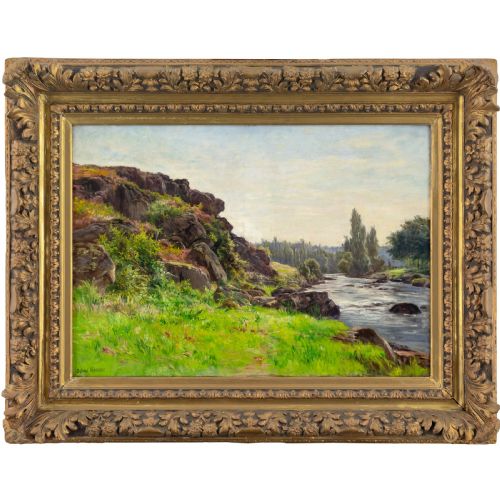
An impressionist river landscape oil brings the shifting light of waterways and banks directly onto canvas or wood panel. These paintings record outdoor scenes from Britain, France, the Netherlands and beyond, spanning from the nineteenth century into the mid-twentieth century.
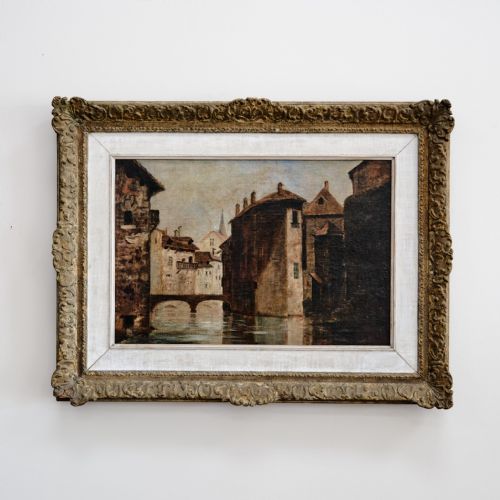
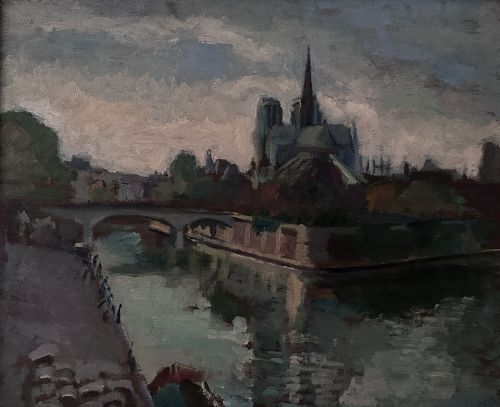
The version you are most likely to meet on this page is an oil on canvas or wood panel depicting rural rivers, Parisian quais, or Dutch canals. Works range from Victorian and Edwardian British scenes to French Post-Impressionist views and mid-century examples.
Makers in this category captured specific locales such as the Seine, the Thames, or Yorkshire rivers, applying pigment with varying degrees of heavy impasto or swift, broken brushstrokes. Each piece reflects the enduring appeal of open-air painting by water.
How They Were Made
Artists painted primarily with oil paint on stretched canvas, wood panels, or canvas boards, sometimes building up thick layers of impasto to give texture to water and foliage. Prepared grounds and gesso provided a stable base for the pigments.
Pint was applied directly outdoors or developed in the studio from plein-air sketches, relying on rapid brushwork rather than meticulous blending to catch transient effects of weather and light.
Listings feature oil paintings on canvas, wood panels, and canvas boards dating from the nineteenth century through the 1960s.
What Varies in Quality
Quality rests upon the artist's handling of light and the optical mixing of colour, where confident brushwork conveys movement in water and atmosphere in the sky. Weaker works remain stiff and literal, failing to capture the fluidity of the riverbank.
Composition and depth elevate certain canvases, guiding the eye naturally along bends in the river or reflections on the surface. Material survival also plays a part, as original stretchers and stable paint layers preserve the artist's intended touch.
George Graham·Gabriel Mathieu·Cyril Walduck Edwards·Willem Bos·Henri Ottmann·Sir Alfred East·Cecil Allan Mould·Herbert Royle·Paul Désiré Trouillebert·Florence Adelina Hess·John Horace Hooper·Hubert Wellington·Honore Cavaroc·Archibald Kay·Charles Clair·Henri Jaques Delpy·Sir David Murray·André Prévot-Valéri·Mario Pinetti·Arthur Herbert Rigg·Ron Folland·Owen Bowen·E A Minardo·David Watts·William Grant Murray
The Impressionist River Landscape Oil Glossary
- Impasto
- Paint applied thickly to a canvas or panel, standing out in relief from the surface so that the marks of the brush or palette knife remain visible.
- Plein-air
- The act of painting outdoors, capturing natural light and atmosphere directly from the subject rather than in a studio.
- Barbizon School
- A mid-nineteenth-century French movement focused on realistic landscape painting and working closely from nature, which strongly influenced later impressionism.
- Post-Impressionism
- A diverse artistic movement following impressionism that extended its use of vivid colours and thick application while exploring more structured forms.
- Canvas board
- A stiff board faced with primed canvas, offering a portable surface utilised by artists for outdoor oil painting.
Impressionist River Landscape Oil: Frequently Asked Questions
What subjects appear in these paintings?
These works typically show rivers, canals, bridges, and footpaths flanked by trees, willows, or urban buildings. Painters focused on the interaction of water, sky, and changing daylight.
Scenes range from rural Yorkshire streams and Scottish rivers to Parisian quais along the Seine and Dutch waterways.
How do I live with an oil painting?
Keep oil paintings away from direct sunlight and steady sources of intense heat to protect the canvas and pigments. Hang them on interior walls with stable humidity.
Dust the surface gently with a soft, dry brush and avoid using water or chemical cleaners on the paint layer.
How can I tell periods apart?
Nineteenth-century pieces often reflect Barbizon or early academic impressionist traditions with subdued palettes and careful tonal balance. Edwardian and interwar works frequently employ brighter pigments and looser, more expressive brushstrokes.
Mid-century examples lean towards heavier impasto and abstract simplification of water and shoreline forms.
Were these painted outdoors?
Many artists began their compositions outdoors using portable box easels to record immediate impressions of light and weather on the water. They often finished larger canvases back in the studio using these direct field studies.
Evidence of outdoor work appears in spontaneous brush marks and occasional surface debris trapped in the wet paint.