




Post Impressionist River Scene
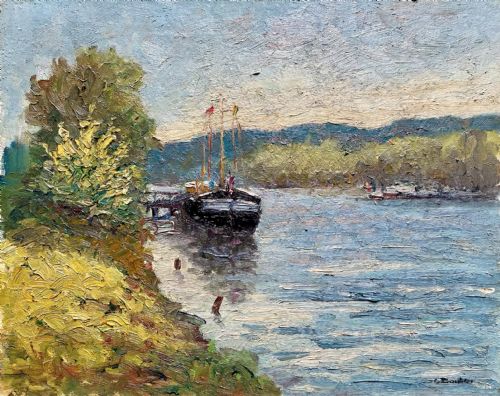
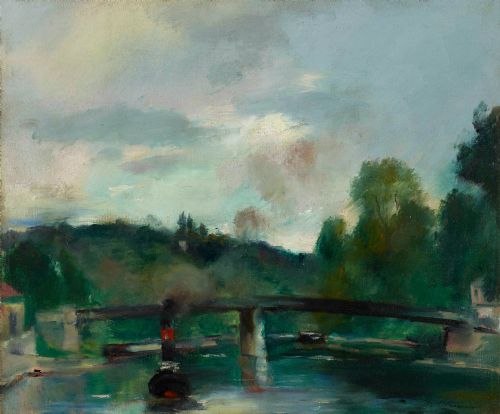
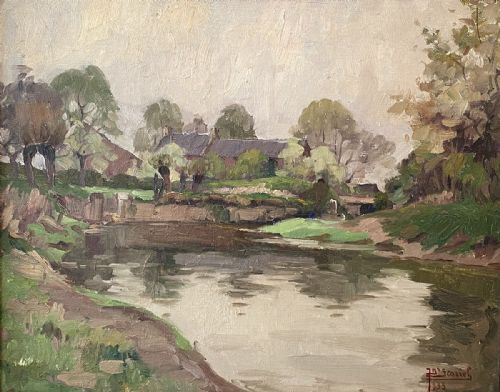
These post impressionist river scene works capture shifting light on water through loose brushwork and vibrant oils.
Post Impressionist River Scene
A post impressionist river scene brings together water, boats, and bridges rendered in oil paint upon canvas or board. These works capture outdoor lighting and atmospheric conditions along rivers, canals, and lakes across the nineteenth and twentieth centuries.
You will encounter compositions ranging from French provincial waterways to Parisian scenes and British river views. The selections span from nineteenth-century origins through mid-century modern interpretations.
Painters focus on working barges, quiet footbridges, and urban waterfronts. Canvas and board form the primary supports for these landscapes.
How they were made
Artists apply oil paint to stretched canvas or wooden board using visible, expressive brushstrokes. Pigments are mixed to capture natural light reflections on water surfaces.
Frames of gilt wood complement many of the canvases. The physical construction relies on traditional stretched canvas techniques paired with oil mediums.
Barges drift across French canals and the Seine while fishermen wait patiently by Normandy riverbanks.
What varies in quality
The handling of light and brushwork determines the strength of each composition. Confident application of oil paint creates depth across water and sky.
The integration of original framing, such as gilt wood, enhances the presentation of the canvas. The clarity of the provenance and the specific hand of the artist elevate individual pieces.
Henri Ottmann·André Prévot-Valéri·Armand Guillaumin·Antoine Bouvard·Pierre Peltier·Adolphe Gumery·Edward Seago
The Post Impressionist River Scene Glossary
- Canvas
- A heavy woven fabric used as a surface for oil painting. It is typically stretched over a wooden frame before application of the ground and pigments.
- Oil Paint
- A slow-drying paint made by mixing pigments with oils such as linseed. This medium allows for thick impasto application and subtle blending.
- Gilt Wood
- Wood that has been treated with a thin layer of gold leaf or gilt finish. Frames utilise this material to accent the artwork.
- Post-Impressionism
- An art movement extending the boundaries of impressionism while retaining vivid colours and thick brush application. Artists focus on expressive forms rather than strict naturalism.
Post Impressionist River Scene: Frequently Asked Questions
What periods do these paintings cover?
The available works span from the nineteenth century through the mid-twentieth century, including pieces dated across the 1900s to the 1960s.
Styles range from traditional impressionism to French post-impressionism and mid-century modern interpretations.
Which materials support these artworks?
Artists use oil paint applied primarily to canvas or board supports. Gilt wood frames frequently enclose these oil paintings.
The physical media rely on traditional oil and canvas construction methods.
Where do these river scenes originate?
Many compositions depict French locations including the Seine, Normandy, Paris, and various canals. Other works feature British river views such as the River Thames.
European waterways provide the primary visual subject matter.
How should I display an oil painting?
Keep oil paintings away from direct sunlight and extreme temperature fluctuations to protect the canvas and paint layers. Ensure the supporting wall can bear the weight of the framed artwork.
Allow natural ambient light to illuminate the brushwork without causing glare on the varnished surface.