






Green Tree Landscape Canvas
A green tree landscape canvas brings the quiet of woodland and rural paths directly into a room through oil paint.
Green Tree Landscape Canvas
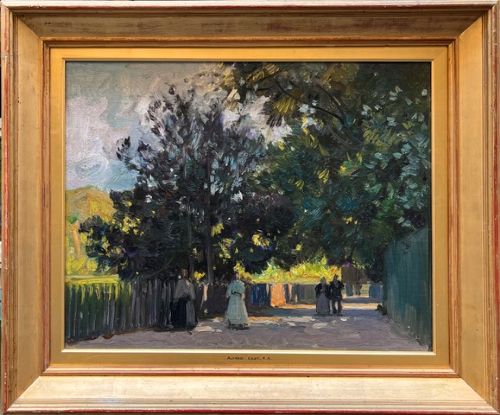
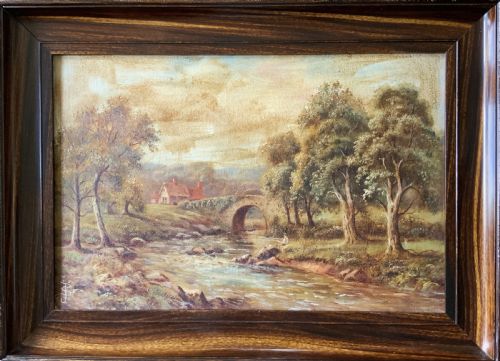
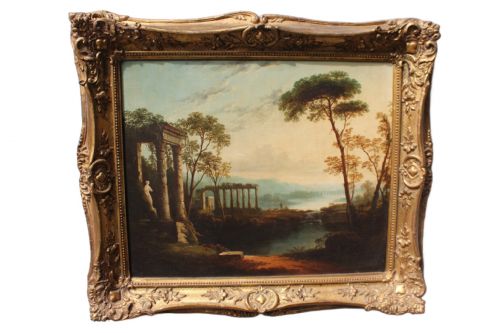
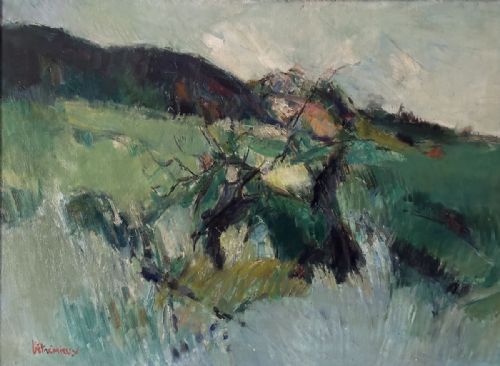
A green tree landscape canvas is an oil painting on fabric capturing woodland scenes, country lanes, and river paths from the nineteenth century through the mid-twentieth century. Buyers searching this phrase look for works featuring foliage, trees, and rural vistas rendered in styles ranging from Victorian to Mid-Century Impressionism.
The versions most commonly met on this page include British and French landscapes, depicting subjects such as willow trees, orchards, and wooded paths. These works span periods from the Victorian era and Edwardian times through the 1930s, 1940s, and 1950s.
Canvas supports feature prominently alongside occasional oil on paper or wood variants, housed within frames of wood, gesso, or gold leaf. The subjects vary from specific named locations in Britain and France to broader pastoral and countryside views.
Evaluating quality and execution
Quality separates through the handling of light, depth, and brushwork within the composition. Stronger examples demonstrate confident application of oil paint to render the texture of tree bark, leaves, and atmospheric distance.
The integrity of the canvas and the preservation of the paint surface dictate the condition of the piece. Superior works maintain stable pigment layers and original framing elements that complement the period of the painting.
Cattle share pasture with farm horses while artists quietly record the shade under the willows.
William H Myers·George Graham·Sir Alfred East·Sydney Yates Johnson·John Linnell·Abraham Hulk Jnr·Ernest Higgins Rigg·Frederick W Jackson·Alois Arnegger·Owen Bowen·Hermoine Hammond·Antoine Bouvard·Kershaw Schofield·Kenneth Washburn
The Green Tree Landscape Canvas Glossary
- Canvas
- A heavy woven fabric used as a surface for oil painting. It is typically stretched over a wooden frame before the artist applies paint.
- Gesso
- A plaster-like mixture applied to a surface to prepare it for painting or gilding. It provides a smooth base for oil paint.
- Gold Leaf
- Gold beaten into extremely thin sheets used for gilding frames and decorative elements. It appears on many period frames.
- Impressionism
- An art style characterised by relatively small, thin yet visible brush strokes and an emphasis on accurate depiction of light. Works in this style often capture fleeting outdoor moments.
- Post-Impressionism
- A predominantly French art movement that developed from Impressionism, extending its limitations while rejecting its constraints. Artists focused on heavier symbolism and bolder colours.
Green Tree Landscape Canvas: Frequently Asked Questions
What periods do these landscape canvases cover?
The listings span from the Victorian era and the nineteenth century through the Edwardian period, 1910s, 1920s, 1930s, and into the 1950s and 1960s.
Mid-century and post-impressionist works sit alongside earlier nineteenth-century French and British examples.
How should I hang an oil painting on canvas?
Ensure the wall support matches the weight of the canvas and its wood or gesso frame. Hang the piece away from direct sunlight and steady heat sources to protect the oil paint.
Keep the room humidity stable to prevent the canvas fabric from slackening over time.
What is the difference between British and French landscape styles here?
British works often focus on pastoral scenes, woodland paths, and river views with a naturalistic palette. French pieces frequently incorporate Impressionist and Post-Impressionist techniques emphasising light and atmosphere.
Both traditions rely on oil on canvas but approach brushwork and colour placement distinctly.
Are these paintings supplied with frames?
Many listings include original or period-appropriate frames made from wood, ebonised finishes, or gold leaf. The framing protects the edges of the canvas and complements the era of the artwork.
Check individual details to see the specific framing material described.