


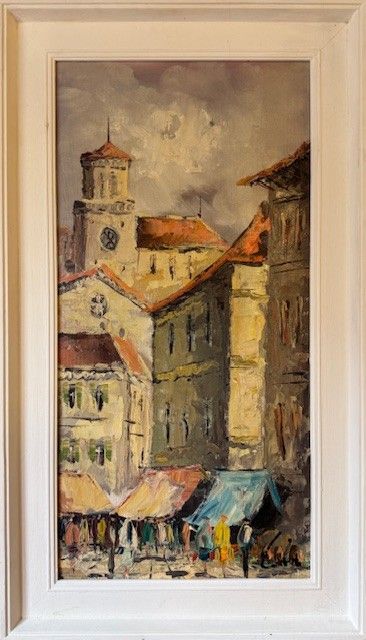


French Cityscape Artwork
When collectors search for french cityscape artwork, they find historical oil paintings and watercolours capturing urban life in Paris and provincial towns.
French Cityscape Artwork
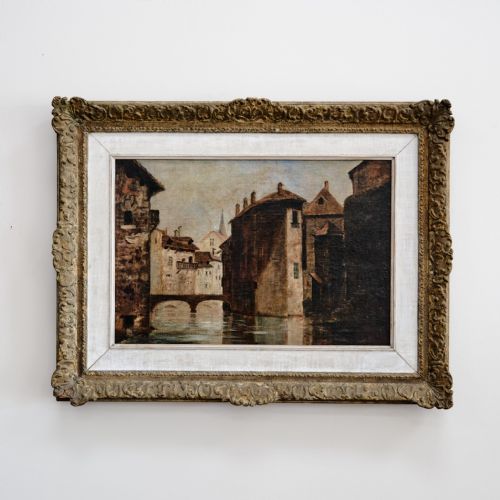
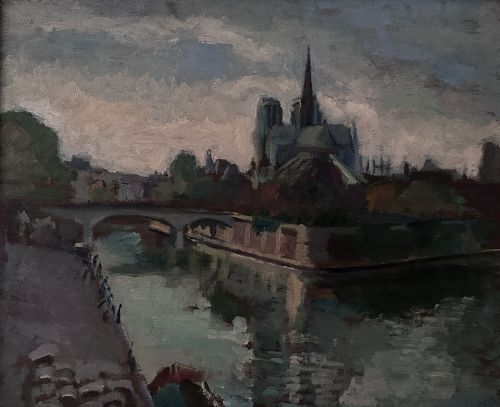
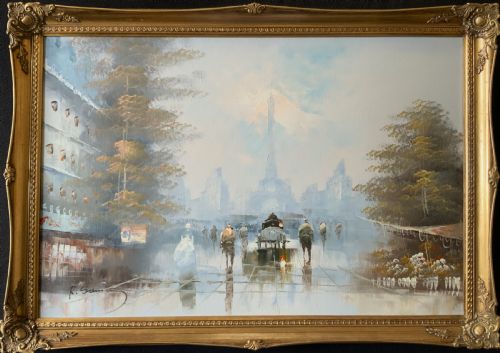
Buyers exploring french cityscape artwork encounter framed canvases, boards and paper works depicting street scenes, rivers and cathedrals. The selection spans the nineteenth century through the mid-twentieth century, capturing iconic locations such as Notre Dame, the Eiffel Tower and the River Seine.
The most common formats on this page are oil paintings on canvas, alongside pastels, watercolours and etchings. These pieces range from intimate views of provincial towns like Rouen and Auxerre to grand panoramic scenes of Parisian boulevards.
Materials and methods
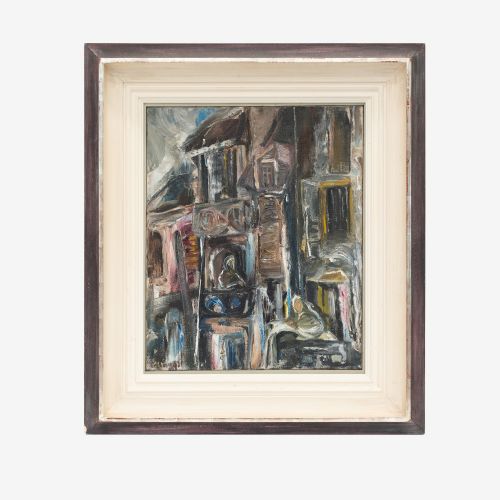
Artists relied primarily on oil paint applied to canvas or board, utilising brushwork to build texture and atmosphere. Pastels on paper and watercolour on paper also appear, offering lighter mediums for architectural details.
Many works are housed in period frames constructed from wood, including gilt wood designs that complement the impressionist and post-impressionist styles of the era.
Some paintings quietly hide pierrots and harlequins alongside the serious architecture of Paris.
Factors that distinguish individual pieces
Quality rests in the handling of light and perspective, where the artist successfully conveys the bustling atmosphere of a Parisian street or a quiet winter harbour. Strong compositions balance architectural precision with loose, expressive brushwork.
The integration of the frame with the painting alters the overall presence of the piece, as period gilt wood frames enhance the visual weight of mid-century and nineteenth-century canvases.
Lilian Colbourn·Caroline Burnett·Paul-Jean Anderbouhr·Victor Gabriel Gilbert·Gabriel Dauchot·Ron Folland·Merio Ameglio·Claude Jousset·Antoine Bouvard Senior·Eduard Leon Cortes·Noel Harry Leaver·Francis Dodd·Louis Icart·Pierre Peltier·Charles Clement Calderon·Henry Schafer·Letitia Marion Hamilton
The French Cityscape Artwork Glossary
- Post-Impressionism
- A stylistic development that extended impressionist techniques while rejecting its limitations, often emphasising symbolic motifs and heavier brushwork. Artists working in this manner focused on vivid colour and distinct forms.
- Impressionism
- A nineteenth-century movement characterised by relatively small, thin yet visible brush strokes and an emphasis on accurate depiction of light. This approach captures the shifting qualities of daylight in urban settings.
- Drypoint
- A printmaking technique of the intaglio family, in which an image is engraved into a plate with a hard-pointed needle of steel or other metal. The resulting prints exhibit soft, velvety lines produced by the burr raised during cutting.
- Gilt wood
- Wood that has been treated with a thin layer of gold leaf or gold paint for decorative effect. Frames utilising this finish are frequently found surrounding vintage oil paintings.
French Cityscape Artwork: Frequently Asked Questions
What periods do these artworks cover?
The inventory spans from the nineteenth century through the mid-twentieth century, including works from the eighteen-eighties up to nineteen-sixty.
Buyers will find pieces reflecting nineteenth-century French school traditions alongside mid-century impressionist and post-impressionist interpretations.
Which locations are most commonly depicted?
Parisian landmarks dominate the selection, featuring views of Notre Dame, the Eiffel Tower, the Pont Neuf, and the River Seine.
Other works expand beyond the capital to show provincial locations such as Rouen in Normandy, Auxerre, and Venice.
What mediums were used by the artists?
Oil paint on canvas or board forms the majority of the collection, supported by pastels on paper and traditional watercolours.
Printmaking is also represented through drypoint etchings capturing urban subjects on paper.
How should I display a vintage frame?
Many works retain their original wood or gilt wood frames, which were selected to complement the era of the painting.
Ensure the display wall supports the weight of larger framed canvases and avoids direct, harsh sunlight to protect the pigments.