




Green Tone Landscape
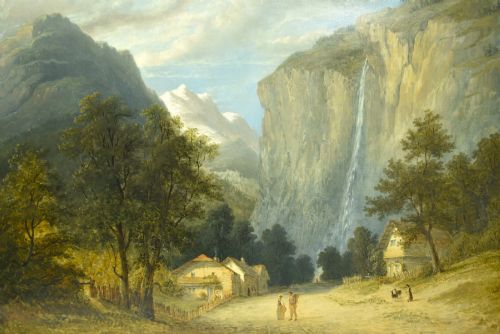
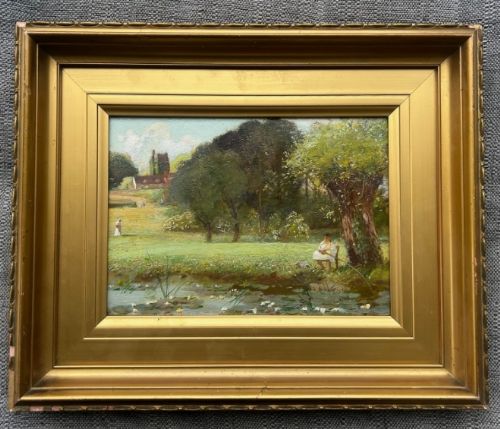
Green tone landscape paintings capture pastoral scenes and river views through verdant palettes rooted in nineteenth and early twentieth century traditions.
Green Tone Landscape
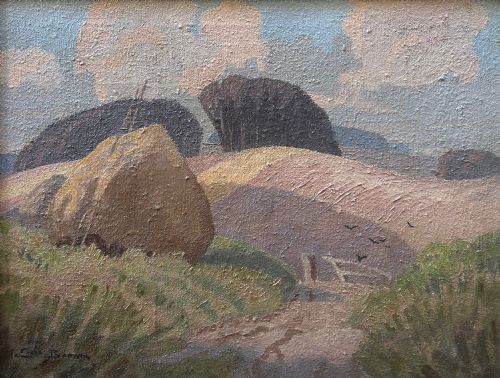
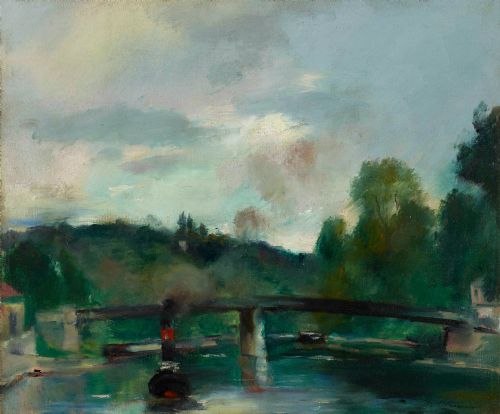
A green tone landscape brings together pastoral views, river scenes, and woodland settings rendered predominantly in verdant pigments. These works capture the English countryside, Scottish highlands, and European rural views through pastoral and impressionistic lenses.
The pieces on this page span the Victorian era, the Edwardian period, and the early twentieth century, reflecting shifting approaches to natural scenery. Collectors encounter oil paintings on canvas and wood panel alongside delicate watercolour paintings on paper.
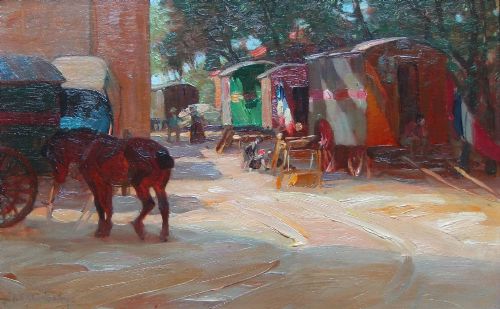
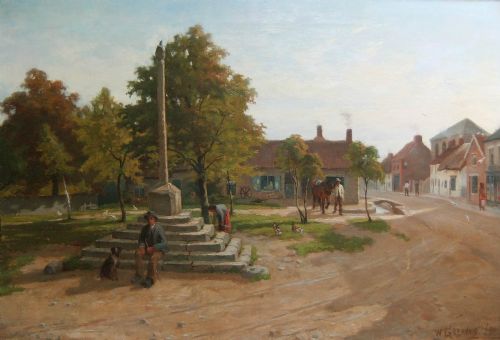
Rural farmyards, moorland streams, and quiet waterways dominate the subjects, often populated by figures, livestock, or rustic cottages. Each piece records a distinct regional locality, from Yorkshire valleys to Sussex rivers.
Materials and methods
Artists painted these scenes utilising oil paint on prepared canvas, sturdy wood panels, and mounting boards, applying pigment with varying brushwork to capture light and atmosphere. Watercolours on paper offer a lighter, more translucent treatment of verdant fields and riverbanks.
Pigments were worked in layers to build depth in foliage, grass, and water, balancing opaque impasto with thin washes. Support materials range from traditional stretched canvas to wooden panels that provide a rigid ground for detailed pastoral compositions.
Listings feature works spanning the nineteenth century through the 1960s, executed in oil paint, watercolour, and canvas.
Assessing quality
Quality rests in the handling of light, atmospheric depth, and the naturalism of the verdant palette across the composition. Stronger works demonstrate confident brushwork and balanced tonal harmony rather than rigid botanical illustration.
The distinction between standard decorative pieces and finer works lies in the artist's ability to convey movement in water, foliage, and sky while maintaining a cohesive regional atmosphere.
Tom Campbell·Sir David Murray·Ernest Higgins Rigg·Reginald Grange Brundrit·David Cox Jnr
The Green Tone Landscape Glossary
- Canvas
- A heavy woven fabric stretched across a wooden frame to serve as a support for oil painting. It provides a flexible yet durable ground for textured brushwork.
- Watercolour
- A painting method where water-soluble pigments are suspended in a water-based solution on paper. This technique produces luminous, transparent washes of colour.
- Wood Panel
- A solid wooden board utilised as a rigid support for oil paint. Painters favoured panels for smaller outdoor sketches and stable finished works.
- Impressionism
- An art movement focused on capturing the visual impression of a moment through unblended colour and loose brushstrokes. It prioritises light and shifting atmospheric effects over academic precision.
- Barbizon School
- A French artistic movement dedicated to naturalistic landscape painting. Practitioners worked outdoors to record rural scenery with earthy, verdant tones.
Green Tone Landscape: Frequently Asked Questions
What subjects appear in green tone landscape works?
These paintings depict rural farmyards, pastoral rivers, moorland streams, and woodland paths across various regional settings. Figures, livestock, and country cottages frequently inhabit the scenery.
The compositions emphasise natural environments, capturing rural life and topography through the lens of nineteenth and early twentieth century artists.
How do I date a green tone landscape?
Dating relies on stylistic markers, framing, artist signatures, and the physical support material, such as canvas or wood panel. Victorian and Edwardian works often carry specific aesthetic conventions distinct from later twentieth century pieces.
Examining the back of the panel or stretcher frame frequently reveals historic exhibition labels, artist inscriptions, or provenance notes.
Where were these landscape paintings created?
Artists produced these works across British countryside locations including Yorkshire, Lancashire, Sussex, and the Scottish highlands. European scenes from France and Switzerland also appear among the selections.
Many painters worked en plein air directly within the landscape to capture authentic local light and verdant colour tones.
How should I display a watercolour landscape?
Watercolour paintings require professional framing behind conservation glass to protect the paper and pigments from ultraviolet light and moisture. Acid-free mounts prevent discolouration around the edges of the sheet.
Placement away from direct sunlight and damp environments ensures the preservation of the delicate washes.